Could the Seemanchal Experience Disrupt Trinamool's Future in Bengal?
Synopsis
As the West Bengal Assembly elections approach, the potential for a consolidation of minority votes, as seen in Bihar's Seemanchal, could drastically affect the ruling party's chances. With calls for unity among Muslim parties, the political landscape is shifting. Will Trinamool Congress maintain its grip, or will opposition forces prevail?
Key Takeaways
Potential for minority vote consolidation could disrupt Trinamool Congress's dominance.
Humayun Kabir's call for unity reflects lessons from Bihar's electoral dynamics.
The AIMIM's success in Bihar serves as a critical case study for West Bengal.
Coalition among minority parties could lead to significant electoral shifts.
Political strategies may pivot as parties adapt to emerging voting patterns.
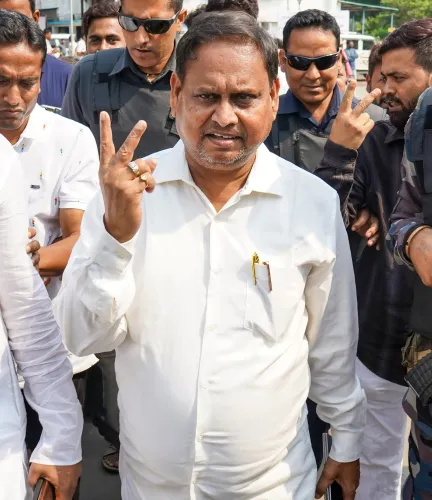
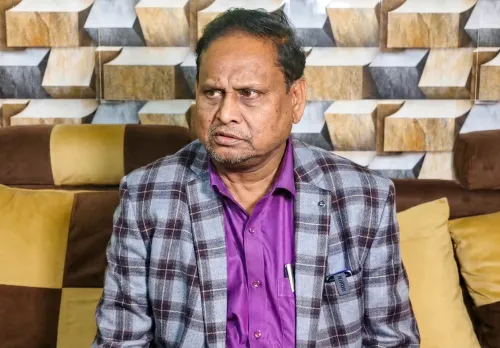
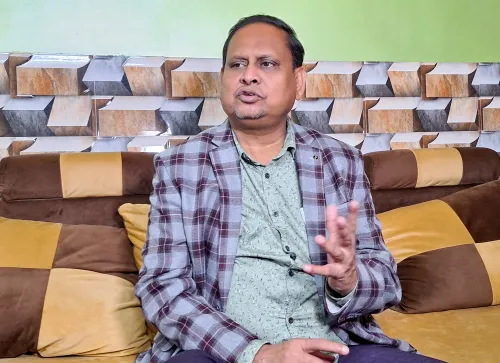
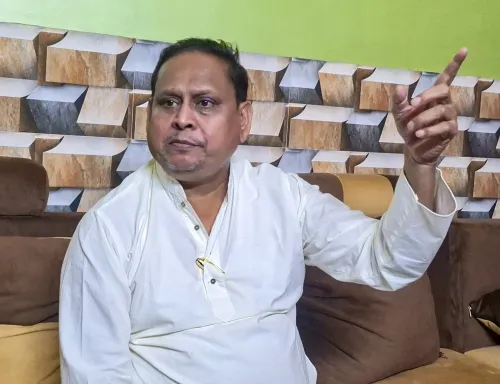
Kolkata, Dec 31 (NationPress) A political alliance rooted in religious beliefs, as suggested by former Trinamool Congress MLA and the creator of a Babri Masjid replica in West Bengal, Humayun Kabir, could significantly impact the ruling party's fortunes in Muslim-majority Assembly seats next year, reflecting the situation seen in Bihar's Seemanchal.
Kabir's bold call for the unification of Muslim votes may lead to a polarization that could inadvertently benefit the principal Opposition party, the Bharatiya Janata Party (BJP), especially in light of accusations of “appeasement politics” leveled against Trinamool chief and Chief Minister Mamata Banerjee.
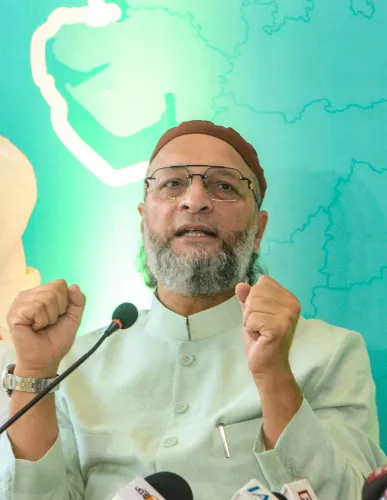
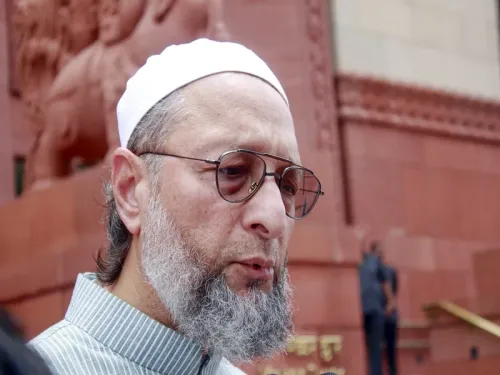
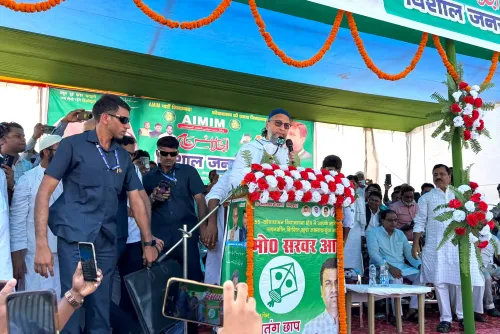
The recent Assembly elections in Bihar saw Asaduddin Owaisi's All India Majlis-e-Ittehadul Muslimeen (AIMIM) win five seats and narrowly miss out on two, after running 25 candidates.
Owaisi's party, having reportedly been rejected by Rashtriya Janata Dal (RJD) leader Tejashwi Yadav, chose to operate independently in Bihar, focusing its energies in Seemanchal, where Muslims form a significant portion of the electorate.
This strategy paid off for AIMIM, as it mirrored its 2020 success, when it captured an equal number of seats. Notably, AIMIM managed a recovery from previous setbacks linked to defections among its winners.
In the Muslim-dominated constituencies of Seemanchal, only the Congress secured a win in Kishanganj, while neither the RJD nor the Left could penetrate the region's political landscape due to vote consolidation.
In Balrampur, AIMIM fell short by just 389 votes against the BJP ally Lok Janshakti Party (Ram Vilas), with the Mahagathbandhan's CPI(ML)L amassing 79,141 votes.
In the Thakurganj constituency, AIMIM trailed the Janata Dal (United) by 8,822 votes, while the RJD garnered 60,036 votes. In Pranpur, the RJD candidate fell behind the BJP by a margin of 7,752 votes, with AIMIM polling 30,163 votes, indicating a clear divergence in voting patterns.
Consequently, AIMIM's rise fragmented minority votes, which hindered the Mahagathbandhan's ability to convert Muslim plurality into a unified front against the National Democratic Alliance (NDA).
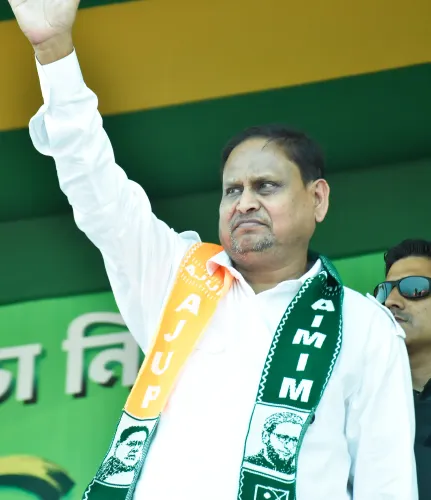
The Seemanchal experience suggests that if Kabir's Janata Unnayan Party (JUP), AIMIM, and the Indian Secular Front (ISF) collaborate, they could achieve local consolidation, negatively impacting the electoral prospects of their opponents.
The ISF, established by Peerzada Abbas Siddiqui of the Furfura Sharif Sufi shrine ahead of the 2021 Assembly elections, aims to ensure “social justice” for Muslims and Dalits in the state.
In the last Assembly elections, the ISF allied with the Left and Congress, winning one seat, while its partners failed to secure any. The future of these parties hinges on coordinating to field a single candidate per seat to consolidate Muslim votes.
Kabir has indicated on multiple occasions that he sees himself as a potential kingmaker, with aspirations to nominate JUP candidates in at least 180 seats. He appears to be taking AIMIM's performance in Bihar into account, though he is yet to organize his party effectively and establish a formal alliance.
Given the lessons from Seemanchal, a formal agreement among JUP, AIMIM, and ISF could alter the electoral calculus; however, there remains uncertainty regarding the potential for uneven splits in minority votes or the appeal of leaders from rival parties during the elections.
Nonetheless, the favorable conditions have led the BJP to suggest that Kabir may support Trinamool post-election, even as Mamata Banerjee seeks to court Hindu voters through a notable increase in temple constructions across the state.
Point of View
The unfolding political dynamics in West Bengal demand attention. The potential consolidation of minority votes could reshape electoral outcomes, echoing the trends observed in Bihar's Seemanchal. As political parties navigate this complex landscape, the implications for governance and representation in the region are profound.
NationPress
16 Sept 2026
Frequently Asked Questions
What is the Seemanchal experience?
The Seemanchal experience refers to the recent electoral dynamics in Bihar, where the consolidation of Muslim votes significantly impacted election outcomes, benefiting AIMIM and demonstrating potential trends that could affect other states, including West Bengal.
Who is Humayun Kabir?
Humayun Kabir is a former MLA of the Trinamool Congress and a prominent figure advocating for the consolidation of Muslim votes in West Bengal. He is known for his proposal to form a political alliance based on religious tenets.
How could minority vote consolidation affect the elections?
The consolidation of minority votes could lead to a significant shift in electoral dynamics, potentially favoring opposition parties like the BJP if the ruling party is unable to maintain its support among minority communities.
What role does AIMIM play in this context?
AIMIM, led by Asaduddin Owaisi, has demonstrated the effectiveness of consolidating minority votes in Bihar, which could serve as a model for similar strategies in West Bengal.
What is the potential impact of a coalition among minority parties?
A coalition among minority parties like JUP, AIMIM, and ISF could lead to a strengthened front against the ruling party, thereby altering traditional voting patterns and challenging the political status quo.