Owaisi Questions Bar on Muslim Street Prayers in India
Synopsis
AIMIM president Asaduddin Owaisi on 30 May 2026 challenged the differential treatment of religious communities in Indian public spaces, asking why Muslims face restrictions on offering namaz on roads while other faiths are free to hold street festivals. The post reignites a long-running debate on equal application of secular norms under Article 25.
Key Takeaways
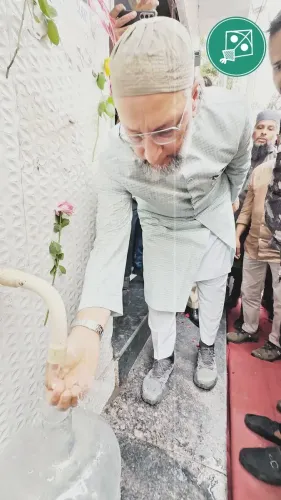
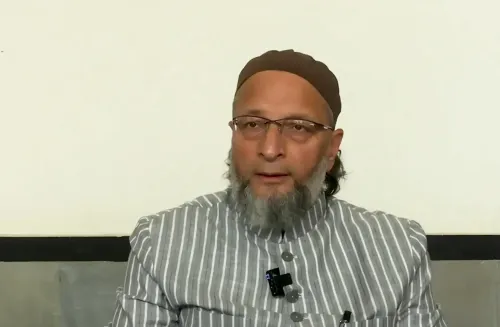
Asaduddin Owaisi , AIMIM president and Lok Sabha MP from Hyderabad, posted on 30 May 2026 questioning why Muslims are stopped from offering namaz on public roads.
He drew a direct contrast with the freedom extended to other religious communities to celebrate festivals on streets.
Article 25 of the Indian Constitution guarantees equal freedom of religion to all citizens, subject to public order and morality.
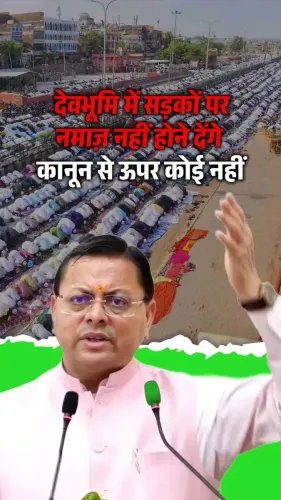
Indian cities have a recurring pattern of restricting namaz gatherings on public roads, often around Eid , Muharram , and Friday prayers .
No uniform national policy governs the use of public spaces for religious observances across faiths; decisions are made case by case by local bodies.
The post may prompt fresh legal challenges and calls for consistent guidelines from state governments and urban local bodies.
AIMIM president Asaduddin Owaisi on Saturday, 30 May 2026, raised a pointed question about the differential treatment of religious communities in public spaces, asking why Muslims are being stopped from offering namaz on roads when people of other faiths are permitted to celebrate their festivals on the same streets.
Context
Posting in Hindi on X, Owaisi wrote: 'Jab Bharat mein doosre mazhab ke log sadkon par apna tyohaar mana sakte hain, toh Musalmano ko namaaz padhne se kyun roka ja raha hai?' — 'When people of other faiths in India can celebrate their festivals on roads, why are Muslims being stopped from offering namaz?'
The post, which carried a video, did not name a specific city or incident. However, it reflects a recurring flashpoint in Indian urban governance: the regulation of public-space use for religious observances, which periodically intensifies around Eid, Muharram, and Friday prayers.
Policy Backdrop
Article 25 of the Indian Constitution guarantees every citizen the freedom of conscience and the right to freely profess, practise, and propagate religion, subject to considerations of public order, morality, and health. The constitutional provision applies equally to all faiths.
Local administrations across Indian cities have, over the years, issued orders restricting namaz gatherings on public roads — often citing traffic management and public inconvenience — while simultaneously granting permissions for religious processions and street events associated with other communities. Critics argue this amounts to unequal enforcement of secular norms; authorities typically frame such decisions as context-specific and non-discriminatory.
Courts, including High Courts and the Supreme Court of India, have addressed individual cases on their specific facts, but no uniform national policy governing street prayers across faiths has emerged from these rulings.
Stakeholders and Impact
The question directly concerns India's Muslim community, estimated at over 20 crore citizens, for whom congregational Friday prayers and Eid namaz are central religious obligations. Urban Muslim neighbourhoods, particularly in cities like Hyderabad, Delhi, Mumbai, and Lucknow, have been sites of such disputes in recent years.
Municipal authorities and state governments are the key decision-makers in granting or denying permissions for public-space religious activity. Civil society groups and minority rights organisations have consistently flagged inconsistency in how these permissions are applied across communities.
Owaisi, as a Lok Sabha MP from Hyderabad and the president of AIMIM — a party that has built its base on advocating for Muslim political and civic rights — has been a consistent voice on such matters in Parliament and on public platforms.
What's Next
The post is likely to prompt responses from state governments and urban local bodies on their specific guidelines for street prayers. Legal observers will watch for any fresh petitions in High Courts or the Supreme Court seeking uniform standards for public-space religious activity.
With the Eid al-Adha season approaching, the debate over the use of public spaces for namaz is expected to intensify, making Owaisi's question a politically significant one that other opposition leaders may be pressed to respond to as well.
Point of View
Forcing a debate on whether the secular state is applying its public-space regulations evenhandedly. By invoking the visible presence of other faiths on public roads, he shifts the conversation from administrative discretion to equal citizenship — a framing that is difficult for any government to dismiss without engaging Article 25. The post fits a broader pattern in which minority rights advocates use the contrast between permitted and restricted religious expression to highlight what they see as structural bias in local administration. Whether or not a specific incident triggered the post, its timing ahead of Eid al-Adha ensures maximum political resonance.
NationPress
22 Sept 2026
Frequently Asked Questions
Why is Owaisi objecting to the ban on namaz on public roads?
Owaisi argues that if people of other faiths are allowed to celebrate festivals on public roads, the same standard must apply to Muslims offering namaz, failing which it amounts to unequal treatment under the Constitution.
Is offering namaz on public roads legal in India?
There is no blanket national law prohibiting namaz on public roads. Permissions are governed by local municipal and police authorities on a case-by-case basis, and courts have ruled on individual disputes without setting a uniform national rule.
What does Article 25 of the Indian Constitution say about religious freedom?
Article 25 guarantees every person the freedom of conscience and the right to freely profess, practise, and propagate religion, subject to public order, morality, and health — and it applies equally to all faiths.
Has namaz on public roads been restricted before in India?
Yes. Several Indian cities have periodically issued orders restricting namaz gatherings on public roads, typically citing traffic management, while permissions for street processions and events of other communities have continued in the same areas.
What is AIMIM and what issues does it raise?
AIMIM, the All India Majlis-e-Ittehadul Muslimeen, is a regional political party led by Asaduddin Owaisi that is primarily active in Telangana and Maharashtra and focuses on advocating for the civic, political, and religious rights of the Muslim community.