Owaisi Calls UCC a Backdoor Imposition of Hindu Law

Synopsis
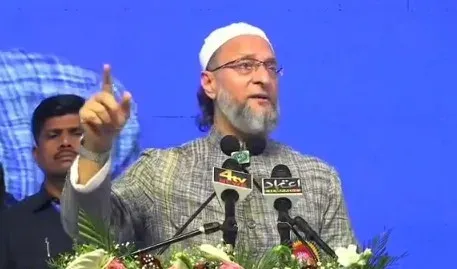
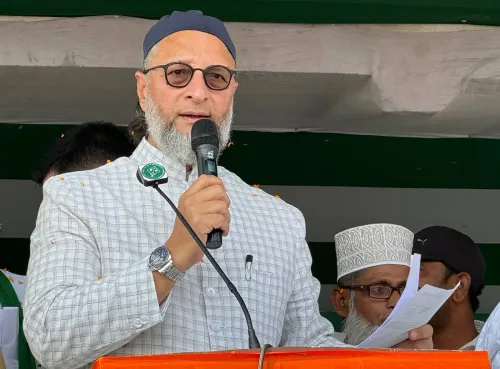
AIMIM president Asaduddin Owaisi on 25 May 2026 accused the Uniform Civil Code of being a backdoor imposition of Hindu principles on Muslims, arguing that rules on succession, inheritance and divorce effectively protect only Hindu culture while forcing compliance on minorities.
Key Takeaways
Asaduddin Owaisi called the UCC a 'backdoor imposition of Hindu law' on Muslims in a post on 25 May 2026 .
He specifically cited succession, inheritance and divorce as areas where Hindu principles are being imposed on Muslim citizens.
Uttarakhand became the first Indian state to enact a Uniform Civil Code in February 2024 , covering all residents.
Article 44 of the Indian Constitution has directed the State to work towards a UCC since 1950 , but no central legislation exists yet.
Muslim personal law in India is currently governed by the Muslim Personal Law (Shariat) Application Act, 1937 .
The Supreme Court and future state-level bills remain key arenas where the UCC debate will be contested.
AIMIM president Asaduddin Owaisi on Monday, 25 May 2026 sharply condemned what he described as a backdoor imposition of Hindu law on Muslims through the Uniform Civil Code (UCC), arguing that Hindu principles on succession, inheritance and divorce are being forced on minority communities under the guise of uniformity.
Context
Responding to a post on X, Owaisi stated: 'This is a backdoor imposition of Hindu law on Muslims. On succession, inheritance and divorce, the Hindu principles are being imposed. Only Hindu culture is being protected, while Muslims have to comply with these so-called 'uniform' rules.' The remark reflects his long-standing position as one of the most vocal parliamentary opponents of the UCC, which he argues disproportionately targets Muslim personal law while effectively codifying majority-community practices as the national standard.
As Lok Sabha MP from Hyderabad and president of the All India Majlis-e-Ittehadul Muslimeen (AIMIM), Owaisi has consistently framed the UCC debate as a question of constitutional rights rather than one of gender justice or national integration — the two pillars on which proponents of the code have built their case.
Policy Backdrop
Article 44 of the Indian Constitution (1950) directs the State to endeavour to secure a Uniform Civil Code for all citizens — a Directive Principle that successive governments treated largely as aspirational for decades. The 21st Law Commission of India examined the question in 2018, inviting public comments but stopping short of a firm recommendation for a single national code.
The debate shifted decisively when the Uttarakhand Assembly passed the Uniform Civil Code Bill in February 2024, making Uttarakhand the first Indian state to enact such legislation after independence. The statute covers marriage, divorce, inheritance and succession for all residents, including, after some revision, members of Scheduled Tribes. State-level enactments since then have kept the issue at the centre of national political discourse.
Successive BJP-led governments at the Centre have treated UCC implementation as an electoral commitment, citing gender equality and national integration as justifications. Critics, including Muslim political leaders and minority rights organisations, counter that the codes as drafted draw heavily from Hindu personal law frameworks and effectively marginalise minority religious practices.
Stakeholders and Impact
Indian Muslims — who govern personal matters such as marriage, divorce, mehr (dower), and inheritance under the Muslim Personal Law (Shariat) Application Act, 1937 — stand to see the most significant change if a central UCC is enacted or if more states follow Uttarakhand's model. Community organisations and clerics have argued that such laws encroach on constitutionally protected religious freedoms under Articles 25 and 26.
Women's rights groups are divided: some welcome a uniform code as a path to equal inheritance and divorce rights across religions, while others echo Owaisi's concern that a code modelled on majority-community norms does not automatically deliver gender justice for minority women.
What's Next
Attention will now turn to whether additional states introduce UCC legislation, and whether the Supreme Court of India takes up pending constitutional challenges to existing state-level UCC laws. Any move by the Central government to introduce a national UCC Bill in Parliament would immediately become a flashpoint, with Owaisi and opposition leaders likely to mount strong floor resistance. The debate also feeds into electoral calculations ahead of upcoming state assembly elections, where minority voter mobilisation remains a key variable.
Point of View
But it carries renewed weight as state-level enactments move the code from constitutional aspiration to enforceable statute. By zeroing in on succession and inheritance — areas where Muslim women's rights under personal law are themselves contested — he is navigating a politically delicate line between community solidarity and the gender-justice argument that UCC proponents wield most effectively. His intervention signals that AIMIM intends to keep minority legal identity at the centre of electoral discourse as the UCC debate edges toward the national legislature. The broader arc here is a slow but accelerating collision between Article 44's directive and Articles 25–26's religious freedom guarantees, a tension the Supreme Court has yet to resolve definitively.
NationPress
20 Sept 2026
Frequently Asked Questions
What did Owaisi say about the Uniform Civil Code in May 2026?
Owaisi called the UCC a backdoor imposition of Hindu law on Muslims, arguing that Hindu principles on succession, inheritance and divorce are being forced on the Muslim community under the label of uniformity.
What is the Uniform Civil Code and why is it controversial?
The Uniform Civil Code is a proposed common set of civil laws on marriage, divorce, inheritance and succession applicable to all citizens regardless of religion. It is controversial because religious minorities, particularly Muslims, argue it effectively replaces minority personal laws with majority-community norms.
Which state first enacted the Uniform Civil Code in India?
Uttarakhand became the first Indian state to enact a Uniform Civil Code, passing the bill in February 2024 to cover all residents including, after revision, Scheduled Tribe members.
Does the Indian Constitution require a Uniform Civil Code?
Article 44 of the Indian Constitution directs the State to endeavour to secure a Uniform Civil Code for all citizens, but it is a Directive Principle — aspirational and not directly enforceable in court.
How does the UCC affect Muslim personal law in India?
Muslim personal matters such as marriage, divorce, dower and inheritance are currently governed by the Muslim Personal Law (Shariat) Application Act of 1937. A UCC, if enacted nationally, would override these provisions with a single common framework.