Owaisi: BJP's UCC push targets 18 crore Muslims, not equality
Synopsis
AIMIM President Asaduddin Owaisi didn't just push back against Amit Shah's UCC timeline — he turned it into a four-point constitutional indictment, invoking the BJP government's own Law Commission against it. His Goa challenge and the specific provisions he cited from Goa's civil code are likely to reframe the UCC debate well beyond a routine opposition statement.
Key Takeaways
AIMIM chief Asaduddin Owaisi on 14 September 2026 accused the BJP of using the UCC to target 18 crore Muslims , not to advance equality.
He cited the Modi government's own Law Commission report, which reportedly found UCC 'neither necessary nor desirable for India.' Owaisi challenged Amit Shah and the BJP to implement in Goa the same UCC framework introduced in Uttarakhand , Gujarat , and Assam .
He alleged that Goa's civil code contains provisions allowing a Hindu husband to remarry if his wife has no child by 25 or no male child by 30 , exposing inconsistencies in the BJP's UCC narrative.
Owaisi condemned the closure of 252 madrassas in West Bengal as a violation of Article 30 of the Constitution.
He questioned the government's empathy toward Pahalgam attack victims and claimed the Red Fort suicide blast was 'again sponsored by Pakistan.'
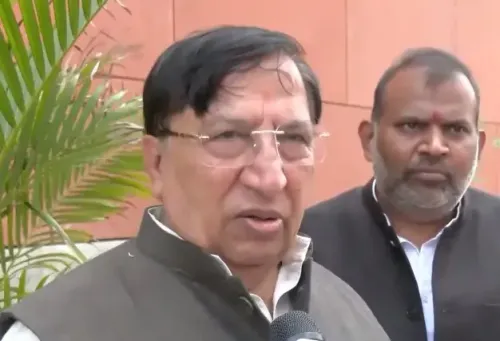
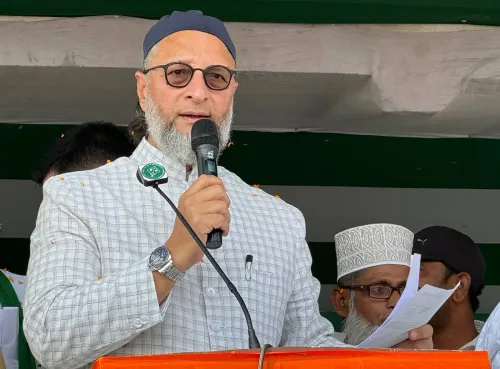
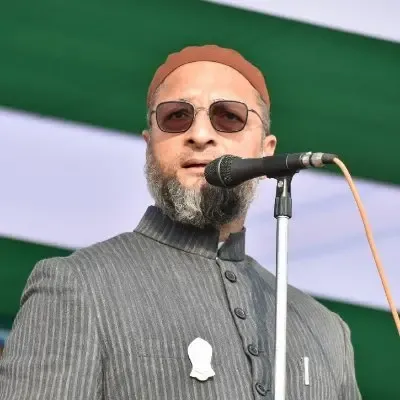
All India Majlis-e-Ittehadul Muslimeen (AIMIM) President Asaduddin Owaisi on Monday, 14 September 2026 accused the Bharatiya Janata Party (BJP) of deploying the Uniform Civil Code (UCC) as a political weapon against 18 crore Muslims in India, rather than as a genuine move toward equality. The remarks came in direct response to Union Home Minister Amit Shah's assertion that all 21 NDA-ruled states will implement the UCC before the 2029 Lok Sabha elections.
Owaisi's Core Charges Against UCC Push
Speaking to media persons in Hyderabad, the Hyderabad MP laid out a multi-point rebuttal to Shah's statement. 'The BJP is not doing this for equality. It is only to target Muslims,' Owaisi said, adding that the initiative runs counter to Articles 25, 14, 26, and 29 of the Constitution, which guarantee freedom of religion and the right to equality.
Owaisi further argued that the BJP, Amit Shah, and the Rashtriya Swayamsevak Sangh (RSS) are 'trying to impose Hindu laws on non-Hindus.' He also cited the Law Commission — constituted by the Narendra Modi government — which, according to him, concluded in its report that a UCC is 'neither necessary nor desirable for India.'
The Goa Precedent: Owaisi's Challenge to Shah
The AIMIM chief directly challenged Home Minister Shah and the BJP to implement in Goa the same UCC framework introduced in Uttarakhand, Gujarat, and Assam. He argued that those who cite Goa as a UCC model are 'fooling themselves and trying to mislead the world.'
Owaisi pointed to specific provisions within Goa's existing civil code: he claimed that if a Hindu woman does not have a child by the age of 25, her husband may take a second wife under Goa law, and that if no male child is born by age 30, the husband may remarry. He also noted that Catholics in Goa enjoy an exemption allowing marriage registration through a Catholic priest rather than the government. These details, Owaisi argued, expose the inconsistency in the BJP's UCC narrative. He also questioned the existence of 'Disturbed Area Act' provisions and so-called 'Love Jihad' laws in BJP-governed states.
Madrassa Closures and Article 30
Owaisi also criticised the West Bengal government's order to shut down 252 madrassas across the state, characterising the move as driven by 'hatred towards Muslims and Islam.' He described the closures as a violation of Article 30 of the Constitution, which grants minorities the right to establish and administer educational institutions of their choice.
BRICS Food Row, Women's Asia Cup, and Pahalgam Attack
On the controversy over food served at the BRICS Summit 2026, Owaisi said India's diversity encompasses 'different cultures, religions, languages and food habits,' and noted that around 20 per cent of minorities in India are vegetarian. He questioned what transpired in discussions with China regarding territory 'where we used to patrol.'
On the row over the Indian women's cricket team refusing to accept the Women's Asia Cup trophy from Asian Cricket Council President and Pakistan Cricket Board Chief Mohsin Naqvi, Owaisi asked: 'Why are you playing with them?' He questioned how the BCCI's ICC contract remains an obligation while the Indus Water Treaty has been put in abeyance, and accused the government of lacking empathy toward families of victims of the Pahalgam terror attack. Owaisi also claimed, without offering evidence, that the recent Red Fort suicide blast was 'again sponsored by Pakistan.'
Political Context
Owaisi's remarks arrive as the UCC debate sharpens ahead of the 2029 electoral cycle. The BJP has positioned UCC implementation across NDA states as a flagship governance promise, while opposition voices — particularly from Muslim-majority constituencies — argue the push is timed for electoral polarisation. Notably, the Law Commission's own findings, cited by Owaisi, have been a persistent counterpoint in the legislative debate around UCC. How the Centre and state governments respond to the constitutional challenges flagged by Owaisi will likely shape the legal and political battleground in the months ahead.
Point of View
Owaisi is exposing a genuine inconsistency that the BJP has not publicly resolved. The UCC debate is fast becoming less about civil law reform and more about which community's practices get coded as the national norm — and that is a tension that will outlast any single electoral cycle.
NationPress
15 Sept 2026
Frequently Asked Questions
Why did Asaduddin Owaisi criticise the BJP's UCC push?
Owaisi argued that the BJP is not implementing the Uniform Civil Code to promote equality, but to specifically target India's 18 crore Muslims. He said the move violates Articles 14, 25, 26, and 29 of the Constitution and cited the Modi government's own Law Commission, which reportedly found UCC 'neither necessary nor desirable for India.'
What did Amit Shah say about UCC that prompted Owaisi's response?
Union Home Minister Amit Shah stated that all 21 NDA-ruled states will implement the Uniform Civil Code before the 2029 Lok Sabha elections. Owaisi responded by challenging the constitutional basis of this plan and questioning its selective application across states.
What is Owaisi's Goa challenge to the BJP?
Owaisi challenged the BJP to implement the same UCC framework in Goa that it introduced in Uttarakhand, Gujarat, and Assam. He argued that Goa's existing civil code contains provisions — such as allowing Hindu men to remarry if their wife has no child by 25 or no male child by 30 — and exemptions for Catholics, which contradict the BJP's claims of Goa as a UCC model.
What did Owaisi say about the West Bengal madrassa closures?
Owaisi condemned the West Bengal government's order to close 252 madrassas, calling it a violation of Article 30 of the Constitution, which grants minorities the right to establish and administer educational institutions of their choice. He attributed the move to what he described as the BJP's 'hatred towards Muslims and Islam.'
What other issues did Owaisi raise at the press conference?
Owaisi commented on the food controversy at the BRICS Summit 2026, the Indian women's cricket team's refusal to accept the Women's Asia Cup trophy from Pakistan Cricket Board Chief Mohsin Naqvi, and the Pahalgam terror attack. He also claimed, without providing evidence, that the recent Red Fort suicide blast was 'again sponsored by Pakistan.'