Rajnath Singh: Oceans are bridges, not barriers for India
Synopsis
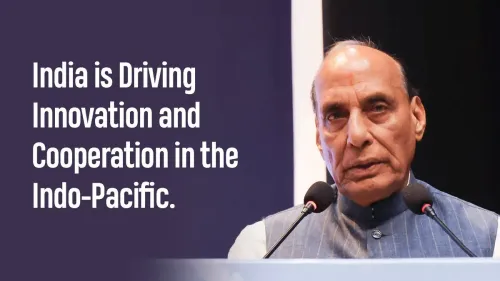
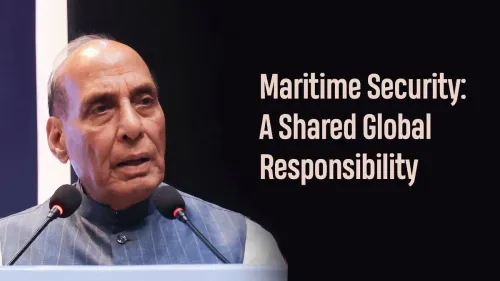
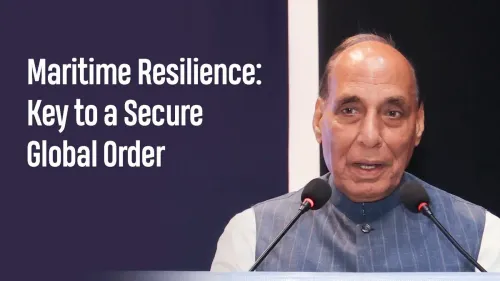
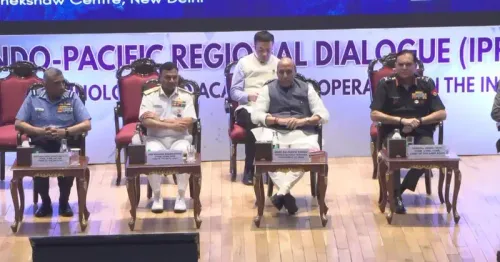
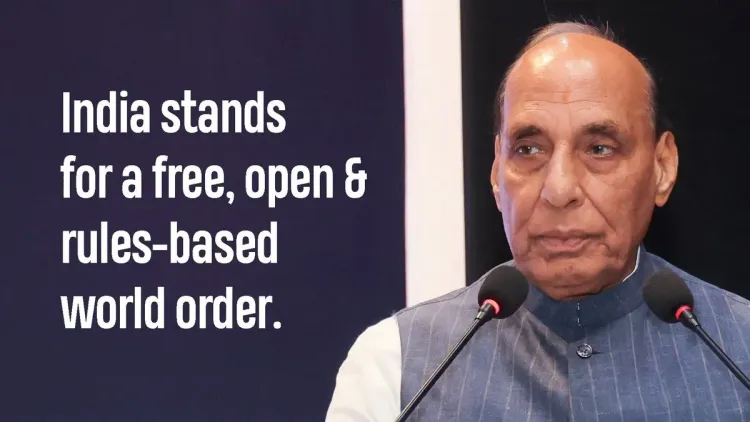
Defence Minister Rajnath Singh declared on November 4, 2026 that oceans are 'bridges of opportunity' for India, reaffirming New Delhi's commitment to a free, open and rules-based international maritime order — a direct echo of the 2015 SAGAR doctrine.
Key Takeaways
Union Defence Minister Rajnath Singh posted on November 4, 2026 reaffirming India's commitment to a free, open and rules-based international order.
Singh framed oceans as 'bridges of opportunity, cooperation and shared prosperity' — not barriers — a core tenet of India's maritime diplomacy.
The statement aligns with the SAGAR doctrine ( Security and Growth for All in the Region ) launched by PM Modi in 2015 .
The phrase 'rules-based international order' signals India's opposition to unilateral assertions of maritime dominance outside established international law.
India's position is backed by active participation in multilateral naval exercises and engagement with the Indian Ocean Rim Association .
Upcoming multilateral exercises and IORA meetings will be key indicators of how India translates these principles into action.
The sea has always been India's strategic frontier — and Union Defence Minister Rajnath Singh put that conviction on record on Wednesday, November 4, 2026, with a pointed articulation of India's maritime worldview that cuts to the heart of the Indo-Pacific debate.
Singh wrote: 'The oceans have connected civilizations, facilitated global trade and carried ideas across nations for centuries. For India, they have never been barriers but bridges of opportunity, cooperation and shared prosperity. India remains committed to a free, open and rules-based international order.'
The SAGAR doctrine behind the words
The statement is not rhetorical flourish — it carries a precise policy lineage. In 2015, Prime Minister Narendra Modi unveiled the SAGAR doctrine (Security and Growth for All in the Region), framing the Indian Ocean as a shared space for security and economic advancement rather than a theatre of zero-sum competition. Singh's post is a pointed reaffirmation of that framework, delivered from the Defence Ministry's highest seat.
The phrase 'rules-based international order' does the heaviest lifting here. It is a deliberate signal — aimed squarely at concerns over unilateral assertions of maritime dominance — that India will not accept a reordering of the seas outside established international law.
India's position in the Indo-Pacific contest
India has consistently embedded this outlook into multilateral platforms: naval exercises with partner navies, engagements through the Indian Ocean Rim Association, and coordination with groupings that share an interest in freedom of navigation. As a major Indian Ocean littoral state with one of the region's largest blue-water navies, India's voice on maritime norms carries institutional weight, not just diplomatic sentiment.
The timing matters too. Indo-Pacific tensions — over shipping lanes, undersea infrastructure, and contested maritime boundaries — have kept the 'rules-based order' debate alive and urgent across capitals. Singh's framing positions New Delhi not as a bystander but as an active stakeholder in that conversation.
Bridges, not barriers — and what that phrase signals
The 'bridges, not barriers' formulation is carefully chosen. It implicitly rejects the securitisation narrative that reduces the Indian Ocean to a chessboard of rivalries, and instead foregrounds connectivity: trade routes, civilisational exchange, shared prosperity. For India's maritime diplomacy, that framing serves a dual purpose — keeping neighbourhood partnerships warm while signalling to larger powers that New Delhi will anchor itself in a liberal maritime order.
Watch for Indian Navy participation in upcoming multilateral exercises and the next Indian Ocean Rim Association ministerial as concrete expressions of exactly what Singh has just described.
Point of View
Not barriers' framing allows India to simultaneously court Indian Ocean littoral partners with a connectivity narrative and signal to revisionist powers that New Delhi will resist any rewriting of maritime norms. Coming from the Defence Ministry rather than External Affairs, the message carries an added strategic weight, suggesting that India's maritime commitment is as much a security doctrine as a diplomatic preference. It reinforces a consistent BJP government line stretching from SAGAR in 2015 to the present, projecting continuity and resolve.
NationPress
4 Nov 2026
Frequently Asked Questions
What did Rajnath Singh say about India and the oceans?
On November 4, 2026, Singh stated that oceans have always been 'bridges of opportunity, cooperation and shared prosperity' for India — not barriers — and reaffirmed India's commitment to a free, open and rules-based international order.
What is India's SAGAR doctrine?
SAGAR stands for 'Security and Growth for All in the Region,' a maritime policy framework announced by Prime Minister Narendra Modi in 2015 that frames the Indian Ocean as a shared space for collective security and economic growth.
Why does India emphasise a rules-based maritime order?
India's emphasis on a rules-based maritime order reflects its interest in protecting freedom of navigation, international trade routes, and established norms of international law against unilateral attempts to assert dominance over contested sea lanes.
What is the Indian Ocean Rim Association?
The Indian Ocean Rim Association is a multilateral body of littoral and partner states focused on regional cooperation across trade, security, and connectivity — a key platform through which India advances its maritime diplomacy.
What is Rajnath Singh's role in India's defence policy?
Rajnath Singh has served as Union Defence Minister since 2019 and is one of the BJP's most senior leaders, frequently articulating India's defence and maritime diplomacy positions at home and on international platforms.