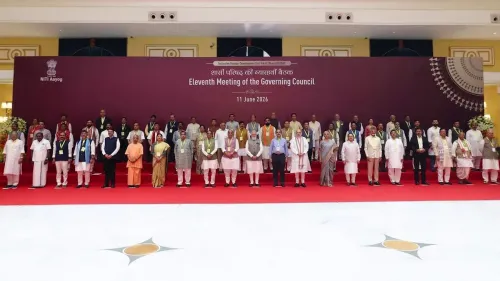
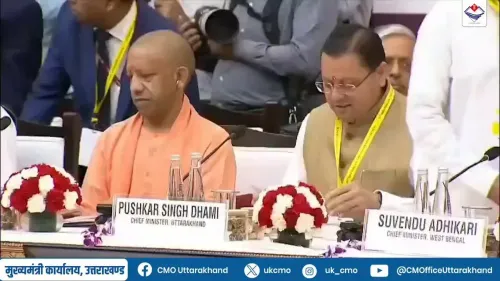
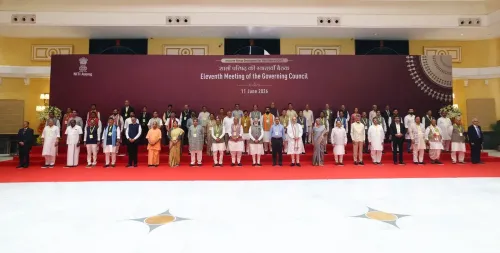
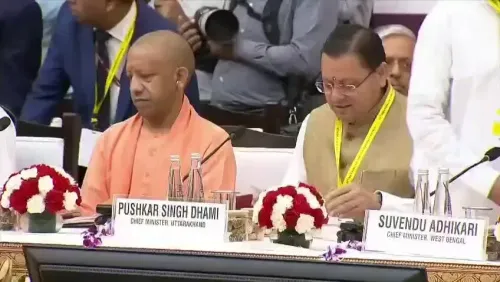
CM Yogi attends NITI Aayog Governing Council's 11th meeting
Synopsis
Chief Minister Yogi Adityanath attended the 11th NITI Aayog Governing Council meeting in New Delhi on 11 June 2026, chaired by Prime Minister Narendra Modi. The apex centre-state forum deliberates on national development priorities, with Uttar Pradesh playing a pivotal role given its size and growth trajectory.
Key Takeaways
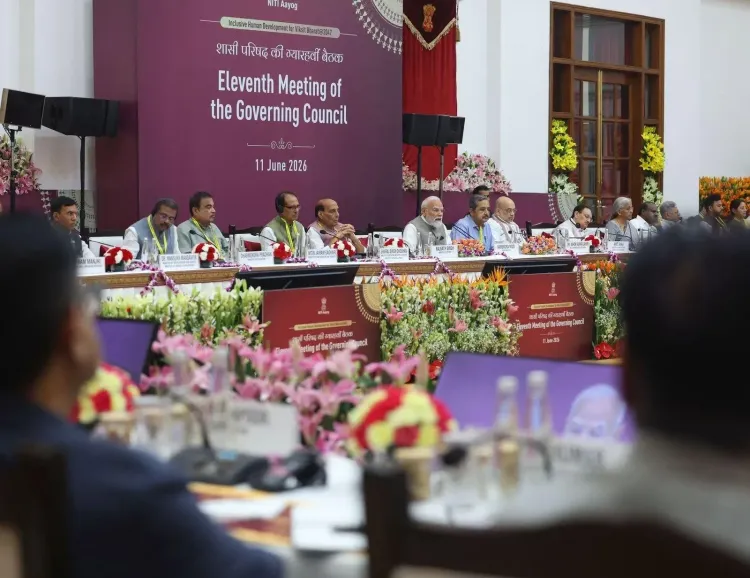
CM Yogi Adityanath attended the 11th NITI Aayog Governing Council meeting in New Delhi on 11 June 2026 .
The meeting was chaired by Prime Minister Narendra Modi , as is standard for all Governing Council sessions.
NITI Aayog was established in January 2015 , replacing the Planning Commission to promote cooperative federalism.
The Governing Council includes all state chief ministers and union territory lieutenant governors as members.
Outcomes from such meetings shape state action plans across sectors including infrastructure, health, and economic growth.
The CMO Uttar Pradesh confirmed the Chief Minister's participation via an official post on X (formerly Twitter) .
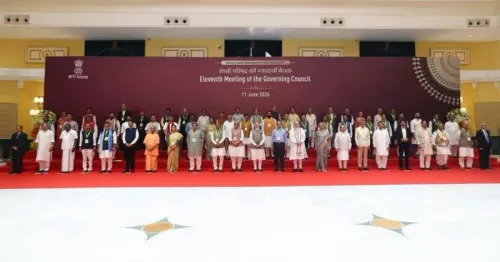
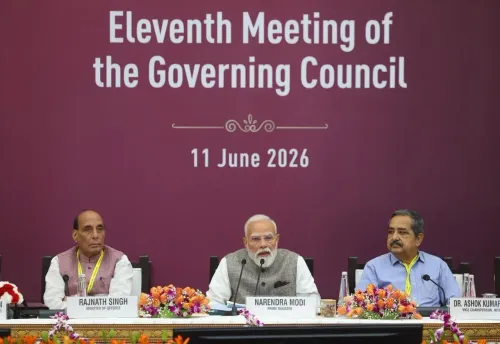
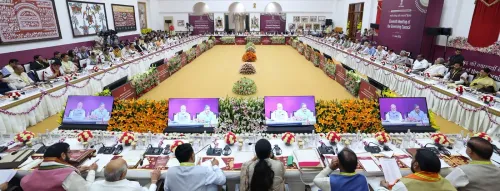
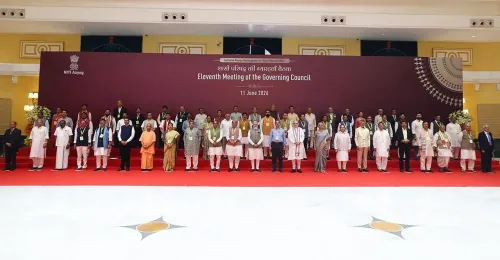
Chief Minister Yogi Adityanath of Uttar Pradesh participated in the 11th meeting of the NITI Aayog Governing Council held in New Delhi on Thursday, 11 June 2026, chaired by Prime Minister Narendra Modi. The Chief Minister's Office of Uttar Pradesh confirmed his attendance at the apex centre-state policy forum, which brings together chief ministers and lieutenant governors from across the country.
Context
The NITI Aayog Governing Council is the highest decision-making body of the National Institution for Transforming India (NITI Aayog), established in January 2015 by a cabinet resolution that replaced the erstwhile Planning Commission. Prime Minister Modi chairs every session, with all state chief ministers and union territory lieutenant governors participating as members. The council serves as India's principal platform for structured dialogue between the Centre and states on development priorities.
The CMO's post in Hindi read: 'माननीय प्रधानमंत्री श्री @narendramodi जी की अध्यक्षता में मुख्यमंत्री @myogiadityanath जी आज नई दिल्ली में आयोजित @NITIAayog की शासी परिषद की 11वीं बैठक में सम्मिलित हुए।' ['Chief Minister Yogi Adityanath participated today in the 11th meeting of the NITI Aayog Governing Council held in New Delhi, under the chairmanship of the honourable Prime Minister Narendra Modi.']
Policy Backdrop
Since its inaugural Governing Council meeting in February 2015, NITI Aayog has used these sessions to align national policy targets with state-level implementation plans across sectors including infrastructure, health, agriculture, and economic growth. The shift from the Planning Commission model was explicitly designed to strengthen cooperative federalism — giving states a more active voice in shaping national programmes rather than receiving top-down directives.
Successive meetings have produced actionable frameworks that states are expected to translate into their own budget allocations and administrative priorities. Uttar Pradesh, as India's most populous state, carries significant weight in any national development calculus, and CM Yogi's participation underscores the state's engagement with central policy architecture.
Stakeholders and Impact
The Governing Council's deliberations directly affect state governments, central ministries, and the citizens who are end-beneficiaries of the schemes and targets discussed. For Uttar Pradesh, outcomes from such meetings can shape the direction of flagship programmes in areas ranging from urban development and road connectivity to health infrastructure and employment generation.
Central policymakers, in turn, rely on chief ministers' inputs to calibrate national targets to ground realities. The presence of CM Yogi — whose administration has positioned UP as a high-growth state in recent years — signals active state-level participation in the federal policy process.
What's Next
The policy recommendations and agenda outcomes emerging from the 11th Governing Council meeting will be closely watched for their potential translation into revised state action plans, new central scheme allocations, or updated development targets. Announcements or communiqués issued after the session are expected to outline priority areas that both the Centre and states have agreed to pursue. How Uttar Pradesh incorporates any new directives into its own governance roadmap will be a key indicator of the meeting's practical impact.
Point of View
Reflecting the state's ambition to be seen as a driver — not merely a recipient — of central development agendas. For the BJP-led government in Lucknow, active participation in NITI Aayog sessions also carries political value: it signals alignment with Prime Minister Modi's cooperative federalism narrative ahead of future electoral cycles. The Governing Council format, by design, gives large states like UP disproportionate influence over agenda outcomes, making Yogi's attendance strategically significant beyond mere protocol. Analysts will watch whether UP-specific priorities — infrastructure investment, industrial corridors, or social sector targets — surface in any post-meeting communiqué.
NationPress
20 Sept 2026
Frequently Asked Questions
What is the NITI Aayog Governing Council?
The NITI Aayog Governing Council is the apex body of the National Institution for Transforming India, comprising the Prime Minister as chairperson and all state chief ministers and union territory lieutenant governors as members. It meets periodically to deliberate on national development priorities and align centre-state policy.
Why did CM Yogi attend the NITI Aayog meeting on 11 June 2026?
CM Yogi Adityanath attended the 11th Governing Council meeting as the Chief Minister of Uttar Pradesh, which is a standing member of the council. The meeting, chaired by PM Modi in New Delhi, is a key forum for states to engage with central policy design and implementation frameworks.
What is the significance of the 11th Governing Council meeting?
The 11th Governing Council meeting continues NITI Aayog's role as India's principal platform for structured centre-state dialogue on development. Outcomes from the session are expected to inform state action plans and central scheme priorities across sectors such as infrastructure, health, and economic growth.
When was NITI Aayog established and why?
NITI Aayog was established in January 2015 by a cabinet resolution, replacing the Planning Commission. The change was intended to strengthen cooperative federalism by giving states a more active role in national policy planning rather than operating under a top-down directive model.
How does the Governing Council affect Uttar Pradesh?
As India's most populous state, Uttar Pradesh has significant stakes in Governing Council outcomes. Policy frameworks agreed at these meetings can shape UP's budget allocations and administrative priorities across flagship programmes in urban development, connectivity, health, and employment.