PM Modi Chairs 11th NITI Aayog Governing Council Meeting
Synopsis
Prime Minister Narendra Modi chaired the 11th meeting of the NITI Aayog Governing Council on June 11, 2026, reaffirming the Centre's commitment to cooperative federalism. The meeting brought together Chief Ministers and Lieutenant Governors to align national development priorities across states.
Key Takeaways
PM Narendra Modi chaired the 11th Governing Council meeting of NITI Aayog on June 11, 2026 .
The Governing Council includes the Prime Minister, Chief Ministers of all states, and Lieutenant Governors of Union Territories.
NITI Aayog was established in January 2015 to replace the Planning Commission and institutionalise cooperative federalism.
The meeting was framed around accelerating India's development journey through joint Centre-State efforts.
Follow-up actions from the meeting are expected to influence state budgets and the design of central schemes.
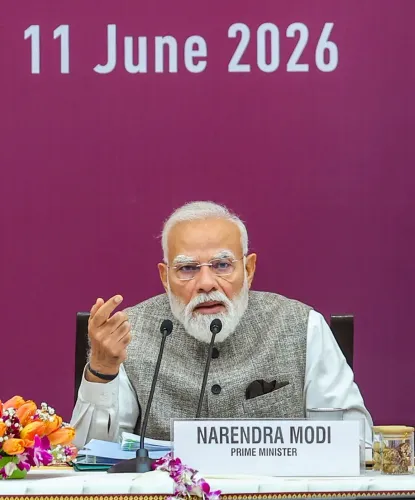
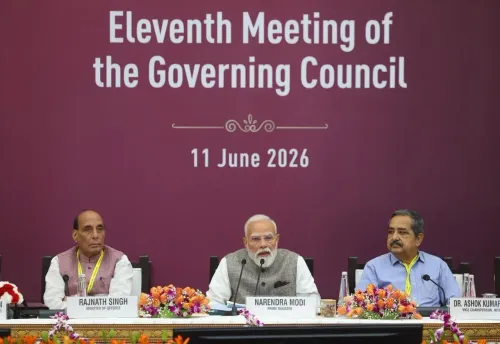
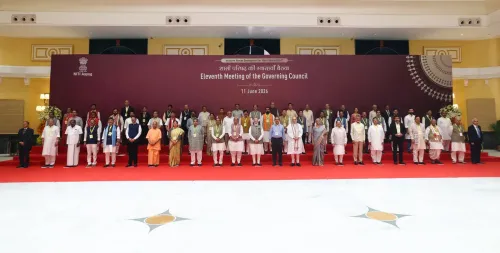
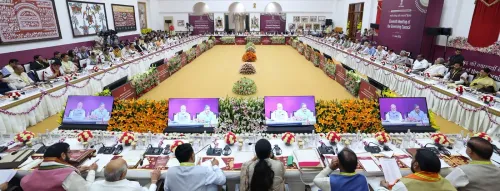
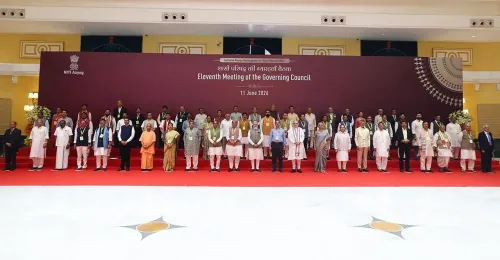
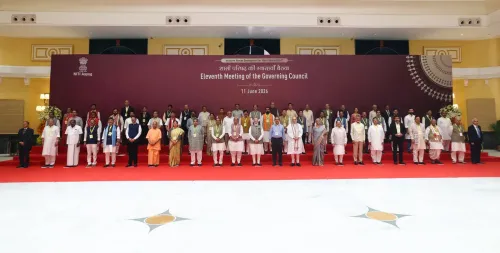
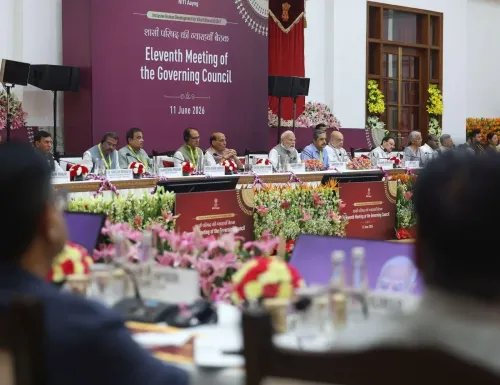
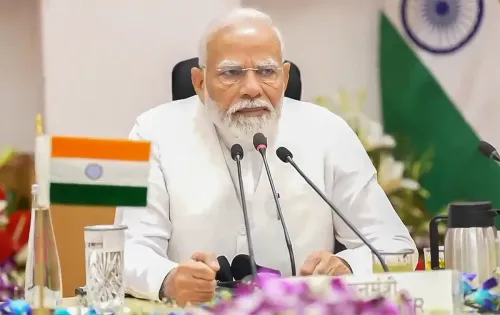
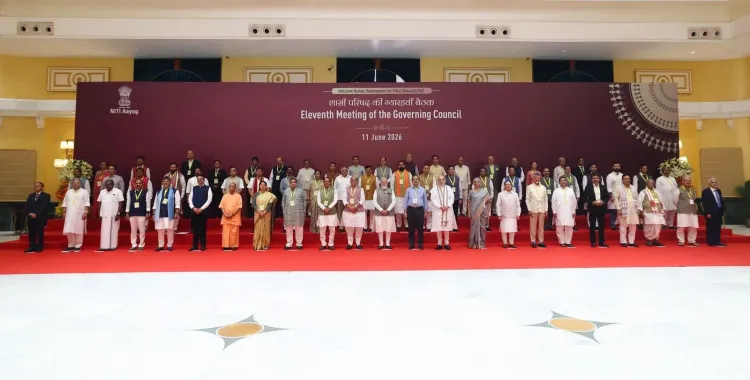
Prime Minister Narendra Modi on Thursday, June 11, 2026, chaired the 11th meeting of the Governing Council of NITI Aayog in New Delhi, bringing together Chief Ministers of all states and Lieutenant Governors of Union Territories to advance India's development agenda through the framework of cooperative federalism.
Posting on X, the Prime Minister said the meeting was 'guided by the spirit of cooperative federalism' and that 'the collective efforts of the Centre and States will play a pivotal role in realising our shared' development goals. The post was accompanied by four images from the meeting.
Context
NITI Aayog's Governing Council is the apex body of the institution, comprising the Prime Minister as Chairperson, Chief Ministers of all states, and Lieutenant Governors of Union Territories. It serves as the highest platform for Centre-State dialogue on national development priorities. The 11th meeting marks a continuation of a series of high-level deliberations that began with the council's first sitting in February 2015.
Policy Backdrop
NITI Aayog — the National Institution for Transforming India — was constituted in January 2015 to replace the erstwhile Planning Commission, which had operated on a top-down model of resource allocation and planning. The transition was designed to institutionalise cooperative federalism, giving states a more active role in shaping national policy rather than being passive recipients of centrally determined plans.
Since 2014, the central government has consistently positioned NITI Aayog as the primary platform for aligning Centre and state priorities across sectors including infrastructure, health, agriculture, and social welfare. Regular Governing Council meetings have been used to set shared goals and review implementation progress across these domains.
Stakeholders and Impact
The Governing Council's deliberations directly affect state governments and central ministries, whose budgetary priorities and scheme rollouts are shaped by the outcomes of these meetings. For states, participation in the council provides a formal channel to raise region-specific concerns and negotiate development priorities at the highest level of government.
The cooperative federalism model championed through NITI Aayog has practical consequences for millions of citizens, as Centre-State coordination determines the pace and reach of flagship programmes in areas ranging from rural development to urban infrastructure. Alignment between central and state governments is considered essential for meeting India's broader economic and social development targets.
What's Next
Attention will now turn to follow-up actions emerging from the 11th Governing Council meeting and how its decisions are reflected in state budgets and the design of central schemes in the coming months. Observers will also watch for any new policy indices, reform templates, or inter-state benchmarking frameworks that NITI Aayog may release in the wake of the meeting. The next scheduled Governing Council sitting and any formal communiqué from the June 11 session will be closely tracked by state administrations and policy analysts alike.
Point of View
Particularly at a time when development delivery is a central electoral narrative. By personally chairing the session and framing it in the language of 'cooperative federalism,' the Prime Minister reinforces a governance identity that distinguishes his administration from the Planning Commission era. The regularity of these meetings also signals an intent to keep state governments institutionally engaged with the Centre's development agenda, reducing friction on scheme implementation. How substantively the council's outcomes translate into state-level action remains the key test of the model's effectiveness.
NationPress
13 Sept 2026
Frequently Asked Questions
What is the NITI Aayog Governing Council?
The NITI Aayog Governing Council is the apex body of NITI Aayog, chaired by the Prime Minister and comprising Chief Ministers of all states and Lieutenant Governors of Union Territories. It meets periodically to align national development priorities between the Centre and states.
When was the 11th NITI Aayog Governing Council meeting held?
The 11th meeting of the NITI Aayog Governing Council was held on Thursday, June 11, 2026 , and was chaired by Prime Minister Narendra Modi.
What is cooperative federalism in the context of NITI Aayog?
Cooperative federalism, as practised through NITI Aayog, refers to a governance model in which the Centre and states jointly plan and implement development priorities rather than the Centre dictating policy to states, as was the case under the old Planning Commission.
Why was NITI Aayog created?
NITI Aayog was constituted in January 2015 to replace the Planning Commission, which operated on a top-down approach. The new body was designed to give states a more active role in national development planning and to promote collaborative goal-setting between the Centre and state governments.
Who attends NITI Aayog Governing Council meetings?
Governing Council meetings are attended by the Prime Minister, who chairs the body, along with Chief Ministers of all Indian states and Lieutenant Governors of Union Territories, making it the broadest formal Centre-State policy dialogue platform in the country.