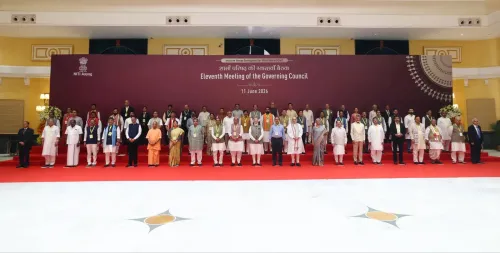
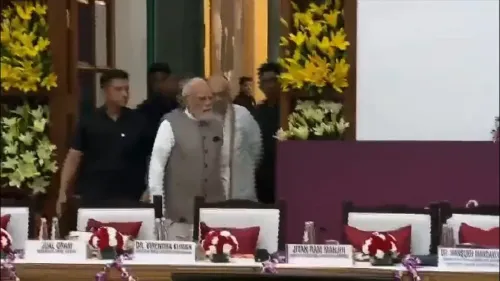
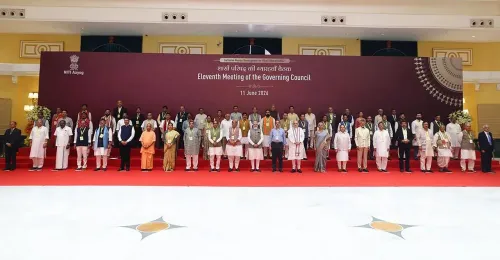
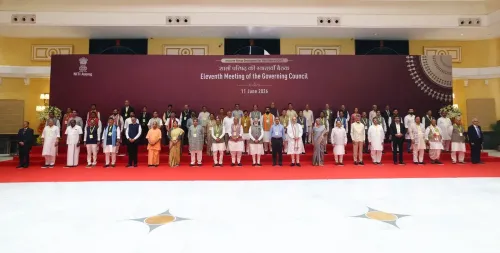
Lalan Singh attends NITI Aayog Governing Council meet chaired by PM Modi
Synopsis
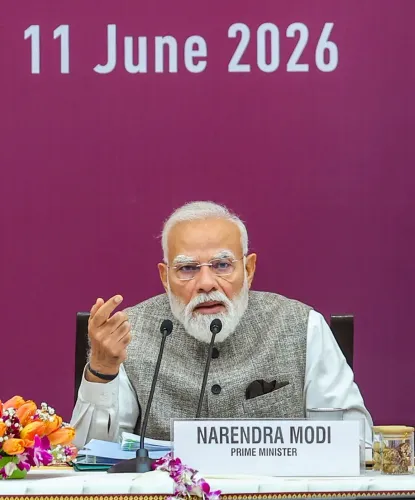
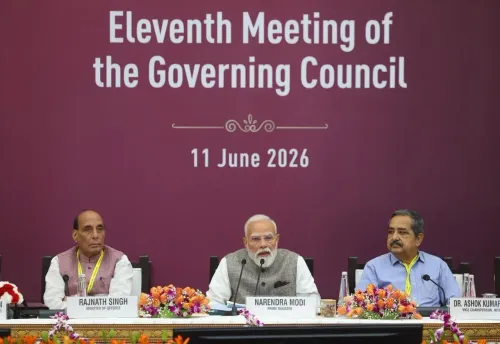
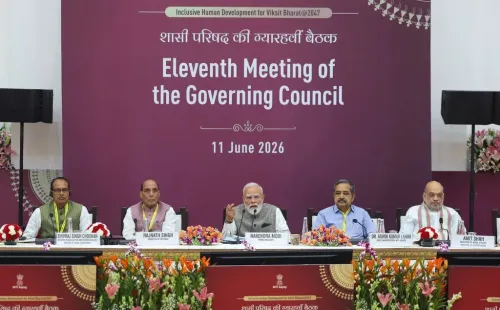
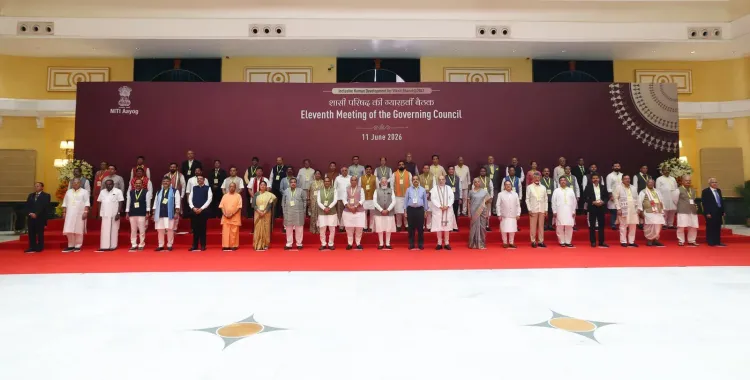
Union Minister Lalan Singh attended the 11th NITI Aayog Governing Council Meeting in New Delhi on June 11, 2026, chaired by PM Narendra Modi. Discussions centred on strengthening cooperative federalism and advancing the Viksit Bharat@2047 vision through inclusive and sustainable development.
Key Takeaways
Rajiv Ranjan Singh (Lalan Singh), Union Minister for Panchayati Raj and Fisheries, attended the 11th NITI Aayog Governing Council Meeting on June 11, 2026 .
The meeting was held in New Delhi and chaired by Prime Minister Narendra Modi .
Discussions focused on cooperative federalism and the Viksit Bharat@2047 development roadmap.
NITI Aayog was established on 1 January 2015 , replacing the Planning Commission to promote bottom-up policy coordination between the Centre and states.
Singh's presence highlights the role of Panchayati Raj institutions and rural delivery mechanisms in achieving national development goals.
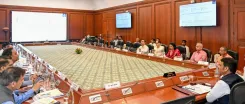
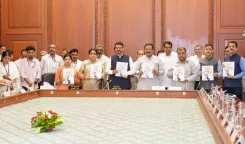
Union Panchayati Raj and Fisheries Minister Rajiv Ranjan Singh, popularly known as Lalan Singh, attended the 11th Governing Council Meeting of NITI Aayog in New Delhi on Thursday, June 11, 2026, chaired by Prime Minister Narendra Modi. The minister said the gathering involved 'meaningful discussions on strengthening cooperative federalism and advancing the vision of Viksit Bharat through inclusive and sustainable development.'
Context
NITI Aayog's Governing Council is the apex body that brings together the Prime Minister, Union Ministers, and Chief Ministers of all states and Union Territories to align on national development priorities. It was constituted on 1 January 2015 when the government replaced the Planning Commission with NITI Aayog to foster a bottom-up, cooperative model of federalism rather than a top-down planning approach. The first Governing Council meeting was held in February 2015, with subsequent meetings convened periodically under the Prime Minister's chairmanship.
Singh's attendance underscores the centrality of rural governance institutions to the national development agenda. As the minister overseeing Panchayati Raj, his presence at the council signals the government's intent to anchor grassroots delivery mechanisms within the broader Viksit Bharat framework.
Policy Backdrop
The Viksit Bharat@2047 vision — articulated by Prime Minister Modi to make India a fully developed economy by the centenary of independence — forms the overarching theme of recent Governing Council deliberations. NITI Aayog has been tasked with coordinating state-level action plans, evidence-based policy reforms, and the localisation of Sustainable Development Goals (SDGs) to translate this national ambition into measurable outcomes.
Successive Governing Council meetings have emphasised state-specific reforms, competitive cooperative federalism, and the use of data dashboards to track progress. The ministry of Panchayati Raj plays a direct role in this architecture, as Gram Panchayats are the primary implementation units for centrally sponsored schemes in rural India covering health, sanitation, roads, and livelihoods.
Stakeholders and Impact
The meeting's outcomes are of direct consequence to state governments, panchayati raj institutions, and communities dependent on agriculture, fisheries, and animal husbandry — all sectors under Singh's ministerial charge. Cooperative federalism, as envisioned through NITI Aayog, requires states to align their budgets and programme delivery with national targets while retaining flexibility to address local contexts.
For sectors like fisheries and animal husbandry, which involve millions of small and marginal producers, Governing Council discussions on inclusive development carry implications for scheme design, fund devolution, and inter-ministerial coordination. Singh's dual role as a JD(U) leader from Bihar — a state with a large rural population — also lends a political dimension to his engagement with cooperative federalism debates.
What's Next
Attention will now turn to the follow-up action points emerging from the 11th Governing Council Meeting, including any new working groups, state-level Viksit Bharat dashboards, or inter-ministerial task forces that may be constituted. The NITI Aayog typically publishes summaries or action-taken reports after such high-level conclaves, which will clarify the specific commitments made by states and Union Ministries.
For Singh's ministries, the meeting may catalyse fresh policy coordination between the Centre and states on rural local body financing and the integration of fisheries and dairy value chains into the Viksit Bharat roadmap.
Point of View
Singh's visible presence at such high-profile conclaves reinforces both his ministerial standing and the NDA alliance's cohesion ahead of state-level electoral cycles. The emphasis on cooperative federalism also reflects an ongoing tension in Centre-state relations, where states seek greater fiscal autonomy while the Centre pushes for convergence on national targets. How the follow-up action points translate into actual fund flows and scheme reforms for Panchayati Raj and fisheries will be the real test of the meeting's substance.
NationPress
26 Oct 2026
Frequently Asked Questions
What is the NITI Aayog Governing Council?
The NITI Aayog Governing Council is the apex body of NITI Aayog, comprising the Prime Minister as chairperson along with Union Ministers and Chief Ministers of all states and Union Territories, convened to align national and state-level development priorities.
What is Viksit Bharat@2047?
Viksit Bharat@2047 is the Indian government's long-term vision to make India a fully developed economy by 2047, the centenary of independence, with targets spanning infrastructure, health, education, and economic growth coordinated through NITI Aayog.
What is cooperative federalism in India?
Cooperative federalism refers to a model of governance where the central and state governments work collaboratively rather than in a hierarchical manner; NITI Aayog was created in 2015 specifically to institutionalise this approach by replacing the top-down Planning Commission.
When was NITI Aayog established?
NITI Aayog was established on 1 January 2015 by the government of Prime Minister Narendra Modi to replace the Planning Commission and serve as a policy think-tank promoting evidence-based, bottom-up development planning.