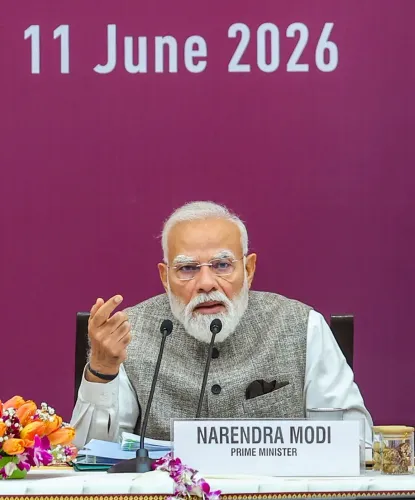
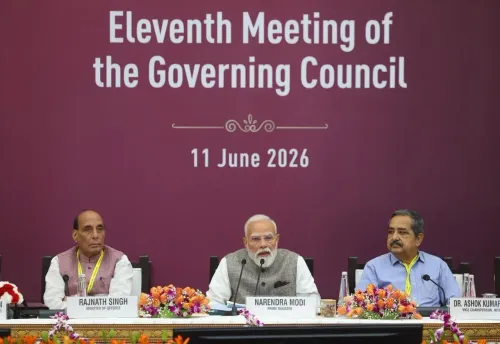
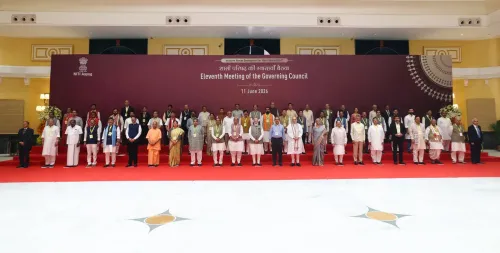
Shivraj Singh Chouhan at NITI Aayog's 11th Governing Council Meet
Synopsis
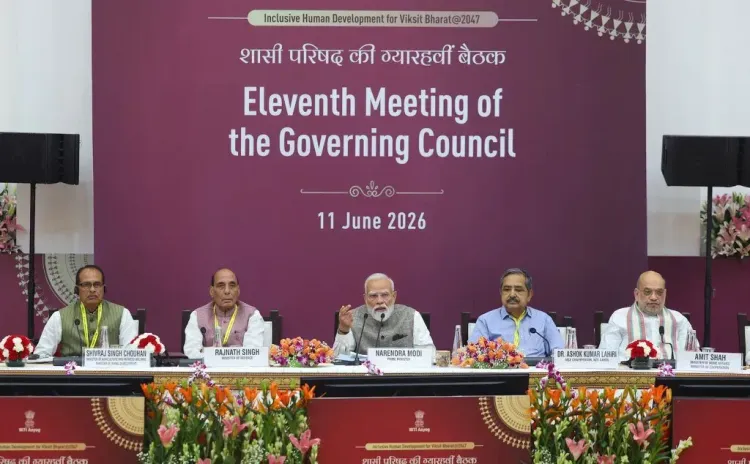
Union Agriculture Minister Shivraj Singh Chouhan attended the 11th NITI Aayog Governing Council meeting in New Delhi on June 11, 2026, chaired by PM Modi. He reaffirmed India's march toward Viksit Bharat 2047 through cooperative centre-state governance under the 'Sabka Saath, Sabka Vikas' framework.
Key Takeaways
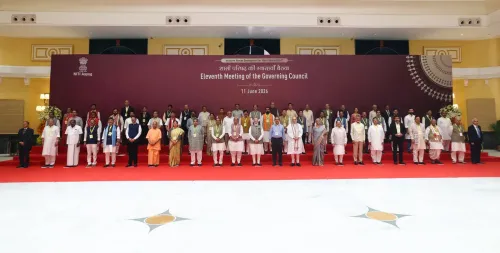
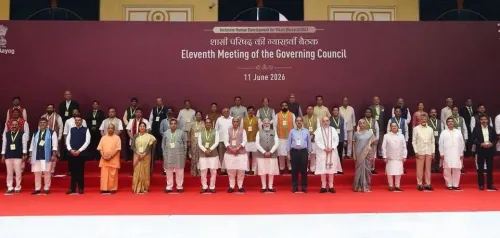
Shivraj Singh Chouhan participated in the 11th NITI Aayog Governing Council meeting in New Delhi on June 11, 2026 .
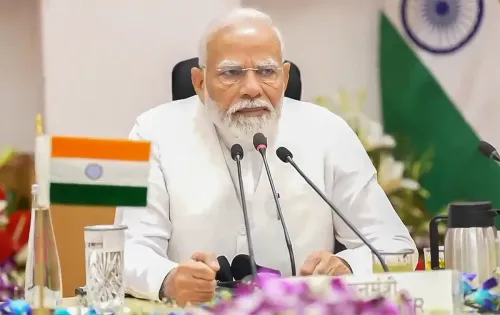
The meeting was chaired by Prime Minister Narendra Modi , as per the Governing Council's constitutional structure.
Chouhan reaffirmed India's commitment to the Viksit Bharat 2047 vision — making India a developed nation by the centenary of its independence.
The post emphasised coordinated action between central and state governments on good governance, public welfare, and self-reliance.
NITI Aayog was established in January 2015 to institutionalise cooperative federalism, replacing the Planning Commission.
As minister holding both Agriculture and Rural Development portfolios, Chouhan's presence underlines the rural economy's centrality to national development planning.
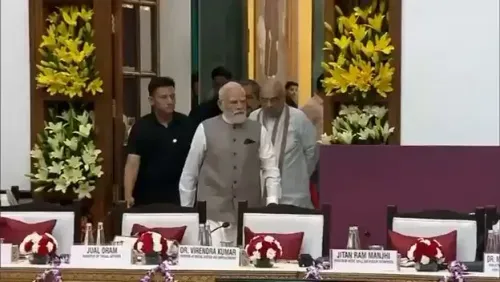
Union Agriculture Minister Shivraj Singh Chouhan participated in the 11th meeting of the NITI Aayog Governing Council in New Delhi on Thursday, June 11, 2026, chaired by Prime Minister Narendra Modi. The meeting brought together Chief Ministers and Lieutenant Governors from across the country to advance the shared national development agenda.
Context
Chouhan posted on X, stating that he attended the meeting held under the chairmanship of Pradhan Mantri Shri Narendra Modi ji (Prime Minister Narendra Modi). He noted that India is steadily advancing toward the resolution of Viksit Bharat 2047 — the vision of a developed India by the centenary of its independence — guided by the spirit of 'Sabka Saath, Sabka Vikas' ('Together with all, development for all'). He added that both central and state governments are working in full coordination with the resolve of good governance, public welfare, and self-reliance.
Policy Backdrop
NITI Aayog, established in January 2015 to replace the Planning Commission, was designed to institutionalise cooperative federalism by making state governments active participants in national policymaking rather than passive recipients of centrally allocated funds. Its Governing Council — the apex decision-making body — comprises the Prime Minister as chairperson, all state Chief Ministers, and Lieutenant Governors of Union Territories.
The Viksit Bharat 2047 framework, formally articulated by PM Modi in his Independence Day address in 2023, envisions India achieving developed-nation status by 2047, the centenary of independence. Governing Council meetings have consistently been used to align state and central schemes with this overarching goal, covering sectors from agriculture and rural development to infrastructure and digital governance.
The principle of 'Sabka Saath, Sabka Vikas' — inclusive development without exclusion — has been a defining political and policy slogan of the BJP-led government since 2014, underpinning welfare delivery, direct benefit transfers, and rural outreach programmes.
Stakeholders and Impact
As Union Minister holding charge of both Agriculture and Farmers Welfare and Rural Development, Chouhan's presence at the Governing Council carries particular significance for the rural economy, which accounts for a large share of India's workforce. His participation signals that agriculture and rural welfare concerns are being integrated into the broader Viksit Bharat planning process.
State governments are the primary stakeholders in these deliberations, as the Governing Council format requires them to coordinate with central ministries on scheme implementation, budget alignment, and governance benchmarks. The emphasis on tanmayata (wholehearted dedication) in Chouhan's post reflects the centre's stated expectation of seamless centre-state convergence.
What's Next
Attention will now turn to state-level follow-up on any resolutions or priority areas identified at the 11th Governing Council meeting. Observers will watch for their reflection in upcoming Union and state budget cycles, as well as in parliamentary deliberations on governance and welfare legislation. With Chouhan's dual portfolio spanning agriculture and rural development, any directives touching farm-sector financing or village-level infrastructure are likely to surface in policy communications in the weeks ahead.
The meeting reinforces the Modi government's established pattern of using NITI Aayog as a platform to project centre-state unity on long-horizon national goals — a dynamic that will intensify as 2047 targets begin to be translated into mid-term benchmarks.
Point of View
And a senior minister's public endorsement reinforces the message of centre-state unity ahead of budget season. For Chouhan specifically, associating his twin portfolios of agriculture and rural development with the Viksit Bharat 2047 arc helps frame sectoral welfare spending as part of a larger national mission rather than isolated beneficiary schemes. The emphasis on 'wholehearted' joint effort also subtly raises the political bar for states — including opposition-governed ones — to visibly participate in the shared agenda.
NationPress
19 Sept 2026
Frequently Asked Questions
What is the NITI Aayog Governing Council?
The NITI Aayog Governing Council is the apex body of NITI Aayog, comprising the Prime Minister as chairperson, all state Chief Ministers, and Lieutenant Governors of Union Territories. It meets periodically to align state and central priorities on national development goals.
What is Viksit Bharat 2047?
Viksit Bharat 2047 is PM Modi's vision to make India a fully developed nation by 2047, the centenary of Indian independence. It was formally articulated in his Independence Day address in 2023 and has since become a guiding framework for central and state planning.
What did Shivraj Singh Chouhan say at the NITI Aayog meeting?
Chouhan stated that India is steadily advancing toward Viksit Bharat 2047 under PM Modi's leadership, guided by the spirit of 'Sabka Saath, Sabka Vikas', and that central and state governments are working in full coordination on good governance, public welfare, and self-reliance.
Why is NITI Aayog important for India's development?
NITI Aayog replaced the Planning Commission in 2015 to shift from top-down central planning to cooperative federalism, giving states an active role in national policymaking. Its Governing Council meetings are a key mechanism for coordinating implementation of welfare and development schemes across all states.
What is Shivraj Singh Chouhan's current role in the central government?
Shivraj Singh Chouhan currently serves as Union Minister of Agriculture and Farmers Welfare and Rural Development. He is a senior BJP leader and former four-term Chief Minister of Madhya Pradesh.