All 28 state CMs attend NITI Aayog Governing Council meet for first time
Synopsis
For the first time since NITI Aayog's Governing Council was formed, all 28 Chief Ministers showed up in the same room. PM Modi used the moment to lay out a federal compact for Viksit Bharat@2047 — from scaling Lakhpati Didis to 6 crore, to pushing states into defence manufacturing and AI readiness. Full attendance is rare; whether it signals real alignment or ceremonial unity is the question that follows every such gathering.
Key Takeaways
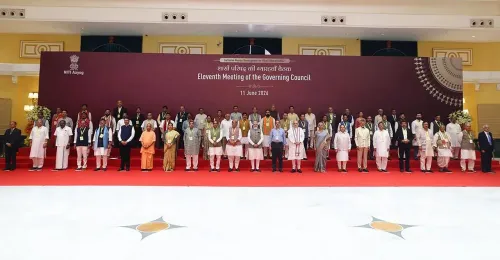
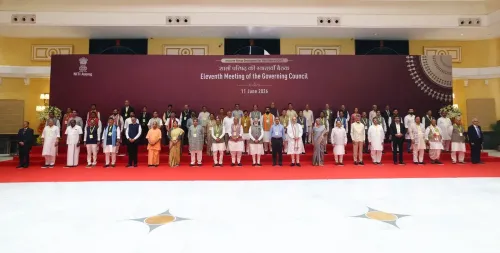
The 11th NITI Aayog Governing Council Meeting on 11 June saw all 28 state Chief Ministers attend — a first in the council's history.
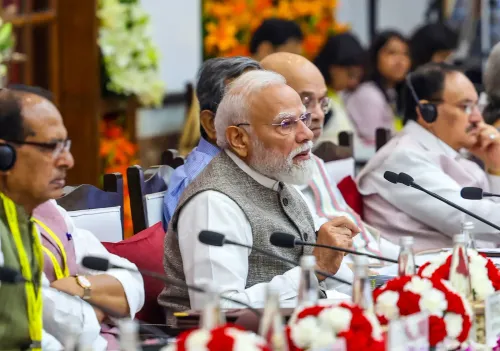
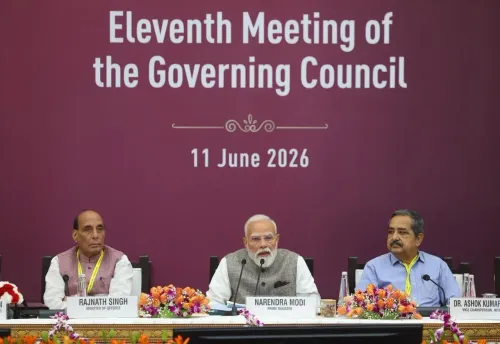
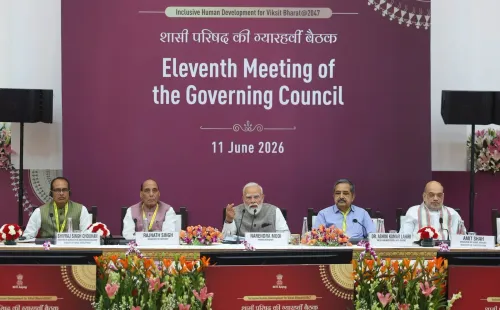
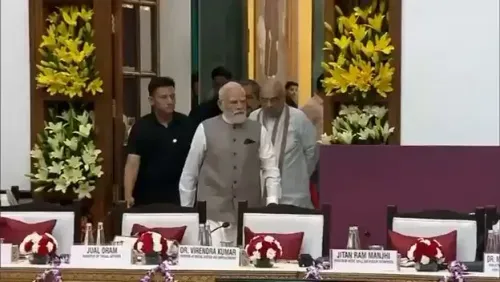
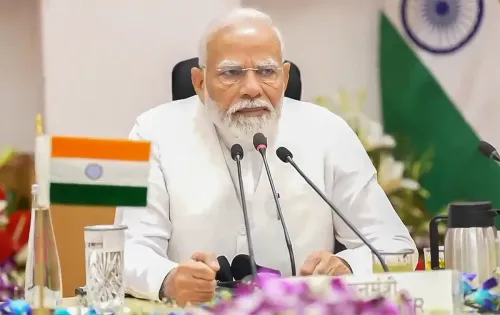
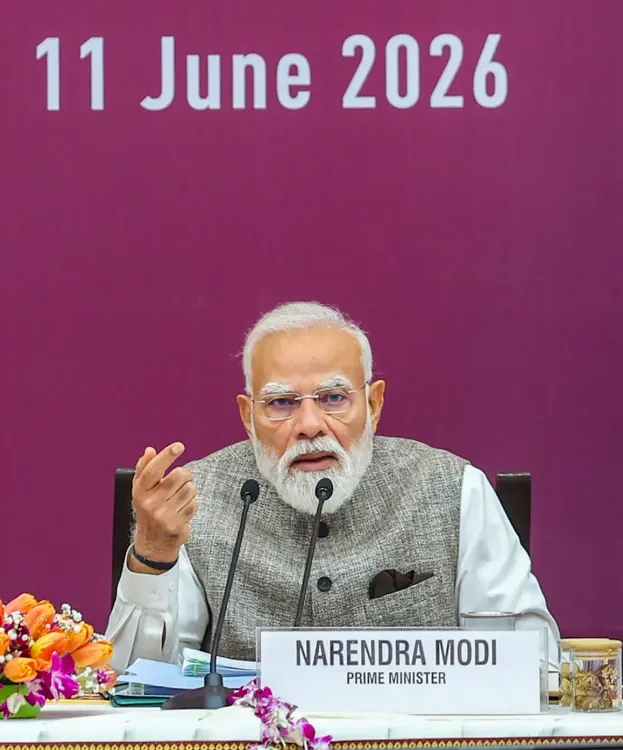
PM Narendra Modi chaired the meeting at the Rashtrapati Bhavan Cultural Centre, New Delhi , under the theme 'Inclusive Human Development for Viksit Bharat@2047' .
Modi called for scaling Lakhpati Didis from 3 crore to 6 crore and leveraging India's trade agreements for youth and MSME opportunities.
The PM highlighted India's demographic advantage — nearly 70 crore Indians are under the age of 25 — urging states to invest in skilling and education.
States were asked to set clear 100-day and five-year targets aligned with the Viksit Bharat@2047 vision.
Priority areas included renewable energy , ODOP , defence manufacturing , water conservation , AI , and tackling cyber fraud and drug abuse .
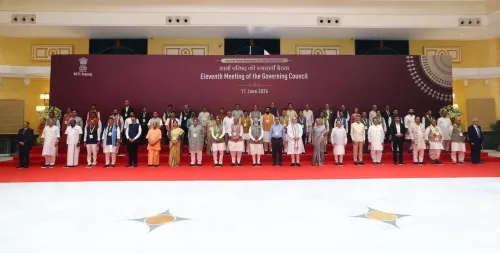
In a historic first since the body's inception, all 28 states and five Union Territories were represented at the 11th Governing Council Meeting of NITI Aayog on 11 June in New Delhi, with Chief Ministers from every state attending in person. The meeting, chaired by Prime Minister Narendra Modi at the Rashtrapati Bhavan Cultural Centre, was held under the theme 'Inclusive Human Development for Viksit Bharat@2047'.
A Landmark for Cooperative Federalism
Lieutenant Governors and Administrators of Union Territories joined Chief Ministers in the deliberations, making it one of the most representative assemblies of India's federal leadership on record. PM Modi described the full participation as a significant step toward strengthening cooperative federalism, asserting that the vision of a developed India by 2047 can only be realised through close collaboration between the Centre and the states.
He underscored that the Viksit Bharat goal must become a collective resolve — extending from states and districts down to blocks and villages. Notably, this is the first time in the council's history that no state sent a representative in place of its Chief Minister.
Key Priorities Outlined by PM Modi
The Prime Minister spotlighted India's economic resilience amid global uncertainties, stressing greater self-reliance and the adoption of global best practices, particularly in renewable energy. He drew attention to India's demographic advantage, noting that nearly 70 crore Indians are below the age of 25, and called on states to convert this demographic dividend into a development dividend through education, skilling, and capacity-building.
Modi urged states to leverage India's recent trade agreements by creating opportunities for youth and MSMEs and attracting investments from partner countries. He also stressed the importance of women-led development, calling on states to help scale the number of Lakhpati Didis from 3 crore to 6 crore.
Governance, Infrastructure and Emerging Sectors
The Prime Minister pushed states to promote One District One Product (ODOP) initiatives and explore opportunities in defence manufacturing. He also flagged the need to tackle drug abuse and cyber fraud as governance priorities.
On infrastructure and investment readiness, Modi called for a focus on ease of doing business, data centres, and artificial intelligence, while equipping citizens with future-ready skills. He emphasised water conservation, natural farming, and district-level monitoring of development indicators.
Targets and the Road Ahead
The Prime Minister called for clear 100-day and five-year targets at the state level to advance the Viksit Bharat@2047 vision. The full attendance at this council meeting signals a rare political consensus on the federal development agenda, even as individual states continue to differ with the Centre on fiscal devolution and resource allocation. Whether the convergence in the room translates into convergence on the ground will be the defining test of this gathering.
Point of View
But symbols do not resolve structural tensions. States that have publicly contested the Centre's fiscal devolution formula — particularly in the south — were present in the room, yet their grievances do not disappear with a photo opportunity. The real measure of this meeting will be whether the 100-day and five-year targets Modi called for are jointly owned or unilaterally handed down. Cooperative federalism works when both sides of the compact have a say in the design; a council chaired by the Prime Minister, with an agenda set by the Centre, is a start — not a settlement.
NationPress
26 Oct 2026
Frequently Asked Questions
What is the NITI Aayog Governing Council meeting?
The NITI Aayog Governing Council is the apex body of NITI Aayog, comprising the Prime Minister as chairperson, all state Chief Ministers, and Lieutenant Governors of Union Territories. It meets periodically to deliberate on national development priorities and the Centre-state development partnership.
Why is full attendance at the 11th Governing Council meeting significant?
All 28 state Chief Ministers attended the 11th meeting on 11 June — the first time every state has been represented at this level since the council's formation. Previous meetings saw some opposition-ruled states boycott or send deputies instead of Chief Ministers.
What is the Viksit Bharat@2047 vision discussed at the meeting?
Viksit Bharat@2047 is the government's goal of making India a developed nation by the centenary of its independence. PM Modi called on states to set 100-day and five-year targets and align local governance — from districts to villages — with this national vision.
What did PM Modi say about Lakhpati Didis at the meeting?
PM Modi urged states to help increase the number of Lakhpati Didis — women earning over ₹1 lakh annually through self-help group enterprises — from the current 3 crore to 6 crore, framing it as a core pillar of women-led development.
Which sectors did PM Modi ask states to focus on?
Modi highlighted renewable energy, defence manufacturing, One District One Product (ODOP) initiatives, data centres, and artificial intelligence as priority sectors. He also stressed water conservation, natural farming, ease of doing business, and combating cyber fraud and drug abuse.