PM Modi at NITI Aayog: Turn demographic dividend into development dividend
Synopsis
For the first time, Chief Ministers of all 28 states sat together at a NITI Aayog Governing Council meeting — and Modi used the moment to frame India's 70-crore-strong youth population as the defining variable in the Viksit Bharat 2047 equation, pushing states to go beyond policy optics and build verifiable skilling and education outcomes.
Key Takeaways
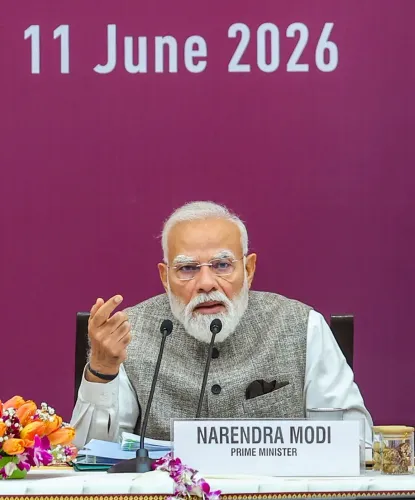
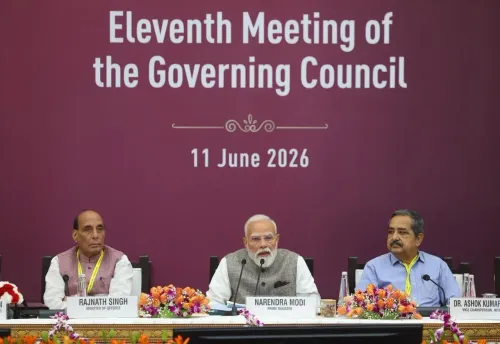
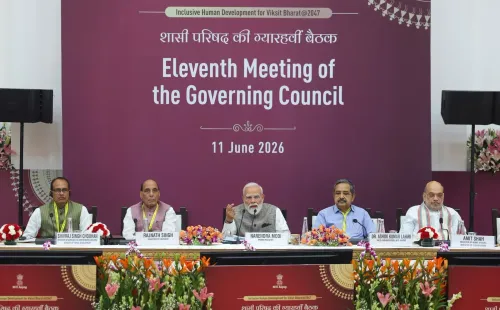
PM Narendra Modi chaired the 11th NITI Aayog Governing Council Meeting on 11 June in New Delhi .
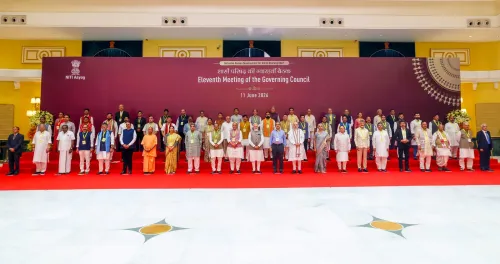
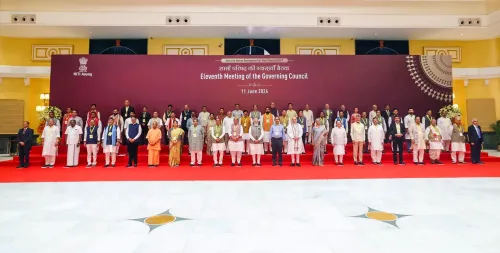
For the first time, Chief Ministers of all 28 states and representatives of 5 Union Territories attended the meeting.
Modi highlighted that nearly 70 crore Indians are below the age of 25 , calling them the country's greatest asset.
He urged states to invest in education, skilling, and capacity-building to convert demographic strength into economic outcomes.
Modi called on states to leverage India's recent trade agreements to create opportunities for youth and MSMEs .
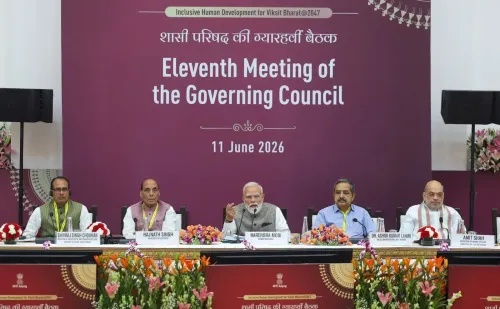
The meeting was held under the theme 'Inclusive Human Development for Viksit Bharat@2047' .
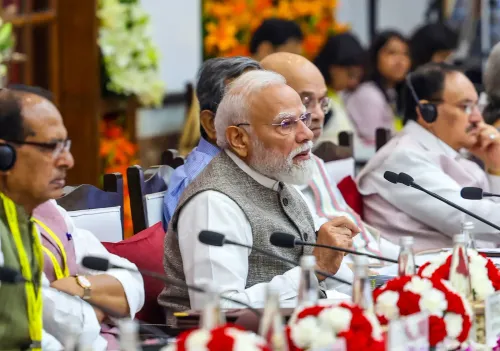
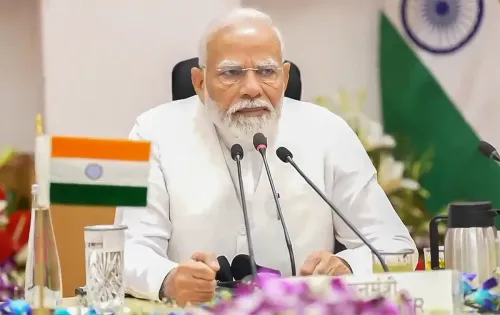
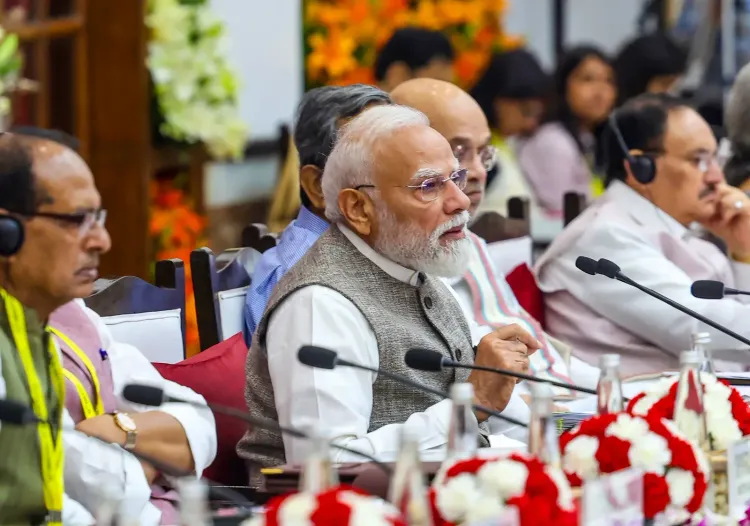
Prime Minister Narendra Modi on Thursday, 11 June called on states to convert India's demographic dividend into a 'development dividend' by channelling sustained investments into education, skilling, and capacity-building for the country's youth, as he chaired the 11th Governing Council Meeting of NITI Aayog in New Delhi. The meeting, held under the theme 'Inclusive Human Development for Viksit Bharat@2047', was attended by Chief Ministers, Lieutenant Governors, and Administrators from all 28 states and five Union Territories.
Historic Turnout at the Governing Council
The session marked a first in NITI Aayog's history: Chief Ministers of all 28 states attended a Governing Council meeting simultaneously. The full-house attendance signals a rare moment of political convergence around the Centre's long-term development agenda, even as India's federal landscape remains contested on several policy fronts.
Youth as India's Biggest Strength
Modi underscored that nearly 70 crore Indians are below the age of 25, describing this demographic profile as the country's single greatest asset. He called for coordinated action by the Centre and states to harness this potential as the bedrock of the Viksit Bharat by 2047 vision. The Prime Minister stressed that the goal of a developed India must cascade from national policy down to every state, district, block, and village.
Global Context and Self-Reliance
Modi noted that while several major economies are grappling with uncertainty and slowdown, India's growth trajectory continues to attract global attention. He urged states to strengthen self-reliance and adopt international best practices, particularly in renewable energy. The emphasis on self-reliance aligns with the Centre's broader push under its 'Aatmanirbhar Bharat' framework, now being extended to subnational implementation.
Trade Agreements and MSME Opportunities
Referring to India's recent trade agreements with multiple countries, Modi called on states to proactively create opportunities for youth and micro, small and medium enterprises (MSMEs). He urged state governments to equip local stakeholders to benefit from these pacts and to actively attract investments from partner nations — a clear signal that the Centre expects states to function as active economic diplomacy partners, not passive recipients of central policy.
Cooperative Federalism at the Core
The Prime Minister reiterated that cooperative federalism is indispensable to achieving Viksit Bharat. He framed the Centre-state relationship not as hierarchical but as a shared mission, with the NITI Aayog Governing Council serving as the apex platform for that collaboration. The next steps will likely involve state-level action plans aligned to the human development benchmarks discussed at the meeting.
Point of View
And the Centre will be keen to leverage it as proof of federal buy-in for Viksit Bharat. Yet attendance and alignment are different things: several states attending have publicly contested Centre-state resource-sharing formulas, and no governing council meeting has yet produced a binding state-level accountability framework for skilling outcomes. Modi's framing of 70 crore youth as a 'dividend' is rhetorically powerful, but India's skilling infrastructure — from ITIs to apprenticeship pipelines — remains chronically under-resourced relative to the scale of that demographic. The real test of Thursday's meeting will not be the communiqué it produces, but whether it triggers measurable state-level budget shifts toward human capital in the next fiscal cycle.
NationPress
26 Oct 2026
Frequently Asked Questions
What was the 11th NITI Aayog Governing Council Meeting about?
The 11th Governing Council Meeting of NITI Aayog, chaired by Prime Minister Narendra Modi on 11 June, focused on 'Inclusive Human Development for Viksit Bharat@2047'. It centred on converting India's large youth population into an economic asset through education, skilling, and capacity-building, with participation from all 28 states and 5 Union Territories.
Why was this NITI Aayog meeting considered historic?
It was the first time that Chief Ministers of all 28 states attended a NITI Aayog Governing Council meeting together, marking an unprecedented show of federal participation in the Centre's long-term development planning process.
What did PM Modi say about India's demographic dividend?
Modi noted that nearly 70 crore Indians are below the age of 25 and described this as the country's biggest strength. He urged states to transform this demographic dividend into a development dividend through sustained investment in education, skill development, and capacity-building programmes.
How do India's trade agreements connect to the NITI Aayog meeting?
PM Modi called on states to use India's recently concluded trade agreements to generate opportunities for youth and MSMEs. He urged state governments to prepare local stakeholders to benefit from these pacts and to attract investments from partner nations, positioning states as active participants in India's economic diplomacy.
What is the Viksit Bharat 2047 vision?
Viksit Bharat@2047 is the Indian government's overarching goal of transforming India into a fully developed nation by the centenary of its independence in 2047. PM Modi has framed it as a collective mission that must extend from national policy to every state, district, block, and village.