Pradhan attends 11th NITI Aayog Governing Council meet
Synopsis
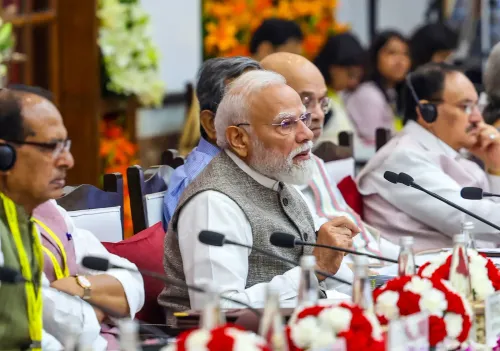
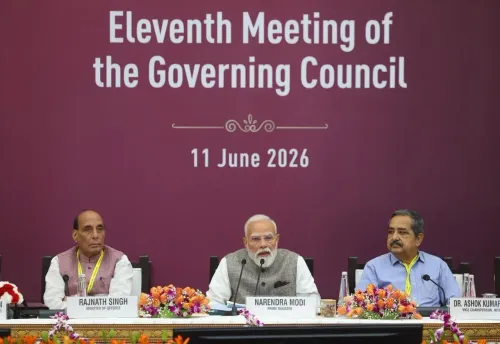
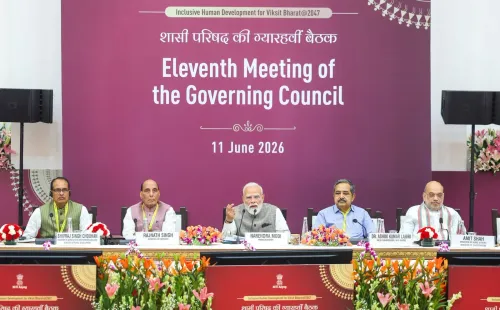
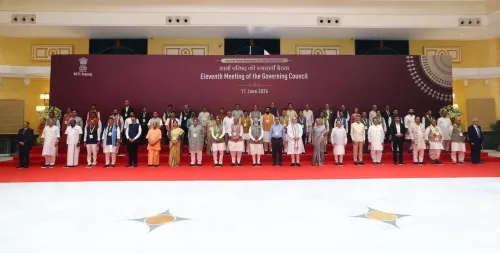
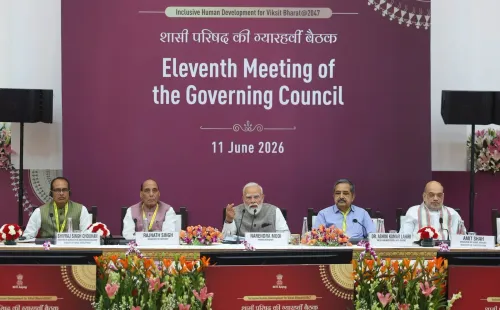
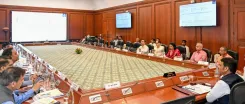
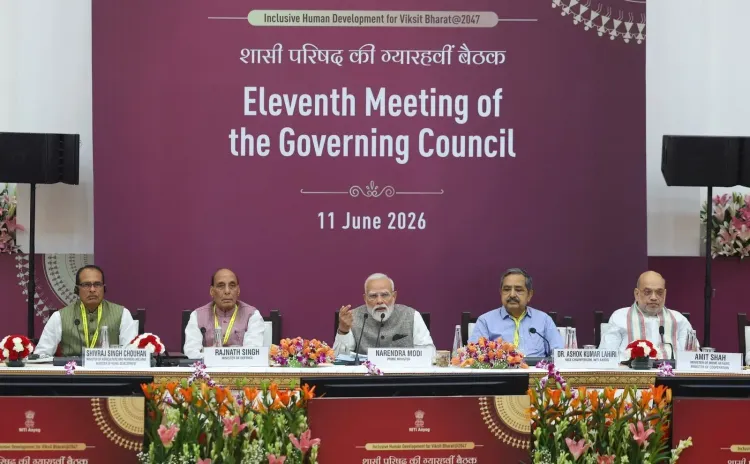
Union Education Minister Dharmendra Pradhan attended the 11th NITI Aayog Governing Council meeting chaired by PM Narendra Modi on June 11, 2026. Discussions centred on strengthening human capital and advancing the Viksit Bharat@2047 vision of making India a developed nation by the centenary of independence.
Key Takeaways
Union Education Minister Dharmendra Pradhan attended the 11th NITI Aayog Governing Council meeting on June 11, 2026 .
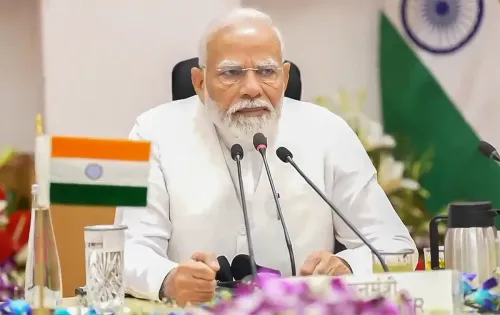
The meeting was chaired by Prime Minister Narendra Modi , who heads the Governing Council.
Discussions focused on strengthening human capital and accelerating India's development journey.
NITI Aayog was established in January 2015 to replace the Planning Commission and promote cooperative federalism.
The Viksit Bharat@2047 vision aims to make India a developed nation by the 100th anniversary of independence .
NEP 2020 and national skilling programmes remain core instruments for achieving the human capital targets discussed at such forums.
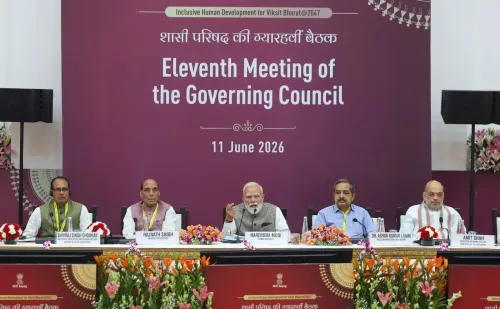
Union Education Minister Dharmendra Pradhan attended the 11th meeting of the Governing Council of NITI Aayog on Thursday, June 11, 2026, chaired by Prime Minister Narendra Modi. The meeting brought together central ministers and chief ministers to deliberate on strengthening human capital and accelerating India's development trajectory under the Viksit Bharat@2047 vision.
Context
Pradhan described the discussions as 'insightful', noting a 'shared commitment towards achieving the vision of Viksit Bharat@2047' — the government's overarching goal of transforming India into a developed nation by the centenary of its independence. The minister's attendance underscores the Education Ministry's central role in the human capital agenda that sits at the heart of this long-term development blueprint.
NITI Aayog's Governing Council is the apex body for cooperative federalism, comprising the Prime Minister as chairperson, all chief ministers, lieutenant governors of Union Territories, and key central ministers. Its meetings serve as the primary forum for aligning state and central government priorities on economic and social policy.
Policy Backdrop
NITI Aayog was constituted in January 2015, replacing the Planning Commission with a mandate to promote bottom-up, collaborative policy-making rather than top-down directive planning. The first Governing Council meeting was held in February 2015, with subsequent meetings convened annually to track progress on national priorities.
Human capital development has been a recurring theme at these councils, with the National Education Policy (NEP) 2020 — approved in July 2020 — serving as the primary legislative instrument for overhauling India's education system. Pradhan, as Education Minister, has been the principal driver of NEP 2020 implementation across states and Union Territories, making his participation in discussions on human capital particularly significant.
The Viksit Bharat@2047 framework links education outcomes, skilling programmes, and workforce readiness directly to India's ambition of achieving developed-nation status by 2047. Governing Council meetings increasingly serve as accountability forums for tracking state-level progress on these interconnected targets.
Stakeholders and Impact
Students, higher education institutions, and state governments are the primary stakeholders in the human capital agenda discussed at such forums. Decisions and directions emerging from Governing Council meetings shape the pace and depth of NEP 2020 adoption across India's diverse states, directly affecting millions of learners and educators.
For state governments, these meetings offer a platform to flag implementation challenges and seek central support, reinforcing the cooperative federalism model that NITI Aayog was designed to institutionalise. The Education Ministry's active presence signals that skilling and education reform remain non-negotiable pillars of the broader development agenda.
What's Next
Attention will now turn to state-level adoption reports on NEP 2020 and measurable human capital metrics that future Governing Council meetings are expected to review. The outcomes of this 11th meeting — including any specific directives on education reform or skilling — are likely to inform budgetary and policy decisions in the months ahead. Progress benchmarks tied to the Viksit Bharat@2047 roadmap will be closely watched by state administrations and education stakeholders nationwide.
Point of View
Elevating education reform from a sectoral concern to a whole-of-government priority. The emphasis on 'human capital' at a Governing Council meeting — the highest cooperative federalism forum — suggests the Centre is pressing states to accelerate on skilling and education outcomes as measurable development indicators. This pattern of using NITI Aayog forums to build political and administrative consensus around long-cycle reforms has been a consistent feature of the current government's policy architecture since 2015. The optics of a senior BJP leader and key minister publicly reinforcing the 2047 vision also serve the party's broader narrative of long-term national transformation ahead of electoral cycles.
NationPress
26 Oct 2026
Frequently Asked Questions
What is the NITI Aayog Governing Council?
The NITI Aayog Governing Council is India's apex forum for cooperative federalism, chaired by the Prime Minister and comprising all chief ministers, lieutenant governors of Union Territories, and key central ministers. It meets periodically to align state and central government priorities on development policy.
What is Viksit Bharat@2047?
Viksit Bharat@2047 is the Indian government's vision to transform India into a fully developed nation by 2047, the 100th anniversary of independence. It encompasses goals across economic growth, education, infrastructure, and social development.
What was discussed at the 11th NITI Aayog Governing Council meeting?
The 11th meeting, chaired by PM Narendra Modi on June 11, 2026, focused on strengthening human capital and accelerating India's development journey in line with the Viksit Bharat@2047 vision, according to Education Minister Dharmendra Pradhan.
What is NEP 2020 and how does it relate to human capital?
The National Education Policy 2020, approved in July 2020, is a comprehensive overhaul of India's education system aimed at improving learning outcomes, expanding access, and building a skilled workforce — all key components of the human capital agenda central to the Viksit Bharat@2047 framework.
When was NITI Aayog established and why?
NITI Aayog was established in January 2015 to replace the Planning Commission. It was designed to promote cooperative, bottom-up federalism and strategic policy coordination between the central government and states, rather than issuing top-down directives.