PM Modi Chairs 11th NITI Aayog Governing Council Meet
Synopsis
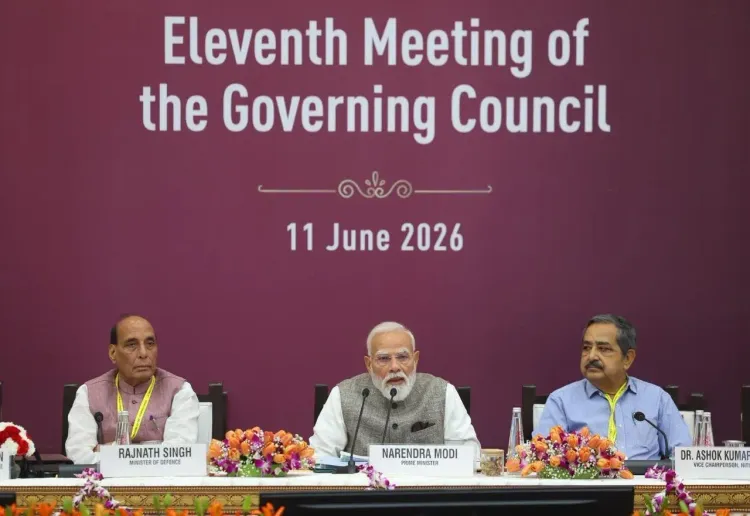
Prime Minister Narendra Modi chaired the 11th NITI Aayog Governing Council meeting on 11 June 2026, focusing on inclusive human development for Viksit Bharat@2047. He stressed self-reliance, global best practices, and reform continuity, reinforcing the federal consultation framework central to India's 2047 developed-nation ambition.
Key Takeaways
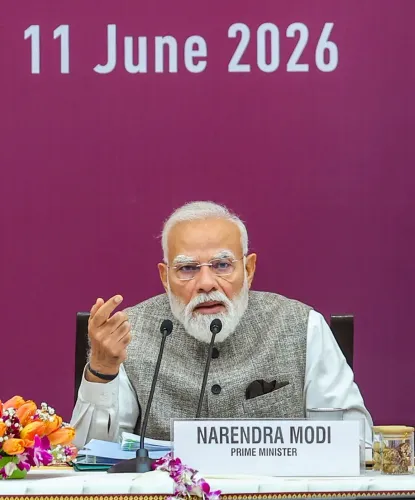
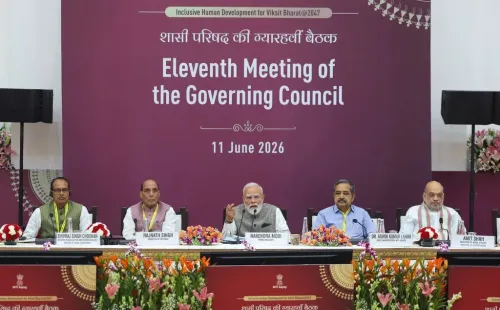
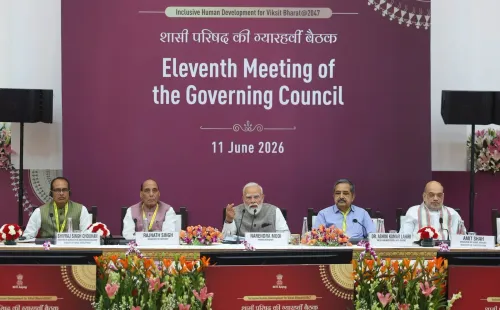
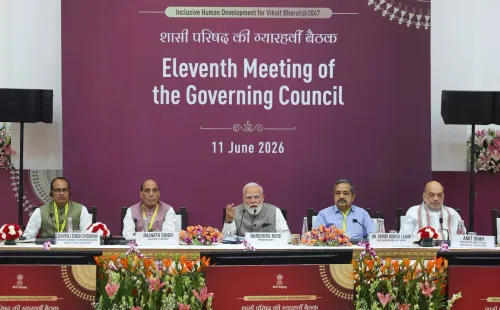
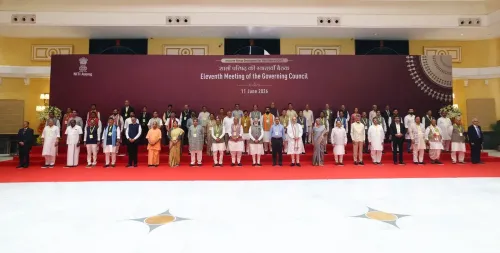
PM Modi chaired the 11th NITI Aayog Governing Council meeting on 11 June 2026 .
The meeting's theme was 'Inclusive Human Development for Viksit Bharat@2047' .
Modi emphasised self-reliance , adoption of global best practices , and strengthening the reform agenda .
NITI Aayog was established in January 2015 to replace the Planning Commission and promote cooperative federalism.
The Viksit Bharat@2047 vision targets developed-nation status by the centenary of India's independence.
State governments and Chief Ministers are key stakeholders in translating council deliberations into on-ground human development outcomes.
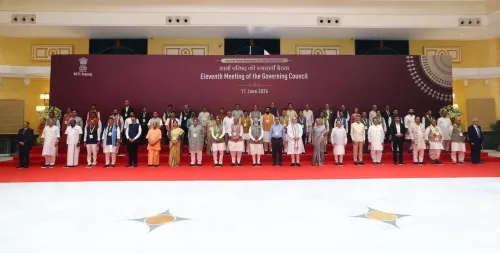
Prime Minister Narendra Modi on Thursday, 11 June 2026, chaired the 11th NITI Aayog Governing Council meeting, convened under the theme 'Inclusive Human Development for Viksit Bharat@2047'. The meeting brought together Chief Ministers and Union Ministers to deliberate on India's long-term development priorities, with a stated emphasis on self-reliance, global best practices, and deepening the reform agenda.
Context
NITI Aayog, constituted in January 2015 to replace the Planning Commission, functions as the government's principal policy think-tank and cooperative federalism platform. Its Governing Council — comprising the Prime Minister, all Chief Ministers, and select Union Ministers — has met periodically since its founding to align central and state governments on national development goals. The 11th edition marks a continued institutional effort to embed the Viksit Bharat@2047 vision into federal policymaking.
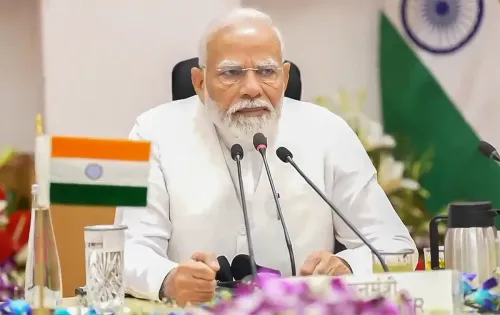
Speaking at the meeting, Modi addressed 'a wide range of issues,' underscoring the importance of Atmanirbhar Bharat (self-reliant India), the adoption of global best practices, and sustaining the momentum of structural reforms. The framing reflects a consistent governmental position that inclusive human development — spanning health, education, and livelihood indicators — is central to achieving developed-nation status by 2047, the centenary of India's independence.
Policy Backdrop
The Viksit Bharat@2047 initiative serves as the overarching policy architecture under which multiple central schemes and state programmes are being evaluated and aligned. The self-reliance emphasis traces directly to the Atmanirbhar Bharat campaign announced in May 2020, which sought to reduce import dependence across sectors ranging from defence to electronics and pharmaceuticals.
Successive Governing Council meetings have progressively integrated outcome-oriented metrics, moving away from the Planning Commission's top-down allocation model toward evidence-based, consultative policymaking. The explicit call to adopt 'global best practices' signals an intent to benchmark India's human development performance against international standards even as the government pursues domestic self-sufficiency.
Stakeholders and Impact
State governments are the primary operational stakeholders in any Governing Council outcome, as they are responsible for ground-level delivery of health, education, and social welfare programmes. The meeting's inclusive human development theme directly affects citizens in areas such as maternal health, school enrolment, skill development, and rural infrastructure — all key indicators on which India's progress toward the 2047 milestone will be assessed.
Policymakers at both central and state levels are expected to use the council's deliberations to recalibrate priorities and resource allocations. The cooperative federalism model embedded in NITI Aayog's mandate means that buy-in from Chief Ministers is structurally essential for translating the Viksit Bharat vision into measurable outcomes on the ground.
What's Next
Attention will now turn to state-level implementation roadmaps that emerge from the council's discussions, particularly on human development indicators. Subsequent NITI Aayog working groups and sectoral task forces are expected to translate the broad themes of self-reliance and reform into actionable, time-bound targets ahead of the 2047 deadline. The degree to which states align their budgetary and policy cycles with the Governing Council's directives will be a key indicator of whether India's federal development architecture can deliver on its most ambitious long-term goal.
Point of View
Particularly as the 2047 deadline moves from aspirational framing to mid-term planning horizon. The dual emphasis on self-reliance and global best practices reflects a deliberate balancing act: projecting domestic capability while acknowledging the need for international benchmarking. Foregrounding 'inclusive human development' signals an awareness that India's growth narrative must be broadened beyond macroeconomic indicators to retain political and social legitimacy. The meeting's outcomes will test whether cooperative federalism can operationalise a vision as expansive as Viksit Bharat across India's diverse state capacities.
NationPress
13 Sept 2026
Frequently Asked Questions
What is the NITI Aayog Governing Council?
The NITI Aayog Governing Council is the apex body of India's principal policy think-tank, comprising the Prime Minister, all Chief Ministers, and select Union Ministers. It meets periodically to align central and state governments on national development priorities under the cooperative federalism framework established when NITI Aayog replaced the Planning Commission in January 2015 .
What is Viksit Bharat@2047?
Viksit Bharat@2047 is the Indian government's vision to transform India into a fully developed nation by 2047 , the centenary of independence. It encompasses economic, social, and governance targets and serves as the overarching policy framework under which central schemes and state programmes are being evaluated.
What did PM Modi say at the 11th NITI Aayog Governing Council meeting?
PM Modi stated that the meeting covered 'a wide range of issues,' with emphasis on self-reliance, adopting global best practices, and strengthening the journey of reforms, all under the theme of inclusive human development for Viksit Bharat@2047.
What is Atmanirbhar Bharat and how does it relate to NITI Aayog?
Atmanirbhar Bharat (self-reliant India) is a policy campaign announced in May 2020 aimed at reducing India's import dependence across key sectors. It is one of the core themes that NITI Aayog Governing Council meetings have consistently integrated into India's long-term development planning.
How often does the NITI Aayog Governing Council meet?
The NITI Aayog Governing Council has met periodically since its establishment in 2015 , with meetings convened at the Prime Minister's discretion to address evolving national development priorities. The 11 June 2026 session was the 11th such meeting.