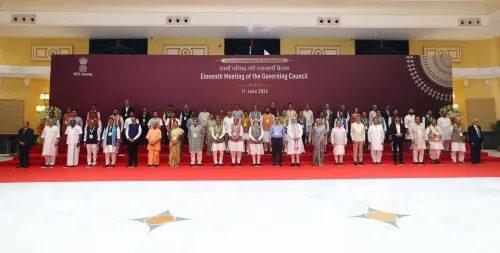
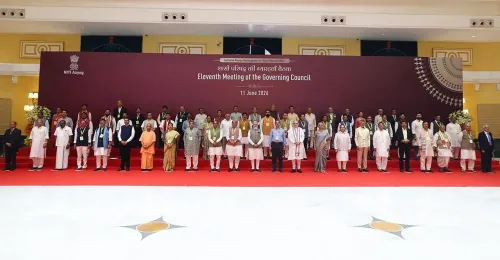
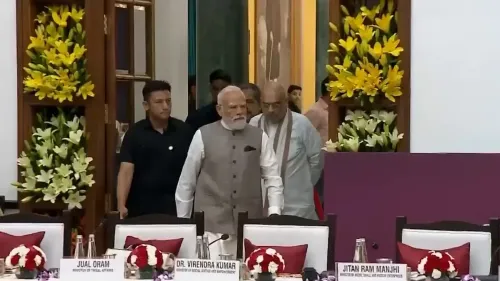
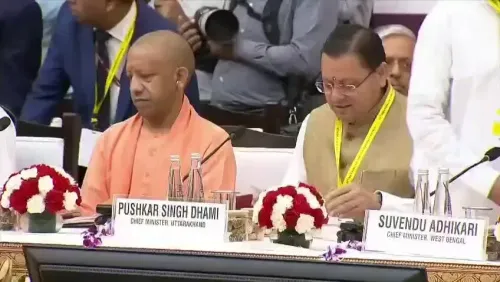
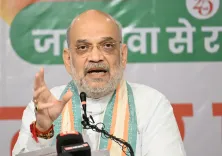
CM Pema Khandu at 11th NITI Aayog Governing Council Meet
Synopsis
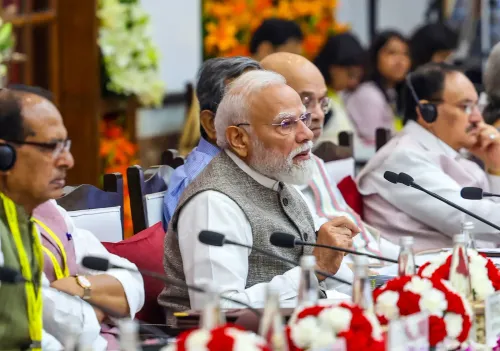
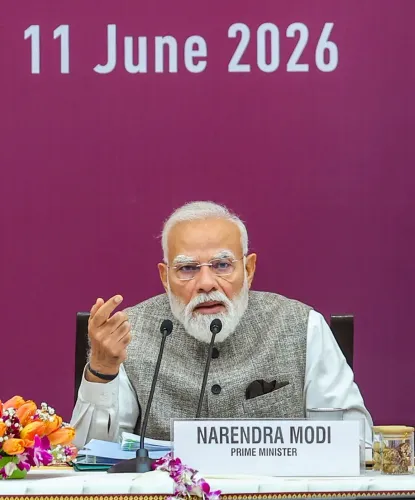
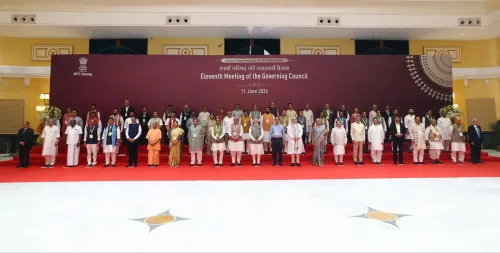
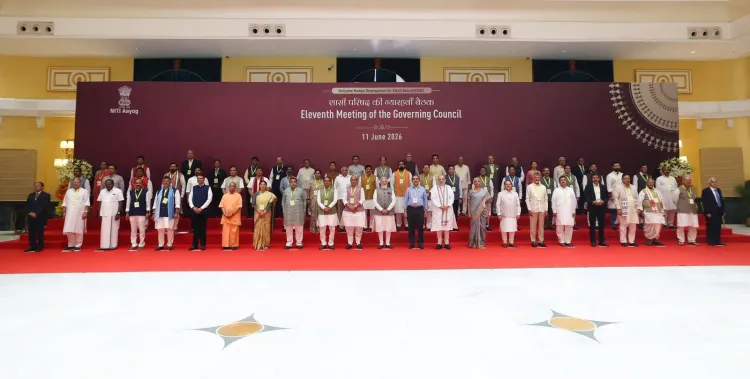
Arunachal Pradesh CM Pema Khandu attended the 11th NITI Aayog Governing Council Meeting on 11 June 2026, chaired by PM Narendra Modi. Deliberations focused on cooperative federalism, youth and women empowerment, and new growth opportunities under the Viksit Bharat @2047 vision. Khandu reaffirmed the state's commitment to the national development agenda.
Key Takeaways
Pema Khandu represented Arunachal Pradesh at the 11th NITI Aayog Governing Council Meeting on 11 June 2026 .
The meeting was chaired by Prime Minister Narendra Modi and focused on cooperative federalism and inclusive growth.
Key deliberation themes included empowering youth and women and unlocking new economic opportunities.
The overarching framework guiding discussions was the Viksit Bharat @2047 national development vision.
NITI Aayog , established on 1 January 2015 , replaced the Planning Commission to institutionalise state-centre policy alignment.
Arunachal Pradesh reaffirmed its commitment to contributing to the collective national growth endeavour.
Arunachal Pradesh Chief Minister Pema Khandu attended the 11th Governing Council Meeting of NITI Aayog on Thursday, 11 June 2026, chaired by Prime Minister Narendra Modi. The meeting centred on cooperative federalism, youth and women empowerment, and unlocking new growth avenues under the national vision of Viksit Bharat. Khandu affirmed that Arunachal Pradesh remains committed to contributing meaningfully to this collective national endeavour.
Context
NITI Aayog was constituted on 1 January 2015, replacing the erstwhile Planning Commission, to institutionalise cooperative federalism by bringing Chief Ministers and the Union government to a common policy table. Its Governing Council — comprising all Chief Ministers and Lieutenant Governors — meets periodically to align state-level priorities with national development goals. The 11th edition of this council meeting marks a continued effort to translate the Viksit Bharat @2047 framework into actionable state-level strategies.
Prime Minister Narendra Modi has chaired each Governing Council meeting since the body's inception, using the forum to emphasise bottom-up planning and competitive federalism among states. Previous editions have taken up themes ranging from agriculture and health to infrastructure and the Atmanirbhar Bharat mission.
Policy Backdrop
The Viksit Bharat @2047 vision — formally articulated in Union Budget speeches and official planning documents from 2022-23 onward — sets the overarching goal of transforming India into a fully developed economy by the centenary of its independence. Deliberations at the 11th Governing Council Meeting reportedly focused on strengthening cooperative federalism, empowering youth and women, and identifying new growth opportunities in line with this vision.
For northeastern states such as Arunachal Pradesh, NITI Aayog meetings have historically served as a platform to highlight priorities around connectivity, hydropower development, and tourism infrastructure. Schemes such as Skill India and the Pradhan Mantri Kaushal Vikas Yojana (PMKVY) remain central to the youth empowerment agenda that featured in Thursday's deliberations.
Stakeholders and Impact
Arunachal Pradesh, India's northeasternmost state sharing a sensitive border with China, has consistently leveraged central forums to advance its case for accelerated infrastructure investment and special development attention. CM Pema Khandu, in office since 2016, has positioned the state as an active partner in national growth initiatives rather than a passive beneficiary of central transfers.
The emphasis on youth and women in the council's deliberations has direct implications for state governments, which are expected to design and fund complementary schemes. Women-focused welfare programmes and skilling initiatives rolled out since 2014 provide the existing scaffolding on which state-level action plans are typically built. For Arunachal Pradesh, with its young demographic profile and significant tribal women's workforce, these themes carry particular resonance.
What's Next
Attention will now shift to whether Arunachal Pradesh translates its stated commitment into concrete budget allocations or state-level action plans targeting youth skilling and women entrepreneurship. Subsequent NITI Aayog working groups and sector-specific sub-committees are expected to follow up on the broad directions set at the Governing Council level. How northeastern states operationalise the Viksit Bharat framework at the grassroots will be a key indicator of the meeting's real-world impact.
Point of View
Particularly as the Centre deepens its northeastern connectivity push. His public reaffirmation of the state's commitment to Viksit Bharat signals alignment with BJP's overarching 2047 narrative ahead of any state electoral cycle. The meeting's focus on youth and women empowerment also gives state governments a cue to announce complementary schemes, making such forums as much about political signalling as policy coordination. For a border state like Arunachal Pradesh, presence at the Governing Council table carries diplomatic weight beyond domestic development optics.
NationPress
14 Sept 2026
Frequently Asked Questions
What is the NITI Aayog Governing Council Meeting?
The NITI Aayog Governing Council Meeting is a high-level forum comprising all Chief Ministers and Lieutenant Governors, chaired by the Prime Minister, to align state and central government priorities on national development. It was established when NITI Aayog replaced the Planning Commission on 1 January 2015.
What was discussed at the 11th NITI Aayog Governing Council Meeting?
The 11th Governing Council Meeting, held on 11 June 2026 and chaired by PM Narendra Modi, focused on strengthening cooperative federalism, empowering youth and women, and identifying new growth opportunities under the Viksit Bharat @2047 vision.
Who is Pema Khandu and why did he attend the meeting?
Pema Khandu is the Chief Minister of Arunachal Pradesh and a senior BJP leader who has held office since 2016. He attended the meeting as Arunachal Pradesh's representative on the NITI Aayog Governing Council, reaffirming the state's commitment to national development goals.
What is Viksit Bharat @2047?
Viksit Bharat @2047 is the Indian government's national vision to transform India into a fully developed economy by 2047, the centenary of independence. It was formally articulated in Union Budget speeches and planning documents from 2022-23 onward.
How does Arunachal Pradesh benefit from NITI Aayog meetings?
Arunachal Pradesh uses NITI Aayog Governing Council meetings to highlight its priorities in connectivity, hydropower, and tourism, and to align state schemes with central programmes on youth skilling and women empowerment, securing greater policy attention for the northeastern region.