ISI plotting major attacks ahead of Uttar Pradesh elections, officials warn

Synopsis
Indian intelligence officials warn that Pakistan's ISI is running a sophisticated long-game ahead of Uttar Pradesh elections — using CCTV surveillance, propaganda flooding, and out-of-state operatives to mask a major planned strike. The Ghaziabad spy module bust has already triggered a nationwide camera audit, and officials say the most dangerous phase of the plot may still be ahead.
Key Takeaways
Pakistan's ISI is reportedly plotting large-scale attacks ahead of Uttar Pradesh assembly elections, according to Indian intelligence officials.
Ghaziabad Police busted a module installing solar-powered CCTV cameras at sensitive locations, with live feeds sent to handlers in Pakistan , prompting a nationwide audit.
ISI-linked operatives are allegedly targeting tier-2 cities and villages in addition to major urban centres to stretch Indian agencies thin.
Officials say ISI plans to use operatives from outside Uttar Pradesh to avoid police detection.
Pakistan's ISI has reportedly shifted tactics to make attacks appear homegrown , partly to avoid returning to the FATF Grey List .
Propaganda channels have allegedly been directed to go into overdrive to disturb communal harmony as a diversionary tactic.
Pakistan's Inter-Services Intelligence (ISI) is reportedly orchestrating a large-scale plot targeting Uttar Pradesh ahead of the state assembly elections scheduled for next year, according to senior Indian intelligence officials. In the lead-up to the planned strikes, ISI-backed elements are said to be running propaganda channels on overdrive while simultaneously conducting covert surveillance operations across India.
The Pattern Officials Are Tracking
Indian intelligence officials say a clear operational pattern has emerged. ISI-linked operatives are reportedly installing CCTV cameras at sensitive locations, conducting espionage activities, and flooding propaganda channels with content designed to inflame communal tensions. According to an Intelligence Bureau (IB) official, the surge in visible activity is a deliberate distraction — intended to keep Indian agencies preoccupied while a far larger strike is being planned.
"The sudden surge in activity is to keep the Indian agencies engaged so that these persons can slip in an attack of a huge magnitude," the official said.
The Ghaziabad CCTV Module and Its Implications
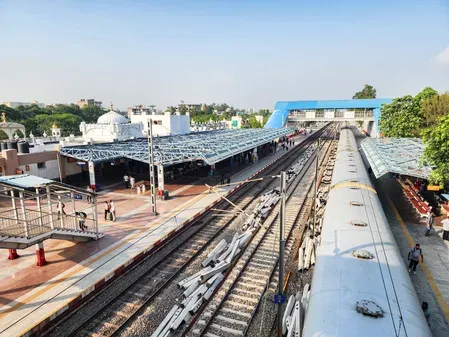
The concern is not hypothetical. Ghaziabad Police recently busted a module allegedly involved in installing solar-powered CCTV cameras at railway stations and other sensitive locations, with live feeds reportedly being transmitted to handlers based in Pakistan. The bust triggered a nationwide CCTV audit by Indian security agencies.
Officials now worry that similar cameras may have been procured in large numbers well in advance and could be deployed at roadside dhabas and shops along routes used by prominent politicians during campaign trails. "The plan is to install them at roadside dhabas and other shops. The aim would be to keep an eye on the routes that the big politicians take during campaigning," an official said.
Targeting Tier-2 Cities and Villages
The ISI's alleged strategy is not limited to major urban centres in Uttar Pradesh. Officials say the plan extends to tier-2 cities and villages — a deliberate effort to stretch Indian agencies thin and create confusion before a surprise strike. Notably, officials believe ISI handlers are unlikely to use operatives already embedded in UP, opting instead for elements from other states to avoid triggering police suspicion.
"Using elements from UP will create suspicion and the ISI wants to avoid that at all cost," an official said.
Pakistan's Tactical Shift: Deniability Over Direct Attribution
Officials say the broader plot fits into a significant doctrinal shift by Pakistan's ISI. Following India's updated counter-terror doctrine — under which any act of terror originating from Pakistan would be treated as an act of war — the ISI has reportedly recalibrated its approach to ensure attacks appear homegrown and untraceable to Islamabad.
Pakistan's awareness of its standing with the Financial Action Task Force (FATF) is also a key factor. Islamabad exited the FATF Grey List on the explicit commitment to halt terror financing. Officials allege that ISI has since been diverting funds from drug money and charitable organisations to sustain terror networks, while maintaining a veneer of deniability. "Pakistan is aware that it is under the watch of FATF. The last thing Pakistan wants is to get back to the Grey List," an official noted.
What Agencies Are Watching For
Intelligence officials are urging that busting individual espionage or terror modules in any one state should not divert attention from the larger, coordinated picture. The constant stream of distractions, they say, is itself part of the design. With Uttar Pradesh elections representing one of India's most consequential political events, agencies are on heightened alert — and officials warn that the most dangerous element of the plot may still be in its preparatory phase.
Point of View
Homegrown-looking attacks is a direct response to India's hardened counter-terror doctrine — and it is tactically sophisticated. What stands out is the layered approach: propaganda to inflame, surveillance to map, and out-of-state operatives to strike. The Ghaziabad CCTV bust is a rare visible thread in what officials describe as a largely invisible web. The deeper concern is that Indian agencies may be optimised for catching individual modules rather than reading the coordinated pattern behind them. With UP elections carrying enormous political weight, the ISI has every incentive to act — and every reason to make sure it does not look like it did.
NationPress
19 Sept 2026
Frequently Asked Questions
What is the ISI allegedly planning ahead of Uttar Pradesh elections?
According to Indian intelligence officials, Pakistan's ISI is allegedly plotting a series of major attacks in the lead-up to Uttar Pradesh assembly elections. The plan reportedly involves covert surveillance, propaganda campaigns to disturb communal harmony, and the use of operatives from outside UP to evade detection.
What was the Ghaziabad CCTV spy module?
Ghaziabad Police busted a module allegedly involved in installing solar-powered CCTV cameras at railway stations and other sensitive locations, with live feeds being transmitted to handlers in Pakistan. The bust prompted a nationwide CCTV audit by Indian security agencies.
Why is the ISI trying to make attacks look homegrown?
Officials say the ISI has shifted tactics following India's updated counter-terror doctrine, which treats any Pakistan-linked terror act as an act of war. Additionally, Pakistan wants to avoid returning to the FATF Grey List, which it exited on the promise of stopping terror financing — making deniability a strategic priority.
Which areas in Uttar Pradesh is the ISI allegedly targeting?
Officials say the ISI's alleged plan is not limited to major cities. It reportedly extends to tier-2 cities and villages in Uttar Pradesh, with the intent to confuse Indian agencies and create maximum disruption before a larger strike.
How are Indian agencies responding to the threat?
Following the Ghaziabad CCTV bust, a nationwide camera audit was initiated. Intelligence officials are also urging agencies not to be distracted by individual module busts and to track the broader coordinated pattern of ISI activity across multiple states.