Pakistan tops 2026 Global Terrorism Index amid internal war: Report
Synopsis
Pakistan's ranking at the top of the 2026 Global Terrorism Index is not just a statistic — it is the outcome of decades of provincial marginalisation, resource exploitation, and military crackdowns that have turned Balochistan, Khyber Pakhtunkhwa, Sindh, and Gilgit-Baltistan into pressure cookers. With 1,139 deaths in 2025 alone and over 10,500 enforced disappearances on record, the country is fighting a war on multiple internal fronts with no political resolution in sight.
Key Takeaways
Pakistan ranked first in the 2026 Global Terrorism Index , recording 1,045 incidents and 1,139 deaths in 2025 — the highest in over a decade.
The TTP accounted for more than half of all fatalities; violence is concentrated in Khyber Pakhtunkhwa and Balochistan .
Balochistan contributes only 5 per cent to Pakistan's GDP despite holding major reserves of gas, coal, copper, and gold, and hosting the CPEC corridor.
The BLA reportedly commands around 6,000 fighters ; three other separatist groups — BLF, UBA, and BRA — are also active.
Pakistan's own COIED recorded over 10,500 enforced disappearances between 2016 and 2024 ; independent groups say the real number is higher.
The Cholistan Canal project was put on hold in 2025 after protests in Sindh over fears of water diversion to Punjab.
Pakistan, ranked first in the 2026 Global Terrorism Index, is engulfed in what analysts describe as a massive, unrelenting internal conflict. According to figures released by the Pakistan Institute for Conflict and Security Studies (PICSS) in April 2026, the country recorded 1,045 terror incidents and 1,139 deaths in 2025 alone — the highest fatality count in over a decade. The resurgence of the Tehreek-i-Taliban Pakistan (TTP), which reportedly accounted for more than half of those deaths, is identified as a central driver of the bloodshed. A report has highlighted that the root cause of this enduring unrest lies in the political and economic dominance of Punjab over Pakistan's other provinces.
Punjab's Dominance and Provincial Marginalisation
Pakistan comprises four provinces: Sindh, Balochistan, Punjab, and Khyber Pakhtunkhwa. Over the years, critics and local residents have taken to calling the country 'Punjab-istan', reflecting deep resentment over what they describe as the centralised grip of Punjab on federal politics, resources, and military appointments. This perceived dominance has left the remaining provinces feeling systematically sidelined, according to the report.
Balochistan: Resource-Rich, Politically Excluded
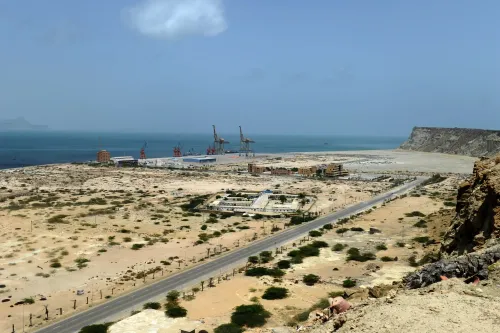
For decades, residents of Balochistan have alleged that Pakistan annexed their land illegally, demanding independence, control over natural resources, and protection of their distinct cultural identity. Balochistan is Pakistan's largest and resource-richest province, holding significant reserves of natural gas, coal, copper, and gold. It also serves as the central corridor for the China-Pakistan Economic Corridor (CPEC). Yet, according to reports, Balochistan contributes only 5 per cent to Pakistan's national GDP.
Local residents have alleged that foreign investments — particularly large-scale Chinese infrastructure projects — are structured to channel Balochistan's wealth toward the country's Punjabi elite. This grievance has fuelled the growth of militant separatist organisations, including the Balochistan Liberation Army (BLA), which reportedly commands around 6,000 fighters, alongside the Balochistan Liberation Front (BLF), the United Baloch Army (UBA), and the Baloch Republican Army (BRA).
Khyber Pakhtunkhwa: Islamist Militancy on the Rise
Khyber Pakhtunkhwa has emerged as another flashpoint, with violence escalating sharply since the Taliban's return to power in Afghanistan. The unrest is primarily driven by Islamist militant groups — the TTP, the Islamic State Khorasan Province (ISKP), and the Hafiz Gul Bahadur Group — all of which have exploited the porous border and weakened state presence in the region.
Sindh's Water Crisis and the Canal Controversy
Once a prosperous hub of trade and agriculture, Sindh now contends with a poverty rate of 45 per cent and a reported 62 per cent water shortage. In 2024, President Asif Ali Zardari approved the construction of six strategic canals. However, when the Cholistan Canal was inaugurated in 2025, widespread protests erupted in Sindh over fears that the project would divert critical water supplies to upstream Punjab. The project was subsequently put on hold following significant public backlash.
Enforced Disappearances and the Human Rights Crisis
Pakistan-occupied Gilgit-Baltistan presents yet another dimension of the crisis. The region lacks full constitutional status, leaving its residents without parliamentary representation. Locals face chronic unemployment and prolonged power outages, even as the federal government reportedly exploits the region's hydropower and mineral resources. Massive protests by local activists have been reported in the region in recent months.
Rather than addressing the underlying issues of economic disparity and political exclusion, Islamabad has largely defaulted to military crackdowns, the report noted. The most alarming consequence, it argued, is a documented epidemic of enforced disappearances. According to the government's own Commission of Inquiry on Enforced Disappearances (COIED), more than 10,500 cases were recorded between 2016 and 2024. Independent human rights organisations argue the actual figures are significantly higher, with Baloch separatist groups alone claiming that more than 5,000 of their people have disappeared over the decades.
'Until Islamabad stops treating its own provinces as resource colonies and starts focusing on genuine political inclusion and human rights, Pakistan will remain a country at war with itself,' the report concluded. With no structural resolution in sight, Pakistan's internal conflict shows little sign of abating.
Point of View
Not episodic. The country's federal architecture has long operated as a vehicle for Punjabi elite capture — militarily, economically, and politically — leaving three of its four provinces in varying states of insurgency or deprivation. The 10,500-plus enforced disappearances recorded by Islamabad's own commission are not a side effect of counterterrorism; they are a governance choice. Ranking first on the Global Terrorism Index while simultaneously being a nuclear-armed state and a recipient of international aid raises hard questions that regional powers and multilateral institutions have consistently avoided asking aloud.
NationPress
12 Oct 2026
Frequently Asked Questions
Why is Pakistan ranked first in the 2026 Global Terrorism Index?
Pakistan topped the 2026 Global Terrorism Index due to a sustained and escalating wave of internal violence, with 1,045 terror incidents and 1,139 deaths recorded in 2025 alone — the highest fatality level in over a decade. The TTP, Baloch separatist groups, and Islamist outfits like the ISKP are the primary drivers.
What is the Tehreek-i-Taliban Pakistan (TTP) and why is it significant?
The TTP is a militant Islamist organisation operating primarily in Khyber Pakhtunkhwa and along the Afghanistan-Pakistan border. It reportedly accounted for more than half of Pakistan's terror-related deaths in 2025, and its resurgence has been linked to the Taliban's return to power in Afghanistan.
Why is Balochistan at the centre of Pakistan's internal conflict?
Balochistan is Pakistan's resource-richest province, holding natural gas, coal, copper, and gold reserves, and is the spine of the CPEC corridor. Despite this, it contributes only 5 per cent to national GDP. Residents allege decades of resource exploitation by the Punjabi-dominated federal establishment, fuelling separatist movements including the BLA, which reportedly has around 6,000 fighters.
What are enforced disappearances and how widespread are they in Pakistan?
Enforced disappearances refer to cases where individuals — typically activists, journalists, or dissidents — go missing after being detained by state or state-linked actors, with no official acknowledgement. Pakistan's own Commission of Inquiry on Enforced Disappearances (COIED) recorded over 10,500 such cases between 2016 and 2024; independent human rights groups argue the true figure is considerably higher.
What triggered the protests in Sindh over the canal project?
Protests erupted in Sindh in 2025 after the Cholistan Canal — one of six strategic canals approved by President Asif Ali Zardari in 2024 — was inaugurated. Residents feared the project would divert water from Sindh to upstream Punjab, worsening an already severe 62 per cent water shortage. The project was subsequently put on hold following the public backlash.