Pakistan Leads Global Terrorism Index as Global Threats Decline
Synopsis
In a shocking revelation, Pakistan has topped the Global Terrorism Index for 2026, with 1,139 terrorism-related deaths, contrasting sharply with a worldwide decline in terrorist incidents. This alarming trend exposes deep-rooted issues within the nation’s security framework.
Key Takeaways
1,139 terrorism-related deaths reported in Pakistan for 2026.
Global terrorism deaths decreased by 28% .
Over 74% of attacks concentrated in Khyber Pakhtunkhwa and Balochistan.
The last six years have seen a continuous rise in terrorism incidents.
Pakistan’s counterterrorism strategy needs comprehensive reform.
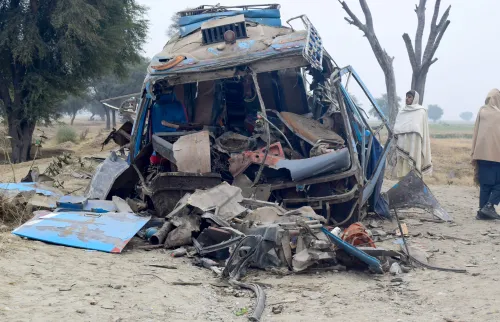
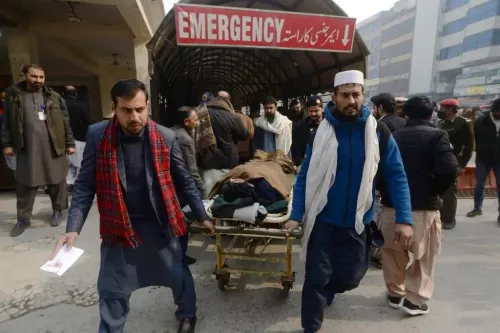
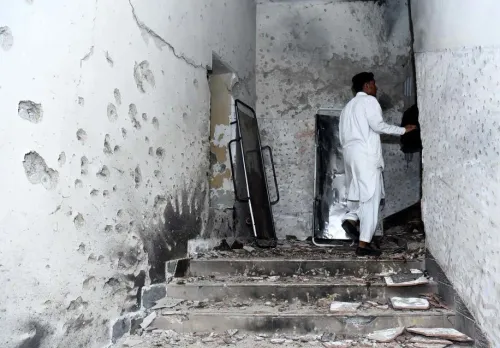
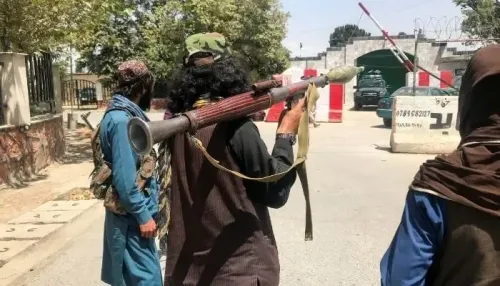
Washington, April 11 (NationPress) In a striking contrast to the global trend, where terrorism-related deaths have decreased by 28% and attacks have fallen by nearly 22%, Pakistan has found itself at the forefront of the Global Terrorism Index 2026, reporting a staggering 1,139 deaths attributed to terrorism last year, according to a recent report.
Fatima El Hashimi, a Moroccan journalist and researcher, writing for the online publication ‘American Thinker’, pointed out that violence has become alarmingly routine in Pakistan—an unsettling normalization that underscores the deteriorating security landscape of the nation, marking the sixth consecutive year of escalating terrorism.
She emphasized that this alarming increase represents a continuation of a deeply concerning trend.
“For six straight years, the number of terrorism-related fatalities in Pakistan has risen, with the latest surge marking the most significant annual rise in a decade. The frequency of attacks more than doubled from 517 in 2023 to 1,099 in 2024, before experiencing a slight decline in 2025, yet remaining at historically high levels,” Fatima noted.
Indicators from the report, which include incidents, casualties, injuries, and hostage situations, paint a picture of a nation where militant violence is not only persistent but also evolving in ways that challenge the state's ability to respond effectively.
The expert highlighted that Khyber Pakhtunkhwa and Balochistan remain the focal points of violence, contributing to over 74% of attacks and 67% of fatalities in 2025.
“These areas, historically overlooked in terms of governance and development, continue to suffer the consequences of Pakistan's internal strife,” Fatima stated.
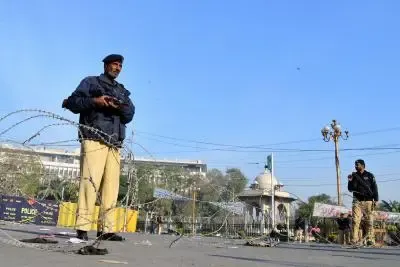
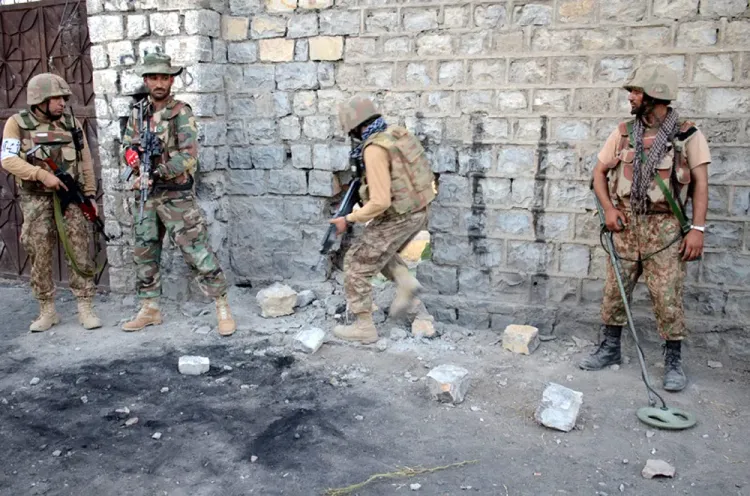
She pointed out that Pakistan’s counterterrorism strategy is heavily oriented towards kinetic actions—raids, retaliations, and targeted strikes—while the non-kinetic aspects of counter-extremism are either weak or completely lacking.
“A clear sign of this deficiency is the lack of a reliable and verifiable terrorism database. Global organizations depend on transparent, evidence-based reporting, yet Pakistan’s law enforcement agencies frequently expect the international community to accept their claims without adequate documentation,” Fatima remarked.
She argued that sustainable peace will remain unattainable unless Pakistan shifts from a force-centric approach to addressing deeper issues such as ideological extremism, cross-border sanctuaries, political instability, and governance shortcomings.
“Breaking this cycle requires more than just firepower. It necessitates political clarity, consistent civilian governance in conflict-affected areas, and serious regional diplomacy, particularly with Afghanistan. It calls for police reforms that empower local law enforcement rather than marginalizing them, intelligence sharing across agencies that often operate in isolation, and judicial reforms ensuring effective prosecution of militants rather than recycling them into the conflict,” Fatima emphasized further.
Point of View
It is clear that the rise in terrorism in Pakistan is a critical issue that demands immediate attention. The ongoing violence not only affects national security but also highlights the need for comprehensive reforms and a multifaceted approach to counter extremism.
NationPress
19 Sept 2026
Frequently Asked Questions
What does the Global Terrorism Index measure?
The Global Terrorism Index measures the impact of terrorism globally, assessing factors such as incidents, fatalities, and injuries.
Why has Pakistan topped the Global Terrorism Index?
Pakistan topped the index due to a significant increase in terrorism-related deaths and attacks, particularly in regions like Khyber Pakhtunkhwa and Balochistan.
What are the main challenges in Pakistan's counterterrorism strategy?
The main challenges include a heavy focus on kinetic actions, weak non-kinetic strategies, lack of a credible terrorism database, and insufficient governance in conflict areas.
How can Pakistan improve its counterterrorism efforts?
Pakistan can enhance its counterterrorism efforts by addressing ideological extremism, improving governance, and fostering regional diplomacy.
What regions in Pakistan are most affected by terrorism?
Khyber Pakhtunkhwa and Balochistan are the most affected regions, accounting for a significant percentage of attacks and fatalities.