Pak Army's global image undermined by surge in terror attacks at home: Report
Synopsis
Pakistan has topped the Global Terrorism Index 2026 for the first time — even as Field Marshal Asim Munir's army earns global headlines for brokering US-Iran talks. A detailed EurAsian Times analysis exposes the contradiction: the same military projecting power in Riyadh and Islamabad is reportedly losing ground at home to the TTP and BLA, with a string of deadly attacks through May 2026 underscoring the crisis.
Key Takeaways
Pakistan topped the Global Terrorism Index 2026 for the first time, per the index cited in the EurAsian Times .
Khyber Pakhtunkhwa and Balochistan accounted for 74% of attacks and 67% of fatalities.
A Shia mosque bombing in Islamabad in February 2026 killed at least 31 worshippers , attributed to ISIS-Khorasan .
In May 2026 alone, attacks killed at least 6 (7 May), 15 (10 May), 9 (12 May), and 9 paramilitary officers (15 May).
The BLA carried out its first recorded attack on a Pakistani maritime vessel, ambushing a Coast Guard patrol near Gwadar .
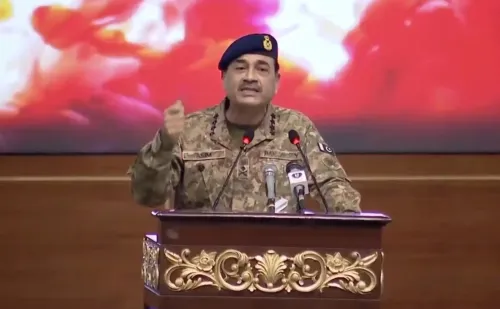
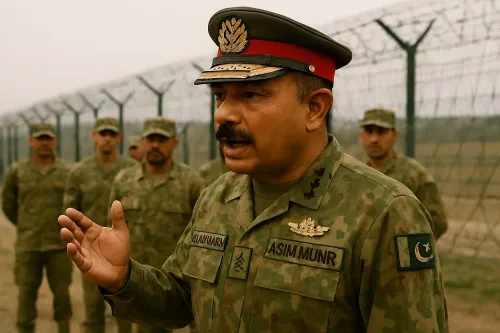
The analysis argues Field Marshal Asim Munir 's global posturing — mediating US-Iran talks, deploying forces to Riyadh — contrasts sharply with mounting domestic security failures.
Pakistan has topped the Global Terrorism Index 2026 for the first time, even as Field Marshal Asim Munir's army commands international headlines for mediating the US-Iran peace talks in Islamabad. A detailed analysis published in the EurAsian Times by editor Nitin J. Ticku argues that the Pakistani military's global posturing stands in sharp contrast to its inability to contain an escalating wave of terror attacks within its own borders.
Pakistan Tops Global Terrorism Index 2026
According to the Global Terrorism Index 2026, Pakistan has, for the first time, claimed the unwanted distinction of being the country most affected by terrorism worldwide. Khyber Pakhtunkhwa and Balochistan together accounted for a staggering 74 per cent of all attacks and 67 per cent of fatalities. The Tehreek-i-Taliban Pakistan (TTP) and the Balochistan Liberation Army (BLA) have, according to the report, grown 'more sophisticated, and more lethal' over this period.
Attacks That Defined the Crisis
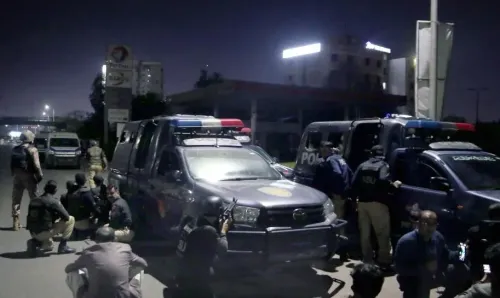
Since the outbreak of the US-Iran conflict in late February 2026, terror incidents inside Pakistan have not only persisted but intensified, particularly along the Afghanistan border. Earlier this year, the BLA launched one of its most coordinated offensives in years, striking across at least nine districts — including the capital Quetta and the port city of Gwadar — targeting police stations, banks, markets, and security installations, killing dozens of civilians and soldiers.
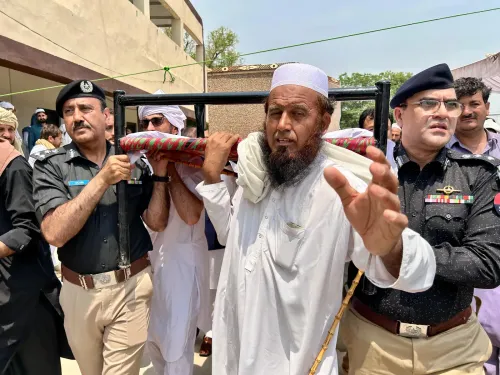
In February, a major suicide bombing struck a Shia mosque in Islamabad, killing at least 31 worshippers. The attack, one of the deadliest in the capital in recent years, was widely attributed to ISIS-Khorasan. In April, a car bombing at a police post in Fateh Khel killed over 20 officers. In a rare development, Baloch insurgents also ambushed a Coast Guard patrol near Gwadar, killing three officials — described as the first recorded incident of the BLA attacking a Pakistani maritime vessel.
May 2026: A Month of Relentless Violence
The violence showed no signs of abating through May 2026. On 7 May, mortar shells struck a market in Khyber Pakhtunkhwa, killing six people, including two children. On 10 May, militants detonated a car bomb at a checkpoint in the same province and opened fire on police, killing at least 15 and wounding three. Gunmen reportedly stormed the police checkpost immediately after the blast.
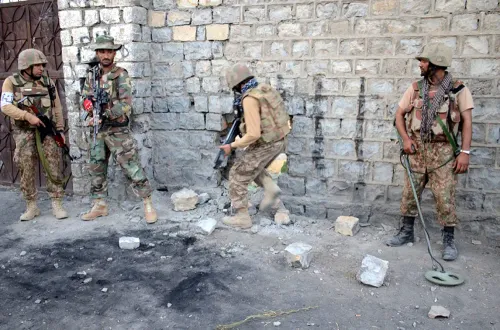
On 12 May, a suicide bomber using a three-wheel vehicle laden with explosives killed at least nine people and wounded 34 others in Khyber Pakhtunkhwa. On 14 May, clashes in Balochistan left at least five soldiers and seven militants dead. The following day, 15 May, militants attacked a security compound in northwest Pakistan with an explosives-laden truck and gunfire, killing at least nine paramilitary officers.
The Contradiction at the Heart of Pakistan's Strategy
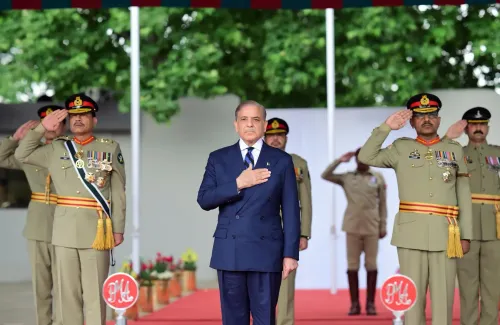
Ticku's analysis draws a pointed contrast: while Asim Munir's forces were dispatching fighter jets and troops to Riyadh and positioning Pakistan as a regional peace broker, militant groups the military once reportedly nurtured were, according to the report, 'shockingly' gaining ground at home. The piece argues that Pakistan's cantonments and border regions remain vulnerable despite the army's internationally projected strength.
This comes amid a broader strategic debate about whether Pakistan's foreign-policy ambitions are outpacing its internal security capacity — a tension that analysts say is unlikely to resolve quickly given the structural entrenchment of groups like the TTP and BLA.
Point of View
Brokering US-Iran talks and deploying assets to the Gulf, may be a deliberate attempt to reframe Pakistan's international identity at a moment when domestic security is visibly deteriorating. The contradiction is hard to paper over: a military that cannot secure its own capital's mosques or its border checkposts is an unreliable guarantor of regional stability, regardless of its diplomatic ambitions. Mainstream coverage tends to treat the diplomacy and the terrorism as separate stories; they are, in fact, the same story.
NationPress
10 Oct 2026
Frequently Asked Questions
Why has Pakistan topped the Global Terrorism Index 2026?
Pakistan topped the Global Terrorism Index 2026 for the first time due to a sharp escalation in attacks by the Tehreek-i-Taliban Pakistan and the Balochistan Liberation Army, which together drove the country's terrorism toll higher than any other nation. Khyber Pakhtunkhwa and Balochistan accounted for 74 per cent of attacks and 67 per cent of fatalities, according to the index.
What major terror attacks has Pakistan suffered in 2026?
Pakistan has faced a series of deadly attacks in 2026, including a suicide bombing at a Shia mosque in Islamabad in February that killed at least 31 people, a BLA offensive across nine districts including Quetta and Gwadar, and multiple strikes in Khyber Pakhtunkhwa in May that killed dozens. The BLA also carried out its first recorded attack on a Pakistani maritime vessel near Gwadar.
Who are the TTP and BLA, and why are they significant?
The Tehreek-i-Taliban Pakistan is a militant group operating primarily along the Afghanistan-Pakistan border, while the Balochistan Liberation Army is a separatist insurgent group active in Balochistan. Both have, according to the EurAsian Times analysis, grown more coordinated and lethal in 2026, posing an escalating challenge to the Pakistani military.
What is the significance of Pakistan's role in US-Iran talks?
Islamabad hosted US-Iran peace talks in 2026, positioning Field Marshal Asim Munir's army as a key regional mediator and drawing significant international attention. Critics and analysts, however, argue that this diplomatic profile contrasts starkly with the military's inability to contain domestic terrorism, raising questions about where its strategic priorities lie.
What does the EurAsian Times analysis argue about Pakistan's military strategy?
The analysis by editor Nitin J. Ticku argues that the Pakistan Army under Field Marshal Asim Munir has prioritised international power projection — including deploying jets and troops to Riyadh and mediating global talks — while losing ground domestically to militant groups it once reportedly supported. The piece contends that the military's cantonments and border regions remain insecure despite its outward show of strength.