Afghanistan airstrikes hit ISIS targets in Pakistan's Balochistan, KP
Synopsis
Afghanistan's Taliban-led government has struck back — launching airstrikes on alleged ISIS facilities inside Pakistan's Balochistan and Khyber Pakhtunkhwa just days after Pakistani military strikes killed 36 Afghan civilians. The tit-for-tat aerial exchanges mark one of the most serious military escalations between the two neighbours in recent years, with diplomatic channels already under severe strain.
Key Takeaways
Afghanistan's Ministry of Defence claimed airstrikes on ISIS -linked facilities in Balochistan and Khyber Pakhtunkhwa , Pakistan, on the night of Tuesday, 1 July 2025 .
Targeted sites included the Saranan area of Pishin district , Qambar Khel area of KP , and Garam Chashma in Chitral .
The strikes were described as retaliation for Pakistani military airstrikes on 28 June that killed 36 Afghan civilians and injured 163 others in Paktia, Paktika, and Kunar.
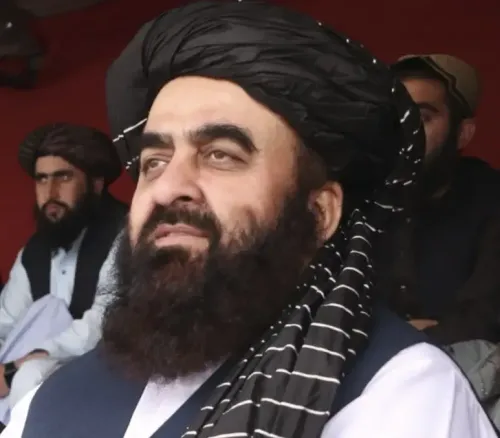
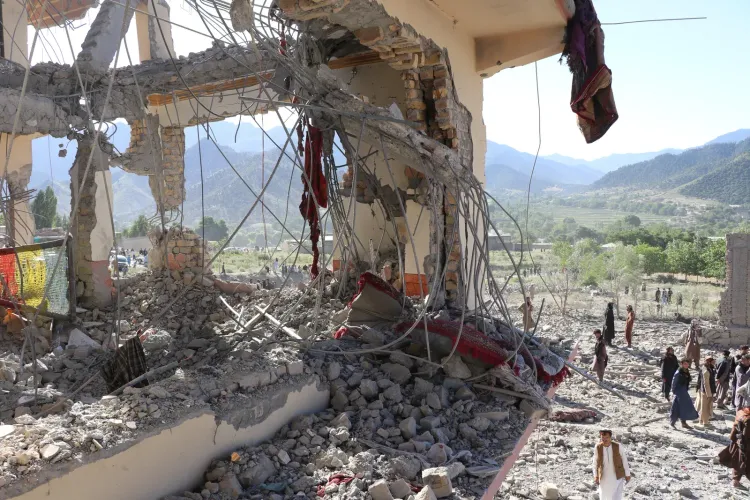
Taliban Deputy Spokesman Hamdullah Fitrat confirmed the Pakistani strike casualties, including the destruction of three residential houses .
The Afghan Foreign Ministry summoned Pakistan's Chargé d'Affaires in Kabul, calling the Pakistani strikes a 'flagrant violation of international law.' Afghanistan's Ministry warned it 'will target any location used to disrupt Afghanistan's security.'
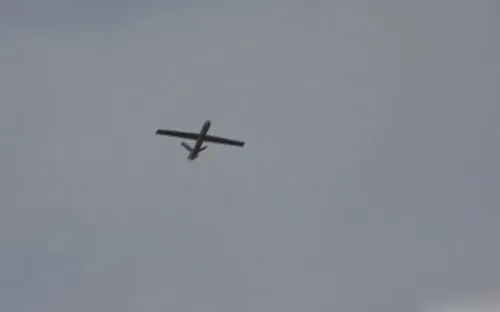
Afghanistan's Ministry of Defence on Wednesday, 1 July 2025, claimed that its air forces conducted strikes against alleged ISIS-linked facilities inside Pakistan, targeting sites in Balochistan and Khyber Pakhtunkhwa (KP) provinces. The strikes, carried out on Tuesday night, mark a sharp escalation in cross-border hostilities between the two neighbours.
What the Afghan Ministry Said
In an official statement, the Afghan Ministry of Defence said its air forces struck an 'ISIS joint centre' in the Saranan area of Pishin district, Balochistan, describing it as a coordination hub used to plan bombings targeting Afghan civilians. The Ministry stated the facility was responsible for 'sabotage activities and planning attacks in Afghanistan.'
Separately, the statement said successful strikes were carried out in the Qambar Khel area of Khyber Pakhtunkhwa and in the Garam Chashma area of Shah Salim Valley in Chitral, both described as 'Daesh centres' from which 'destructive activities and attacks against civilians were being planned.'
Citing preliminary information, the Ministry claimed the strikes inflicted 'heavy casualties and significant financial losses' on ISIS and its supporters, adding that the operations were carried out with 'high precision' and caused no civilian casualties.
'Afghan air defence forces will target any location used to disrupt Afghanistan's security,' the Ministry affirmed.
The Trigger: Pakistani Airstrikes on Afghan Soil
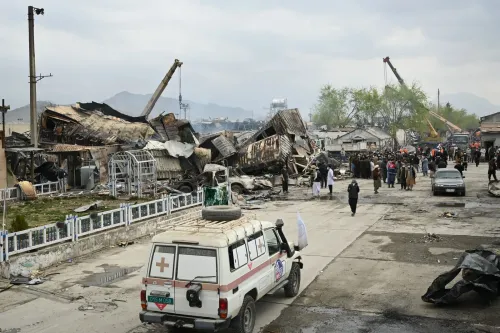
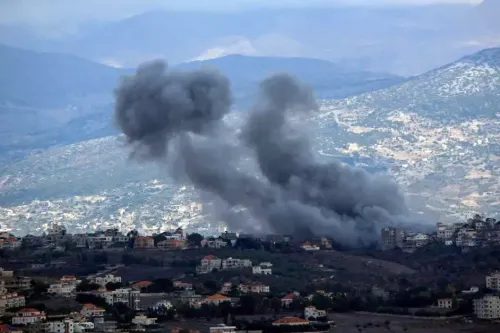
The Afghan strikes came days after Pakistani military airstrikes on 28 June killed 36 civilians — including women and children — and injured 163 others in Paktia, Paktika, and Kunar provinces of Afghanistan. Taliban Deputy Spokesman Hamdullah Fitrat confirmed the casualty figures on Monday, adding that three residential houses were completely destroyed.
This is not an isolated episode — cross-border military exchanges between Pakistan and Taliban-governed Afghanistan have intensified through 2024 and into 2025, with each side accusing the other of harbouring militant networks.
Diplomatic Fallout
On Monday, the Afghan Ministry of Foreign Affairs summoned the Chargé d'Affaires of the Embassy of Pakistan in Kabul, conveying what it described as a 'strong and unequivocal protest' over the violation of Afghan airspace and the aerial bombardment of civilian homes in Kunar, Paktia, and Paktika.
The Afghan Foreign Ministry characterised Pakistan's strikes as 'a flagrant violation of international law, humanitarian law, and the sovereign integrity of states,' condemning them in the strongest possible terms. Pakistan has not publicly responded to the Afghan retaliatory strikes as of the time of this report.
What Comes Next
The tit-for-tat aerial exchanges raise the risk of a sustained military confrontation along one of South Asia's most volatile borders. With diplomatic channels strained and both sides claiming the right to strike militant infrastructure across the border, de-escalation will require third-party intervention or a direct bilateral channel — neither of which appears imminent.
Point of View
Killing 36 people, and Kabul has now responded in kind under a counter-terrorism framing. The ISIS attribution by Kabul is strategically convenient, giving the strikes a veneer of legitimacy under international counter-terror norms while avoiding the optics of a direct state-on-state attack. Whether Pakistan accepts that framing — or escalates — will define the next phase of what is rapidly becoming one of South Asia's most dangerous bilateral flashpoints.
NationPress
19 Sept 2026
Frequently Asked Questions
Why did Afghanistan conduct airstrikes inside Pakistan?
Afghanistan's Ministry of Defence said the strikes targeted ISIS facilities in Balochistan and Khyber Pakhtunkhwa that were allegedly used to plan attacks on Afghan civilians. The strikes came days after Pakistani military airstrikes on 28 June killed 36 Afghan civilians and injured 163 others.
Which areas in Pakistan were targeted by Afghan airstrikes?
The Afghan air force reportedly struck the Saranan area of Pishin district in Balochistan, the Qambar Khel area in Khyber Pakhtunkhwa, and the Garam Chashma area of Shah Salim Valley in Chitral. All three were described as ISIS coordination or planning centres.
How many civilians were killed in Pakistan's earlier strikes on Afghanistan?
Pakistani military airstrikes on 28 June killed 36 civilians, including women and children, and injured 163 others across Paktia, Paktika, and Kunar provinces of Afghanistan. Taliban Deputy Spokesman Hamdullah Fitrat confirmed the figures on Monday, adding that three residential houses were completely destroyed.
What was Afghanistan's diplomatic response to Pakistan's strikes?
The Afghan Ministry of Foreign Affairs summoned Pakistan's Chargé d'Affaires in Kabul and lodged a formal protest, calling the Pakistani strikes a flagrant violation of international law, humanitarian law, and Afghan sovereignty.
Has Pakistan responded to Afghanistan's retaliatory airstrikes?
Pakistan had not publicly responded to the Afghan retaliatory strikes as of 1 July 2025. The situation remains volatile, with both sides having now conducted aerial operations on each other's territory.