Pakistan-Afghanistan airstrikes: New phase of confrontation on the Durand Line
Synopsis
The Taliban has claimed it launched overnight airstrikes inside Pakistan — targeting alleged ISIS-linked sites in Balochistan and Khyber Pakhtunkhwa. If confirmed, it would be the most assertive cross-border military action by Kabul since August 2021, and could trigger retaliation from a nuclear-armed Pakistan. The Durand Line, never truly quiet, may be entering its most volatile chapter yet.
Key Takeaways
Afghanistan's Ministry of Defence announced on 19 June 2025 that its forces struck ISIS-linked facilities in Balochistan and Khyber Pakhtunkhwa , Pakistan.
The strikes, if confirmed, would be among the most assertive military actions by the Taliban since seizing power in August 2021 .
The ministry alleged the targeted sites were used to plan attacks against Afghanistan ; independent verification remains limited.
Pakistan has accused the Taliban of sheltering TTP militants — a charge Kabul denies — deepening bilateral tensions.
Analysts warn the strikes risk provoking retaliation from Pakistan , a nuclear-armed state with a far larger military.
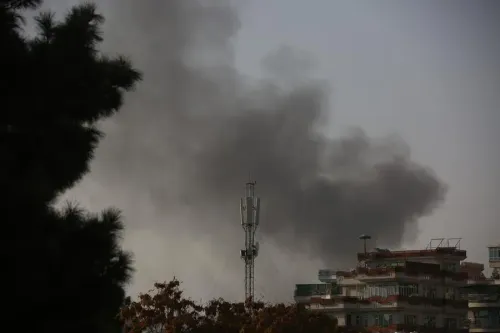
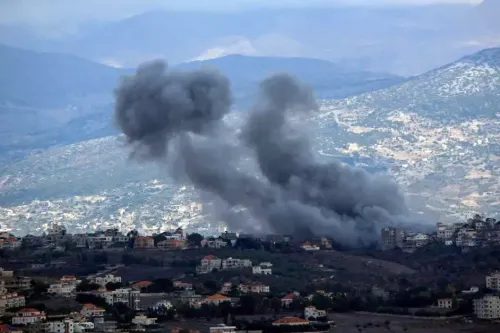
Residents in Balochistan reportedly heard overnight explosions, according to local media accounts.
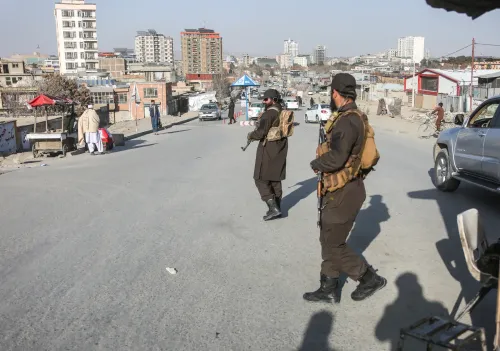
The frontier between Pakistan and Afghanistan is entering a dangerous new phase of confrontation, with neither side signalling a willingness to de-escalate, according to a report by the Afghan Diaspora Network. The Taliban administration announced on 19 June 2025 that Afghan forces had conducted overnight airstrikes against targets inside Pakistani territory — a move that, if confirmed, would rank among the most assertive military actions taken by the group since it seized power in August 2021.
What Afghanistan's Defence Ministry Said
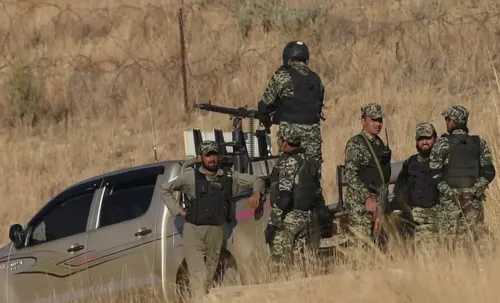
In a formal statement, Afghanistan's Ministry of Defence said its forces struck what it described as ISIS-linked facilities in Balochistan and Khyber Pakhtunkhwa provinces of Pakistan, according to Khaama Press, an Afghanistan-based news agency. The ministry alleged that the targeted sites were being used to plan and coordinate attacks against Afghanistan, and said that 'important and designated targets' were successfully hit. It warned that Kabul would 'eliminate threats in the embryo' and act decisively against any group it considers a danger to Afghan sovereignty.
Ground Reports and Verification Gaps
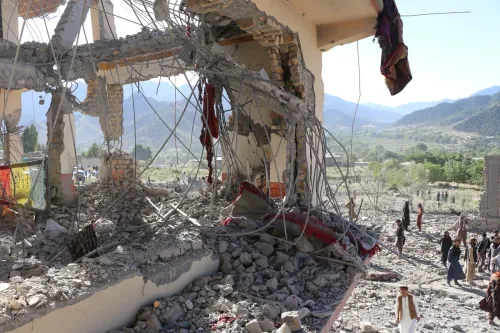
Residents in Balochistan reportedly heard explosions overnight, according to local media accounts. However, independent verification of the strikes remains limited. Pakistan has not issued an official confirmation of the attacks, and the full scope of any damage is unclear. The situation on the ground, according to analysts cited in the Afghan Diaspora Network report, 'remains murky.'
The Broader Pakistan-Taliban Standoff
Al Jazeera, citing regional analysts, noted that the Taliban's announcement — if accurate — represents a significant escalation in an already fragile bilateral relationship. The strikes come as Pakistan has intensified pressure on the Taliban over the alleged presence of Tehreek-e-Taliban Pakistan (TTP) militants on Afghan soil. Islamabad accuses Kabul of sheltering TTP fighters; the Taliban deny the allegation. Both governments, in turn, accuse each other of harbouring hostile networks — a cycle of mutual suspicion that analysts say has repeatedly undermined regional security.
Researcher and journalist S S Ahmad, writing in the Afghan Diaspora Network, noted that the Taliban's statement appears designed to project strength domestically and regionally, reinforcing their claim to be a government capable of protecting national sovereignty — a posture they have consistently adopted to bolster internal legitimacy since taking power.
Risk of Escalation
Analysts warn that the strikes, if confirmed, carry serious escalatory risk. Pakistan is a nuclear-armed state with a significantly more powerful conventional military than Afghanistan. The two countries share the long and porous Durand Line, where militant groups have operated for decades. 'Such actions risk deepening instability,' the Afghan Diaspora Network report cautioned. A Pakistani retaliation, should it materialise, could dramatically alter the security calculus across the region.
What Happens Next
The Afghan Diaspora Network report noted that if the Taliban's claims are confirmed, 'the strikes could mark a turning point in how Kabul responds to perceived threats inside Pakistani territory.' For now, both sides remain entrenched in their respective positions, with no diplomatic off-ramp publicly visible. The international community, including regional powers with stakes in Afghan stability, will be watching closely for any further military moves along the Durand Line.
Point of View
And its own domestic audience, that it will not absorb Pakistani pressure over TTP passively. But the asymmetry here is stark: Afghanistan is a landlocked, aid-dependent state making cross-border military claims against a nuclear power. If Pakistan responds militarily, the Taliban has no escalation ladder to climb. What mainstream coverage underplays is how this fits a pattern: the Taliban has consistently used shows of force to paper over internal legitimacy deficits. The real danger is that a cycle of claim and counter-claim on the Durand Line becomes self-fulfilling, drawing in regional actors — Iran, China, the Gulf states — who each have their own equities in Afghan stability.
NationPress
21 Sept 2026
Frequently Asked Questions
What did Afghanistan claim about the airstrikes on Pakistan?
Afghanistan's Ministry of Defence announced on 19 June 2025 that its forces conducted overnight airstrikes against alleged ISIS-linked facilities in Pakistan's Balochistan and Khyber Pakhtunkhwa provinces. The ministry said the sites were being used to plan attacks against Afghanistan and that 'important and designated targets' were successfully hit.
Has Pakistan confirmed the Afghan airstrikes?
Pakistan has not issued an official confirmation of the strikes as of the latest reports. Independent verification remains limited, though residents in Balochistan reportedly heard explosions overnight, according to local media accounts.
Why are Pakistan-Afghanistan tensions escalating?
Tensions have been building over Pakistan's accusations that the Taliban is sheltering Tehreek-e-Taliban Pakistan (TTP) militants on Afghan soil — a charge Kabul denies. Both governments accuse each other of harbouring hostile networks, creating a cycle of mutual suspicion along the Durand Line.
How significant would confirmed Afghan airstrikes on Pakistan be?
If confirmed, the strikes would represent one of the most assertive cross-border military actions by the Taliban since it seized power in August 2021. Analysts cited by Al Jazeera describe it as a significant escalation in an already fragile bilateral relationship.
What is the risk of further escalation between Pakistan and Afghanistan?
Analysts warn that confirmed strikes could provoke retaliation from Pakistan, a nuclear-armed state with a far more powerful military. The long, porous Durand Line — where militant groups have operated for decades — makes further incidents likely if neither side signals a willingness to de-escalate.