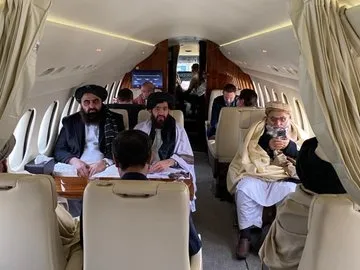
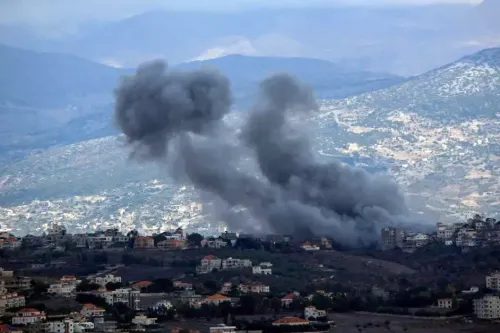
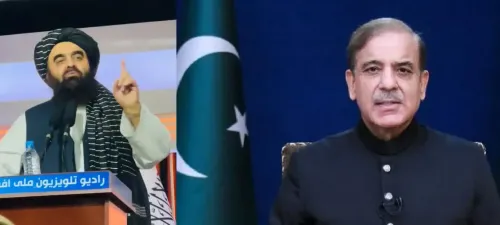
Afghan minister warns Pakistan: 'We don't fear bombings' after Kabul airstrikes
Synopsis
Afghanistan's information minister openly warned Pakistan it fears neither bombings nor hardships — on the same day Kabul confirmed retaliatory airstrikes on alleged ISIS targets inside Pakistani territory. With 36 Afghan civilians already killed in Pakistani strikes on 28 June, this cross-border exchange marks one of the most serious military escalations between the two neighbours in years.
Key Takeaways
Afghan Minister Shar Ahmad Haqqani warned Pakistan on 1 July 2025 that Afghanistan does not fear bombings and has defeated better-equipped adversaries.
Afghanistan's Ministry of Defence claimed airstrikes on Tuesday night against ISIS targets in Pakistan's Balochistan and Khyber Pakhtunkhwa provinces.
Strikes targeted alleged Daesh centres in Pishin district , Qambar Khel , and Chitral's Garam Chashma area ; the ministry says no civilians were harmed.
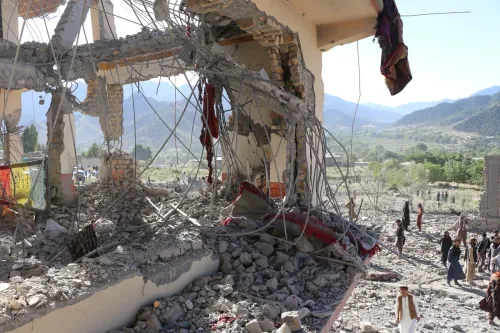
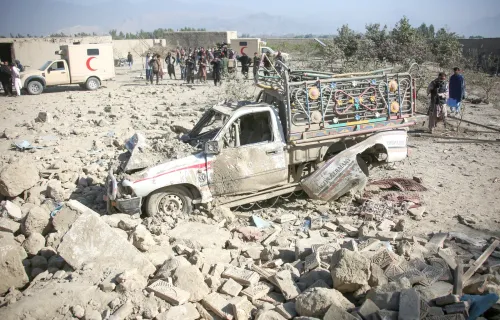
Pakistani military airstrikes on 28 June killed 36 civilians and injured 163 others in Afghan provinces of Paktia , Paktika , and Kunar .
Taliban Deputy Spokesman Hamdullah Fitrat confirmed the civilian death toll and said three residential houses were completely destroyed.
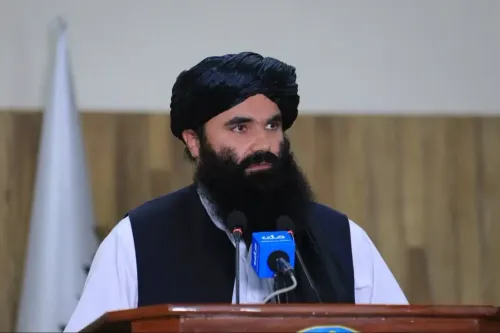
Afghanistan's Minister of Information and Culture, Shar Ahmad Haqqani, issued a stark warning to Pakistan on Wednesday, 1 July, declaring that Afghans are not intimidated by military pressure or aerial bombardment, and that Kabul has already defeated adversaries with far superior weapons and technology. His remarks came on the same day Afghanistan's Ministry of Defence claimed its air forces had conducted retaliatory strikes on alleged ISIS-linked targets inside Pakistani territory.
Haqqani's Warning
Speaking at a seminar on intellectual, ideological, and professional capacity building for journalists, Haqqani directed pointed remarks at those he accused of targeting Afghan civilians. 'To those who killed our children in their sleep through cruel bombings, it must be said that we do not fear bombings and hardships. We defeated those who were more equipped than you in modern technology and weapons,' he said, according to Ariana News.
Haqqani further stated, 'We are neither afraid nor defeated,' stressing that the Afghan people remain steadfast despite years of conflict and ongoing external pressure.
Afghan Airstrikes Inside Pakistan
Earlier on Wednesday, Afghanistan's Ministry of Defence said its air forces had carried out strikes on Tuesday night targeting what it described as ISIS facilities in Pakistan's Balochistan and Khyber Pakhtunkhwa provinces.
According to the ministry's statement, strikes were conducted in the Saranan area of Pishin district, Balochistan, on what it called an 'ISIS joint centre' used for planning attacks and coordinating bombings against Afghan civilians. Additional strikes were reportedly carried out in the Qambar Khel area of Khyber Pakhtunkhwa and the Garam Chashma area of the Shah Salim Valley in Chitral, targeting further alleged Daesh centres.
The ministry claimed the strikes inflicted 'heavy casualties and significant financial losses' on ISIS and its supporters, and said attacks were conducted with 'high precision' causing no civilian casualties. It added a direct warning: 'Afghan air defence forces will target any location used to disrupt Afghanistan's security.'
Background: Pakistan Strikes That Killed 36 Civilians
The Afghan military's action came just days after Pakistani military airstrikes on 28 June killed 36 civilians — including women and children — and injured 163 others in Afghanistan's Paktia, Paktika, and Kunar provinces. Three residential houses were completely destroyed in those strikes, according to Taliban Deputy Spokesman Hamdullah Fitrat, who confirmed the toll on Monday.
This comes amid a sharp escalation in tensions between Pakistan and Afghanistan over recent months, marked by repeated cross-border exchanges of fire and mounting concerns over civilian casualties on both sides.
What Happens Next
With Kabul now conducting airstrikes on Pakistani soil and senior Afghan officials issuing open warnings, the risk of further escalation along the Pakistan-Afghanistan border is significant. The international community has yet to formally respond to either the Pakistani strikes or the Afghan retaliatory action. Analysts will be watching whether Islamabad responds militarily or seeks diplomatic de-escalation through back-channel engagement.
Point of View
Not restraint, serves its domestic legitimacy. Pakistan, already managing economic fragility and internal security pressures, faces an uncomfortable choice: a military response risks deeper entrenchment, while inaction signals weakness. The civilian toll — 36 dead in a single Pakistani strike — is the number that will define international pressure going forward, and neither side has yet offered a credible accountability mechanism.
NationPress
30 Sept 2026
Frequently Asked Questions
What did Afghan minister Shar Ahmad Haqqani say about Pakistan?
Shar Ahmad Haqqani, Afghanistan's Minister of Information and Culture, said on 1 July 2025 that Afghans do not fear bombings or hardships, warning those who targeted Afghan children that Afghanistan has already defeated adversaries with superior weapons and technology. He made the remarks at a journalists' capacity-building seminar in Kabul.
Did Afghanistan carry out airstrikes inside Pakistan?
Yes. Afghanistan's Ministry of Defence stated that its air forces conducted strikes on Tuesday night, 30 June, targeting alleged ISIS facilities in Pakistan's Balochistan and Khyber Pakhtunkhwa provinces. Locations mentioned include Pishin district, Qambar Khel, and the Garam Chashma area of Chitral. The ministry claimed heavy casualties on ISIS but said no civilians were harmed.
How many civilians were killed in Pakistani airstrikes on Afghanistan?
Pakistani military airstrikes on 28 June killed 36 civilians, including women and children, and injured 163 others across Afghanistan's Paktia, Paktika, and Kunar provinces. Three residential houses were completely destroyed, according to Taliban Deputy Spokesman Hamdullah Fitrat.
Why are Pakistan and Afghanistan tensions escalating?
Tensions between Pakistan and Afghanistan have been rising for months, marked by repeated cross-border exchanges of fire and growing civilian casualties. The Pakistani airstrikes on 28 June and the subsequent Afghan retaliatory strikes represent a significant military escalation in that ongoing conflict.
What is Afghanistan's warning to Pakistan going forward?
Afghanistan's Ministry of Defence stated that its air defence forces 'will target any location used to disrupt Afghanistan's security,' signalling that further cross-border strikes are possible if Pakistan is deemed to be harbouring groups planning attacks on Afghan soil.