Pakistani airstrikes kill dozens in Afghanistan's Paktika, Kunar
Synopsis
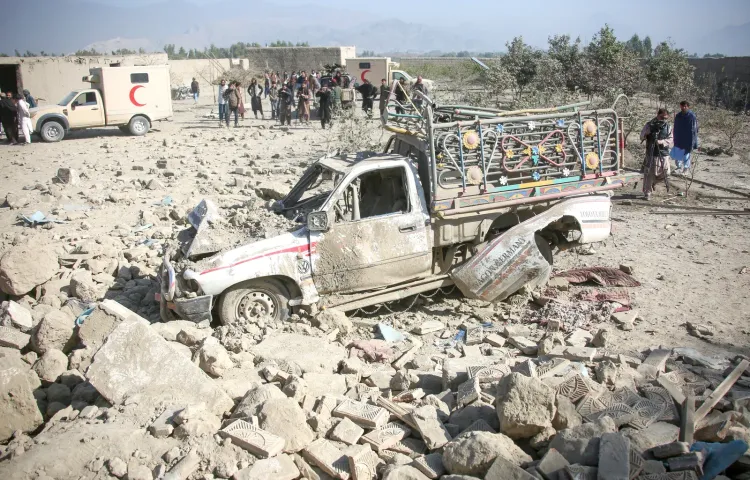
Pakistan's military has struck Afghan civilian areas for at least the second time this month, killing dozens including women and children across three provinces. With former US Ambassador Zalmay Khalilzad publicly questioning whether Islamabad even wants peace — and raising the spectre of Chinese strategic interests — this is no longer just a bilateral border dispute.
Key Takeaways
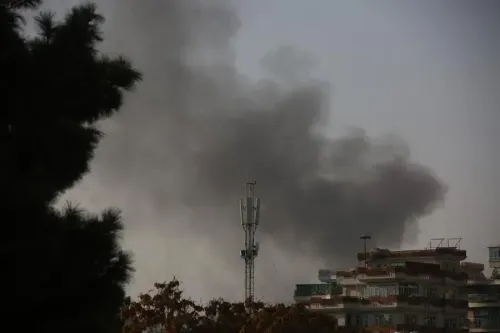
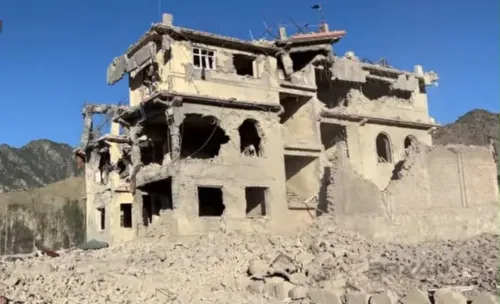
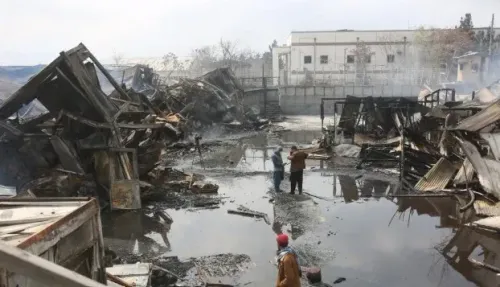
Pakistani military airstrikes reportedly hit Gayan (Paktika) , Tsamkani (Paktia) , and Manogai (Kunar) districts on the night of Sunday, 28 June 2025 .
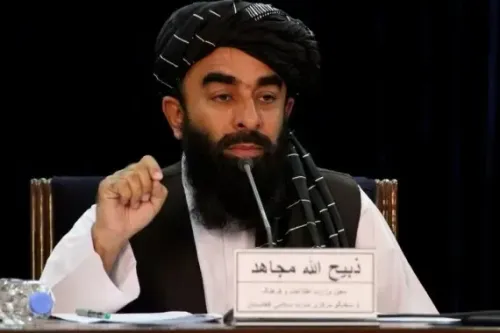
Taliban spokesperson Zabihullah Mujahid confirmed dozens of civilian deaths and injuries, including women and children, calling the strikes a 'crime and an act of brutality'.
Former US Ambassador Zalmay Khalilzad condemned the strikes on X, questioning whether Islamabad genuinely seeks a negotiated settlement.
Khalilzad raised the possibility that Pakistan may be acting to keep Afghanistan unstable or to facilitate greater Chinese influence in the country.
Earlier strikes on 9 June killed 11 children , one woman, and one elderly man across Kunar, Khost, and Paktika, prompting a formal Afghan diplomatic protest.
Afghanistan's Ministry of Foreign Affairs has summoned Pakistan's charge d'affaires in Kabul on multiple occasions over the airspace violations.
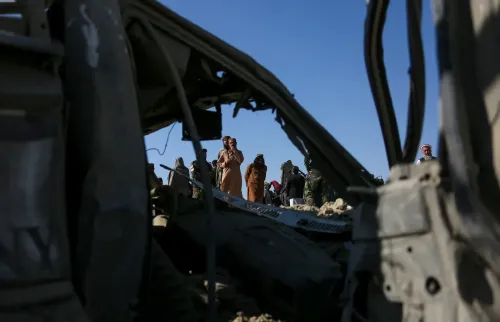
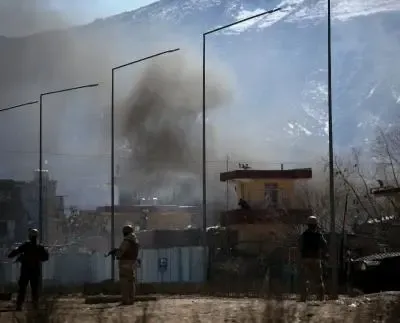
The Pakistani military has reportedly carried out fresh airstrikes on civilian areas in Afghanistan's Paktika, Paktia, and Kunar provinces, killing and injuring dozens of civilians, including women and children, according to Taliban spokesperson Zabihullah Mujahid on Monday, 29 June. The strikes, which Mujahid described as a 'cowardly act of aggression', hit the Gayan and Tsamkani districts of Paktika and Paktia, and the Manogai district of Kunar on Sunday night.
What the Taliban Said
In a post on social media platform X, Mujahid stated: 'Last night, the Pakistani military once again carried out airstrikes on civilian areas in Gayan District of Paktika Province, Tsamkani District of Paktia Province, and Manogai District of Kunar Province, Afghanistan. The attacks resulted in the deaths and injuries of dozens of civilians, including women and children. We strongly condemn this cowardly act of aggression and consider it a crime and an act of brutality.'
The Afghan Ministry of Foreign Affairs has previously summoned Pakistan's charge d'affaires in Kabul to formally protest the violation of Afghan airspace and strikes on residential areas.
Khalilzad Condemns the Strikes
Former US Ambassador to Afghanistan Zalmay Khalilzad sharply condemned the attack in a post on X, saying Pakistan had once again bypassed repeated international and domestic calls for negotiations in favour of military action. 'Ignoring the calls from around the world and from many Pakistanis for negotiations to resolve their differences with their neighbour, once again Pakistan has attacked Afghanistan, again killing and injuring many,' Khalilzad wrote.
Khalilzad further questioned Islamabad's intentions, posting: 'But now, in the face of the ongoing total lack of any constructive effort or response from Pakistan, I think it's time to ask: does Islamabad even want a settlement?' He raised the possibility that Pakistan's objectives may extend beyond its stated security concerns, asking whether the Pakistani establishment sought an unstable Afghanistan, or was 'being rewarded by China to create circumstances that make Afghanistan susceptible to increased Chinese influence.'
According to Khalilzad, if such objectives are driving Pakistan's approach, they would run counter to US interests — increased instability could expand safe havens for anti-US groups, particularly ISIS-K, while greater Chinese influence in Afghanistan poses a broader geopolitical challenge.
Pattern of Escalating Strikes
This latest incident is not isolated. Earlier in June 2025, Taliban spokesperson Mujahid confirmed that Pakistani strikes on Kunar, Khost, and Paktika provinces on the night of 9 June killed 11 children, one woman, and one elderly man, while 14 other women and children were injured. The Afghan foreign ministry summoned Pakistan's envoy in the aftermath of that attack as well.
The repeated strikes come amid a broader deterioration in Pakistan-Afghanistan relations, marked by cross-border fire exchanges and mounting civilian casualties on the Afghan side. Critics argue that Pakistan has not meaningfully engaged with diplomatic proposals put forward by the Taliban government.
What Comes Next
With Kabul's diplomatic channels strained and international voices growing louder, pressure is building on Islamabad to clarify its objectives and engage in dialogue. Whether Pakistan responds to calls for negotiation — or continues its military posture — will shape stability across a region already burdened by displacement and humanitarian strain.
Point of View
And its silence on Taliban-proposed diplomatic channels is becoming harder to explain away. The civilian death toll — disproportionately women and children — risks internationalising the issue in ways that Pakistan's foreign policy establishment may not have fully priced in.
NationPress
27 Sept 2026
Frequently Asked Questions
What happened in the Pakistani airstrikes on Afghanistan on 29 June 2025?
The Pakistani military reportedly carried out airstrikes on civilian areas in the Gayan district of Paktika, the Tsamkani district of Paktia, and the Manogai district of Kunar on the night of 28 June 2025. Taliban spokesperson Zabihullah Mujahid confirmed that dozens of civilians, including women and children, were killed and injured.
What did Taliban spokesperson Zabihullah Mujahid say about the strikes?
Mujahid condemned the strikes as a 'cowardly act of aggression' and called them 'a crime and an act of brutality.' He posted the statement on social media platform X, demanding accountability from Pakistan.
Why did former US Ambassador Zalmay Khalilzad criticise Pakistan?
Khalilzad condemned Pakistan for repeatedly choosing military action over negotiations, and publicly questioned whether Islamabad genuinely seeks a settlement. He also raised the possibility that Pakistan may be acting to destabilise Afghanistan or to advance Chinese geopolitical influence in the region.
Is this the first Pakistani airstrike on Afghanistan in 2025?
No. Earlier strikes on 9 June 2025 killed 11 children, one woman, and one elderly man across Kunar, Khost, and Paktika provinces, with 14 others injured. Afghanistan's foreign ministry summoned Pakistan's charge d'affaires in Kabul to protest those strikes as well.
What has Afghanistan done diplomatically in response to the strikes?
The Afghan Ministry of Foreign Affairs has summoned Pakistan's charge d'affaires in Kabul on multiple occasions to lodge formal protests over airspace violations and strikes on residential areas. The Taliban government has also reportedly put forward diplomatic proposals that Pakistan has not publicly responded to, according to Khalilzad.