Pakistan airstrikes in Afghanistan: 36 killed, world leaders demand restraint
Synopsis
Pakistani military airstrikes on 28 June killed 36 civilians and wounded 163 across three Afghan provinces — drawing simultaneous condemnation from the UN Secretary-General, UNAMA, the EU, the UK, and the UN Special Rapporteur. Afghanistan has formally protested, calling the strikes a flagrant violation of international law and accusing Pakistan of using military aggression to mask its own domestic failures.
Key Takeaways
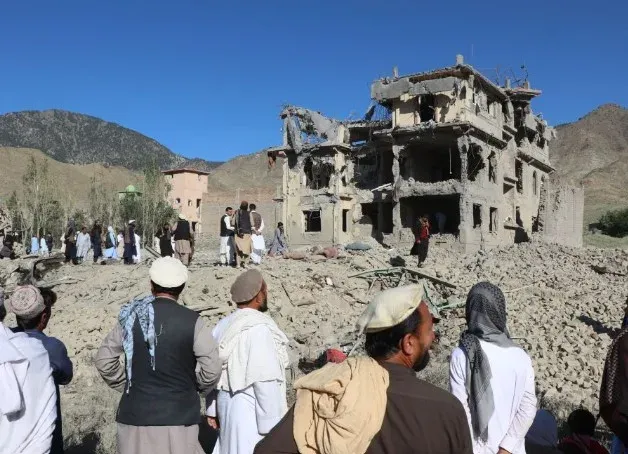
Pakistani military airstrikes on 28 June in Paktia , Paktika , and Kunar killed 36 civilians and wounded 163 others , destroying three homes.
UN Secretary-General António Guterres called for an immediate cessation of hostilities and resolution through diplomacy.
UNAMA confirmed civilian deaths including women and children, invoking international humanitarian law principles.
The European Union and United Kingdom both called for immediate de-escalation and full civilian protection.
The Afghan Ministry of Foreign Affairs summoned Pakistan's chargé d'affaires and formally protested the violation of Afghan airspace.
The Islamic Emirate of Afghanistan called the strikes a 'flagrant violation of international law' and accused Pakistan of using force to obscure domestic failures.
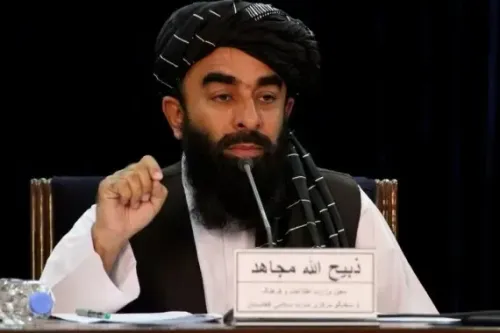
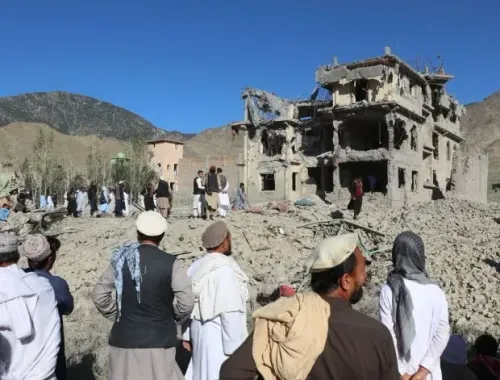
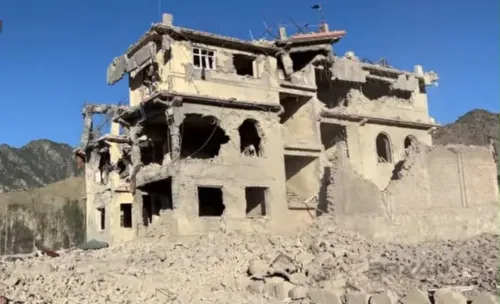
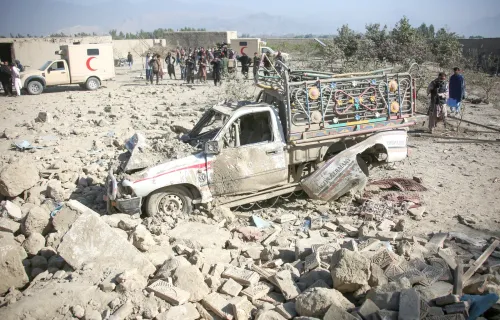
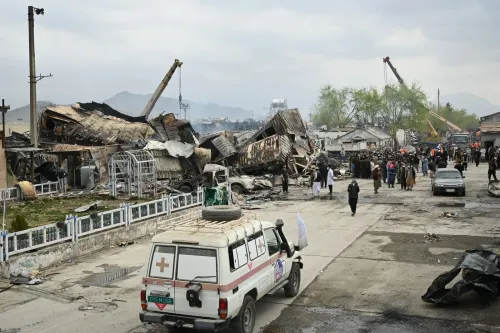
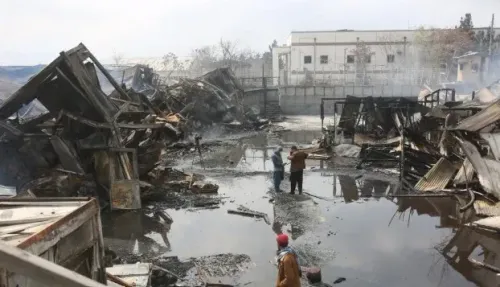
Pakistani military airstrikes on the Afghan provinces of Paktia, Paktika, and Kunar on the night of 28 June killed 36 civilians and wounded 163 others, according to Taliban Deputy Spokesman Hamdullah Fitrat, triggering a wave of international condemnation and urgent calls for de-escalation. Three residential houses were completely destroyed in the strikes, which targeted civilian areas, prompting the United Nations, the European Union, and the United Kingdom to demand immediate restraint and adherence to international humanitarian law.
UN Calls for Immediate Cessation of Hostilities
UN Secretary-General António Guterres expressed grave concern over the civilian casualties and called for an immediate halt to hostilities. His spokesperson, Stéphane Dujarric, said at a press briefing: 'The Secretary-General reiterates his call on the parties to resolve their differences through diplomacy. We continue to call on all parties to uphold their obligations under international humanitarian law and continue to stress that civilians and civilian infrastructure must be protected at all times.'
The United Nations Assistance Mission in Afghanistan (UNAMA) separately confirmed that dozens of civilians, including women and children, were killed and injured across the three provinces. In a statement, UNAMA said: 'UNAMA reiterates its call for respect for the international humanitarian law principles of precaution, distinction and proportionality to protect civilians from harm. We offer our condolences to the families of the victims and wish a speedy recovery for the injured.'
EU and UK Urge De-escalation and Civilian Protection
The European Union called for full civilian protection and immediate de-escalation. Anouar El Anouni, the EU's spokesman for foreign affairs, posted on X: 'The EU calls for full protection of civilians after airstrikes in Kunar, Paktia and Paktika resulted in civilian casualties. International humanitarian law must be respected at all times. We call for immediate de-escalation and restraint.'
Richard Bennett, the UN Special Rapporteur on the situation of human rights in Afghanistan, also posted on X, stating he was 'disturbed by civcas, incl. women & children, in Pakistan's airstrikes in Paktia, Paktika & Kunar provinces, Afghanistan,' and urged 'restraint, civilian protection & accountability.' Richard Lindsay, the United Kingdom's special envoy to Afghanistan, condemned the strikes, posting: 'Deeply concerned by the ongoing violence in Afghanistan and Pakistan and the continued, tragic loss of life. We condemn all forms of terrorism. We urge adherence to international humanitarian law and protection of civilians and reiterate calls to de-escalate.'
Afghanistan Summons Pakistan's Envoy, Files Formal Protest
On Monday, the Afghan Ministry of Foreign Affairs summoned the Chargé d'Affaires of Pakistan's Embassy in Kabul and lodged a formal protest over what it described as a violation of Afghan airspace and the aerial bombardment of civilian homes. The ministry's statement called the strikes 'a flagrant violation of international law, humanitarian law, and the sovereign integrity of states.'
The Islamic Emirate of Afghanistan rejected any Pakistani justification for the strikes, stating that Pakistan's military has 'repeatedly pursued the failed policy of addressing these issues through the use of force and military aggression' and accused Islamabad of advancing 'unfounded allegations against Afghanistan' to obscure its own domestic security and political failures.
Context: A Pattern of Cross-Border Tensions
This is not the first time Pakistani military action has drawn international censure over Afghan civilian casualties. Cross-border tensions between Islamabad and the Taliban-administered Kabul have intensified over the past several years, with Pakistan periodically conducting strikes it attributes to militant activity along the Durand Line. The Taliban government has consistently denied harbouring groups responsible for attacks inside Pakistan and has characterised such strikes as violations of sovereignty. The scale of the 28 June strikes — 36 dead, 163 wounded, three homes razed — marks one of the deadliest single incidents in this cycle of cross-border hostility. With multiple UN bodies, the EU, and the UK now on record demanding accountability, diplomatic pressure on Islamabad is at its most concentrated in recent memory.
Point of View
UNAMA, the EU, the UK, and the UN Special Rapporteur all condemned the action within hours — yet the absence of any named consequences for Pakistan signals the limits of diplomatic pressure on a nuclear-armed state. Islamabad's pattern of attributing domestic instability to cross-border militant sanctuaries, then responding with airstrikes, has drawn condemnation before without altering behaviour. The Taliban's pointed rebuttal — accusing Pakistan of externalising its own failures — reflects a hardening posture in Kabul that makes diplomatic resolution harder, not easier. The real question is whether this level of civilian harm finally shifts the calculus of any major power with leverage over Islamabad.
NationPress
29 Sept 2026
Frequently Asked Questions
What happened in the Pakistan airstrikes on Afghanistan on 28 June?
Pakistani military aircraft struck the Afghan provinces of Paktia, Paktika, and Kunar on the night of 28 June, killing 36 civilians and wounding 163 others, according to Taliban Deputy Spokesman Hamdullah Fitrat. Three residential houses were completely destroyed in the strikes.
How did the United Nations respond to the Pakistan airstrikes in Afghanistan?
UN Secretary-General António Guterres called for an immediate cessation of hostilities and urged both parties to resolve differences through diplomacy. UNAMA separately confirmed civilian casualties including women and children and invoked the international humanitarian law principles of precaution, distinction, and proportionality.
What did Afghanistan do in response to the airstrikes?
The Afghan Ministry of Foreign Affairs summoned Pakistan's Chargé d'Affaires in Kabul and filed a formal protest, calling the strikes a flagrant violation of international law and Afghan sovereignty. The Islamic Emirate accused Pakistan of using military aggression to mask its own domestic security and political failures.
Which other countries or organisations condemned the Pakistan airstrikes?
The European Union called for full civilian protection and immediate de-escalation, with EU foreign affairs spokesman Anouar El Anouni posting the statement on X. The United Kingdom's special envoy to Afghanistan, Richard Lindsay, also condemned the strikes and urged adherence to international humanitarian law. UN Special Rapporteur Richard Bennett called for restraint and accountability.
Is this the first time Pakistan has conducted airstrikes inside Afghanistan?
No. The Islamic Emirate of Afghanistan stated this is not the first instance of Pakistani military strikes on Afghan territory, noting that Pakistan has 'repeatedly pursued the failed policy' of using force against Afghanistan over several years. Cross-border tensions between Islamabad and Taliban-administered Kabul have escalated periodically, with Pakistan attributing such actions to militant threats along the Durand Line.