Afghanistan summons Pakistan envoy after airstrikes kill 13 civilians

Synopsis
Pakistan's airstrikes on residential areas in Kunar, Khost, and Paktika on 9 June killed 11 children, one woman, and one elderly man — prompting Kabul to summon Pakistan's envoy and hold the Pakistan Army explicitly responsible for future consequences. Former President Hamid Karzai called it the product of 'ill-considered policies,' as a months-long bilateral crisis shows no sign of abating.
Key Takeaways
Afghanistan's Ministry of Foreign Affairs summoned Pakistan's Chargé d'Affaires in Kabul on 11 June 2025 to protest airspace violations and civilian killings.
Pakistani airstrikes on 9 June hit Kunar , Khost , and Paktika provinces, killing 13 civilians — including 11 children , one woman , and one elderly man .
A further 14 women and children were injured in the strikes on residential homes.
The Afghan Ministry warned that responsibility for 'all consequences of these repeated violations' lies with the Pakistan Army .
Former President Hamid Karzai urged Pakistan to abandon its 'policy of war and destruction' toward Afghanistan.
Diplomatic and local mediation efforts have so far failed to halt escalating cross-border tensions.
Afghanistan's Ministry of Foreign Affairs summoned Pakistan's Chargé d'Affaires in Kabul on 11 June 2025 to register a formal protest over the violation of Afghan airspace and Pakistani airstrikes that struck residential homes in three provinces, killing 13 civilians. The diplomatic démarche followed one of the deadliest cross-border strikes in recent months, deepening an already fraught bilateral relationship.
What Happened on the Night of 9 June
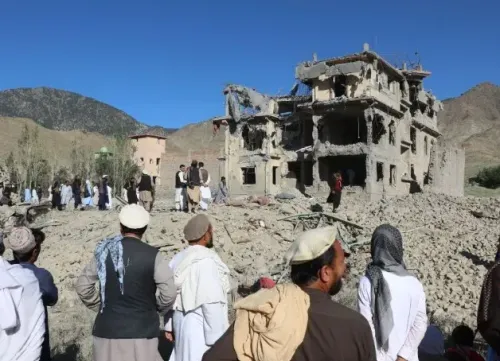
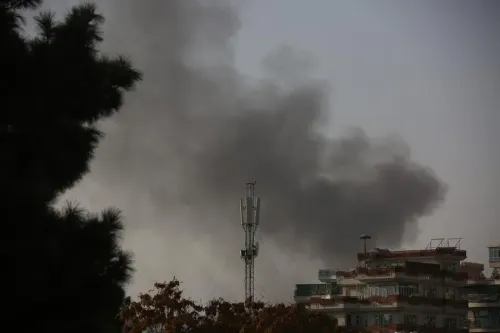
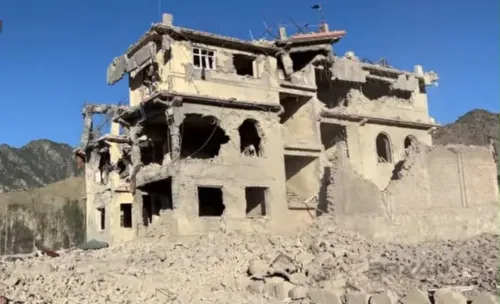
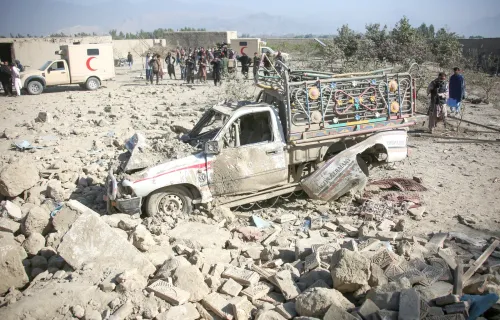
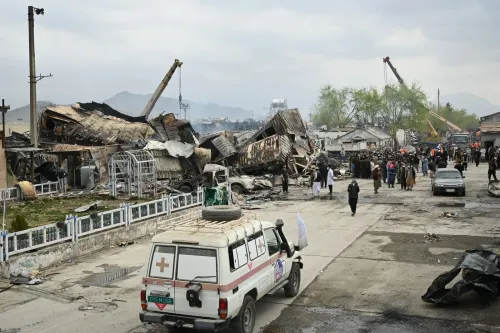
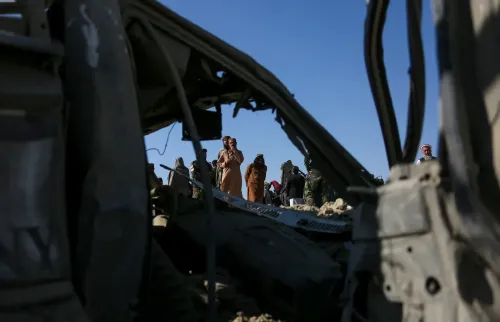
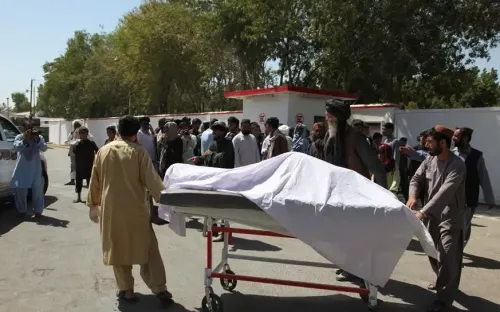
Taliban spokesperson Zabihullah Mujahid confirmed that Pakistani airstrikes hit Afghanistan's Kunar, Khost, and Paktika provinces on the night of 9 June, killing 11 children, one woman, and one elderly man. A further 14 women and children were injured in the strikes, which targeted residential areas.
Kabul's Formal Protest
In a statement shared on the social media platform X, the Afghan Ministry said: 'The Islamic Emirate of Afghanistan summoned the Charge d'Affaires of the Pakistani Embassy in Kabul and presented him with its strong and resolute protest regarding the violation of Afghanistan's airspace and the bombing of the homes of innocent civilians.'
The Ministry condemned the strikes as a violation of international principles and laws, asserting that defending Afghan territory and ensuring the security of its people are 'legitimate responsibilities.' It warned Islamabad directly: 'The responsibility for all the consequences of these repeated violations and crimes will lie with the Pakistan Army.'
Karzai Condemns Pakistan's 'Policy of War'
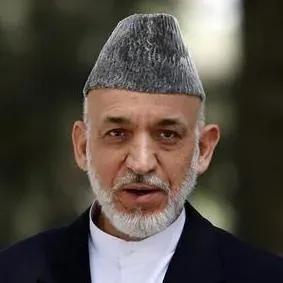
Former Afghan President Hamid Karzai sharply criticised Pakistan over the strikes, posting on X: 'Pakistan is grappling with the consequences of its ill-considered policies and hostile actions in the region, and it must realise that it will not achieve its goals by persisting with and pursuing those policies. Pakistan's best interest lies in abandoning its policy of war and destruction towards Afghanistan and instead choosing good neighbourliness and civilised relations.'
Karzai called on Islamabad to acknowledge its 'hostile actions' and abandon what he described as a strategy of destabilisation.
Escalating Tensions Along the Border
This incident is the latest in a series of cross-border flashpoints between Pakistan and Afghanistan over recent months, marked by repeated exchanges of fire and mounting civilian casualties on both sides. The two governments have traded accusations of harbouring militant groups and fuelling regional instability. Diplomatic and local mediation efforts have so far failed to halt the cycle of escalation.
Notably, the Afghan Ministry questioned the logic underpinning Pakistan's military operations, asking: 'How is it possible that the killing of children and women in one region means the establishment of security in another region?' — a pointed challenge to Islamabad's stated counter-terrorism rationale.
What Comes Next
With Kabul now holding Pakistan's Army explicitly responsible for future consequences, the risk of further retaliatory rhetoric — or action — is elevated. International observers and regional powers will be watching closely to see whether diplomatic channels can prevent additional civilian harm as both sides harden their positions.
Point of View
Khost, and Paktika — killing 11 children — marks a dangerous escalation beyond the usual border skirmishes, and Kabul's explicit naming of the Pakistan Army as responsible for future consequences raises the stakes considerably. What is often missing from coverage is the strategic bind both sides are in: Pakistan frames these strikes as counter-terrorism operations against the Tehrik-i-Taliban Pakistan (TTP), yet the civilian toll consistently undermines that justification internationally. The Taliban, for its part, has both a political incentive to condemn the strikes loudly and a practical inability to fully police the border sanctuaries that give Pakistan its pretext. With mediation efforts exhausted and rhetoric hardening, the risk is that this becomes a normalised cycle — periodic Pakistani strikes, Afghan protests, no accountability — until a single incident triggers a response that neither side can walk back.
NationPress
20 Sept 2026
Frequently Asked Questions
Why did Afghanistan summon Pakistan's envoy on 11 June 2025?
Afghanistan summoned Pakistan's Chargé d'Affaires in Kabul to formally protest the violation of Afghan airspace and Pakistani airstrikes on 9 June that killed 13 civilians, including 11 children, in Kunar, Khost, and Paktika provinces. The Afghan Ministry described the strikes as a violation of international law.
How many civilians were killed in the Pakistani airstrikes on Afghanistan?
According to Taliban spokesperson Zabihullah Mujahid, the airstrikes on the night of 9 June killed 13 civilians — 11 children, one woman, and one elderly man — while 14 other women and children were injured. The strikes targeted residential homes in three Afghan provinces.
What did the Afghan Ministry say about Pakistan's responsibility?
The Afghan Ministry stated that 'the responsibility for all the consequences of these repeated violations and crimes will lie with the Pakistan Army.' It also condemned the strikes as a violation of international principles and affirmed that defending Afghan territory is a legitimate responsibility.
What did former President Hamid Karzai say about the airstrikes?
Hamid Karzai posted on X that Pakistan is 'grappling with the consequences of its ill-considered policies' and called on Islamabad to abandon its 'policy of war and destruction towards Afghanistan' in favour of 'good neighbourliness and civilised relations.'
What is the broader context of Pakistan-Afghanistan tensions?
The two countries have been locked in escalating cross-border tensions for several months, with repeated exchanges of fire and growing civilian casualties. Both governments have accused each other of harbouring militant groups, and diplomatic mediation efforts have so far failed to prevent further escalation.