CM Mohan Yadav Hosts JP Nadda in Bhopal for 'Save Democracy' Padyatra
Synopsis
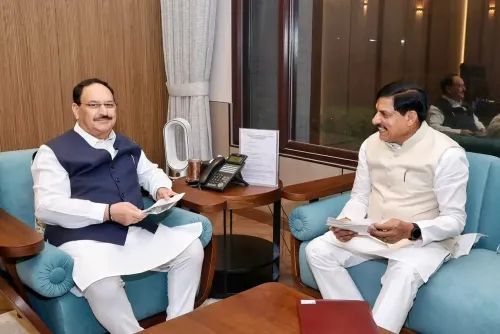
Union Minister JP Nadda visited Bhopal on November 4, 2026, where CM Dr. Mohan Yadav welcomed him at his official residence ahead of the BJP's 'Save Democracy – Remove Anarchy' padyatra, underscoring strong state–centre party alignment in Madhya Pradesh.
Key Takeaways
JP Nadda , Union Minister and BJP National President, made a special visit to Bhopal on November 4, 2026 for the padyatra.
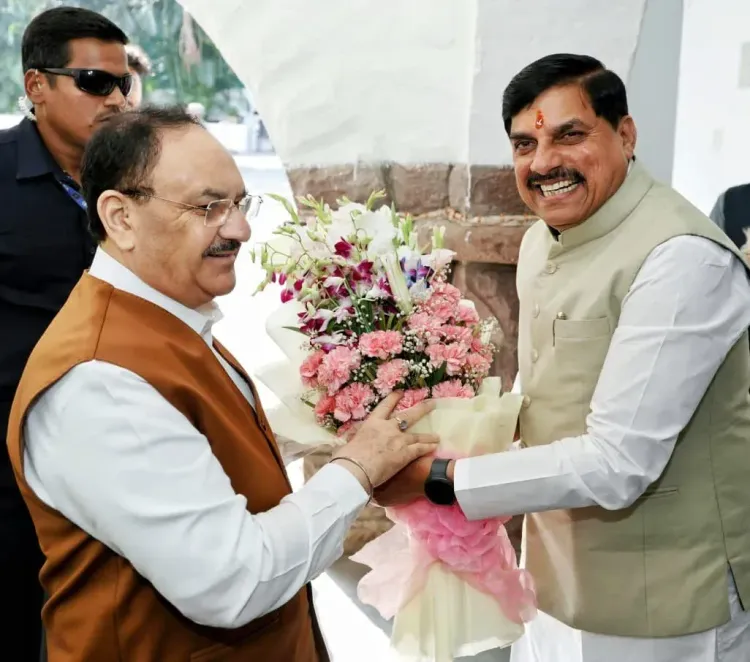
Mohan Yadav personally welcomed Nadda at the Chief Minister's official residence.
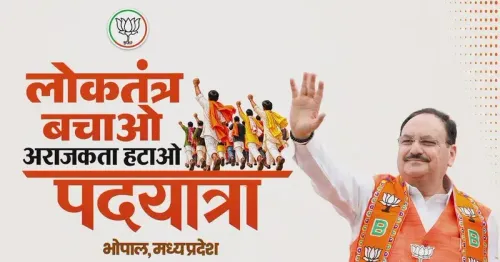
The march is branded 'Loktantra Bachao – Anarchta Hatao' ('Save Democracy – Remove Anarchy').
The event signals tight alignment between the Madhya Pradesh state government and central BJP leadership .
Padyatras are a core BJP outreach tool; Nadda's presence elevates this one to a national-profile event.
Opposition responses in Madhya Pradesh are awaited as the march progresses.
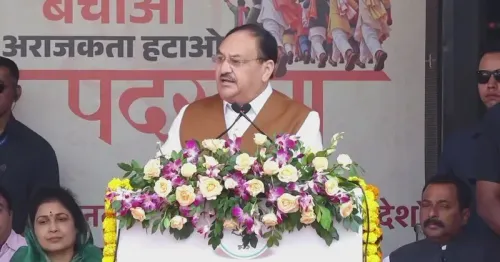
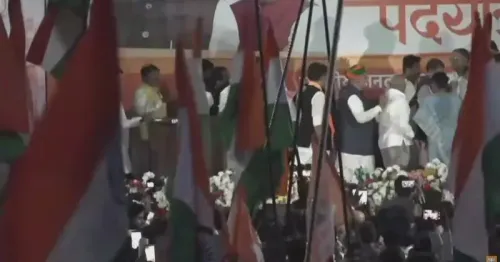
Union Minister JP Nadda made a special visit to Bhopal on Wednesday, November 4, 2026, and Madhya Pradesh Chief Minister Dr. Mohan Yadav rolled out a warm welcome at his official residence — the opening act of a political mobilisation march the BJP is branding as a battle for democracy itself.
CM Yadav shared the moment on X, writing that he gave a heartfelt welcome — 'aatmiya swagat' — to Nadda, who had arrived specifically to participate in the 'Loktantra Bachao – Anarchta Hatao' ('Save Democracy – Remove Anarchy') padyatra. The hashtag #SaveDemocracyRemoveAnarchy framed the event squarely as a counter-narrative to what the party portrays as Opposition-fuelled instability.
Who Walked In — and Why It Matters
JP Nadda wears two significant hats: he is the Union Minister of Health and Family Welfare and Chemicals and Fertilizers, and he remains the National President of the Bharatiya Janata Party — a combination that makes his presence at a state-level march anything but routine. When a figure of that stature travels to a state capital specifically for a padyatra, it signals that central leadership is tightly aligned with what the state unit is doing on the ground.
Bhopal, the capital of Madhya Pradesh, serves as both the administrative and political nerve centre of a state the BJP has governed almost continuously for two decades. Dr. Yadav has held the Chief Minister's chair since December 2023, and state–centre coordination events like this padyatra are a staple of the party's visible governance playbook.
The Padyatra as Political Theatre
Foot marches — padyatras — carry deep symbolism in Indian political culture, evoking mass contact and moral authority. The BJP has repeatedly deployed them to consolidate its base, amplify governance messaging, and put pressure on the Opposition ahead of key political cycles. The dual slogan — 'save democracy' alongside 'remove anarchy' — is a pointed rhetorical frame, positioning the ruling party as the defender of institutional order against what it characterises as Opposition disruption.
Opposition parties in Madhya Pradesh are yet to formally respond to this latest mobilisation. How they engage with the narrative — or whether they launch a counter-march of their own — will be worth watching in the days ahead.
When a sitting Union Minister leaves Delhi to walk alongside a state Chief Minister under a democracy-themed banner, the message is unmistakable: this is not just street outreach. It is a show of force.
Point of View
Using grassroots street mobilisation to reinforce its governance credentials. For CM Yadav, hosting the party's national president at his residence before the march publicly cements his standing within the BJP hierarchy. The Opposition's response — or lack of one — will reveal whether the BJP's framing succeeds in setting the terms of the debate.
NationPress
4 Nov 2026
Frequently Asked Questions
What is the 'Loktantra Bachao – Anarchta Hatao' padyatra?
It is a BJP-organised foot march in Madhya Pradesh themed around 'Save Democracy – Remove Anarchy', aimed at political outreach and mobilisation under a pro-democracy banner.
Why did JP Nadda visit Bhopal on November 4, 2026?
JP Nadda travelled specifically to participate in the 'Loktantra Bachao – Anarchta Hatao' padyatra, signalling strong central BJP backing for the state-level event.
What is JP Nadda's current role in the government and party?
JP Nadda is the Union Minister of Health and Family Welfare and Chemicals and Fertilizers, and also serves as the National President of the Bharatiya Janata Party.
Who is Dr. Mohan Yadav?
Dr. Mohan Yadav is the Chief Minister of Madhya Pradesh, a post he has held since December 2023, and a senior BJP leader.
What is the significance of a padyatra in Indian politics?
Padyatras — organised foot marches — are a traditional form of mass political contact in India, used to build ground-level support, amplify a party's message, and demonstrate organisational strength.