CEC Gyanesh Kumar faces VACB probe after Kerala govt sanctions ₹2 crore bribe case
Synopsis
Kerala has sanctioned a vigilance probe against Chief Election Commissioner Gyanesh Kumar over a nearly two-decade-old allegation that he demanded ₹2 crore as PWD Secretary to clear contract bills — a case linked to the subsequent suicide of a Malaysian engineer. With Home Minister Chennithala invoking Supreme Court precedent to dismiss any immunity argument, this is the most direct legal challenge yet to India's sitting election chief.
Key Takeaways
Kerala Home Minister Ramesh Chennithala sanctioned a VACB probe against CEC Gyanesh Kumar on 4 November 2026 .
The sanction was granted under Section 17(A) of the Prevention of Corruption Act , after consultation with Chief Minister V.D.
Sajan alleges Kumar demanded ₹2 crore from Malaysian engineer Lee See Bin to clear KSTP contract bills when Kumar was Kerala PWD Secretary in 2006 .
Lee See Bin , reportedly under severe mental stress over pending payments, later died by suicide.
Chennithala stated that Kumar's constitutional protections as CEC do not extend to actions taken during his earlier posting as PWD Secretary.
The VACB will now decide the next steps in the investigation in accordance with the law.
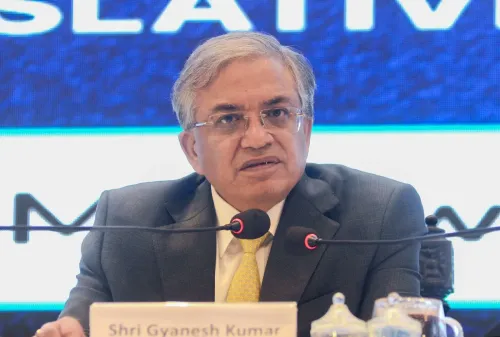
Chief Election Commissioner Gyanesh Kumar is set to face a vigilance investigation in Kerala over allegations that he demanded a ₹2 crore bribe to clear government contract bills when he served as the state's Public Works Department (PWD) Secretary in 2006. The Kerala government on Wednesday, 4 November 2026, granted formal sanction for the probe under Section 17(A) of the Prevention of Corruption Act, marking a significant escalation in a case that directly implicates the head of India's election machinery.
How the Sanction Was Granted
Kerala Home Minister Ramesh Chennithala confirmed that he had approved the investigation after consulting Chief Minister V.D. Satheesan. 'I spoke to the Chief Minister and granted sanction for an investigation under Section 17(A). The VACB can conduct a probe under the law, and I have given the necessary approval,' Chennithala said. The Vigilance and Anti-Corruption Bureau (VACB) will now determine how to proceed in accordance with the law.
The Allegations: What Contractor Sajan Claimed
The probe stems from a complaint filed by contractor V.O. Sajan, who alleged that Kumar had withheld bills belonging to Pathibel — a company that had undertaken a Kerala State Transport Project (KSTP) contract — and demanded ₹2 crore from Malaysian engineer Lee See Bin for their clearance. Sajan, a sub-contractor handling material supplies for Pathibel, also claimed that Lee was under severe mental stress over the pending payments and had spoken to him directly about the alleged demand. Lee, who was reportedly staying near Sajan's house at Chadayamangalam, later died by suicide.
Sajan further alleged that an earlier vigilance investigation into the matter had been aimed at giving Kumar a clean chit rather than pursuing the facts of the case.
Kumar's Current Position No Bar, Says Chennithala
Chennithala was unambiguous that Kumar's status as Chief Election Commissioner would not shield him from an investigation into actions taken during an earlier posting. 'Supreme Court judgments are clear that there is no bar on an investigation. The protection is attached to the office of the Chief Election Commissioner and not to actions taken when he was the PWD Secretary,' he said. The minister's remarks signal that the state government views the constitutional protections attached to Kumar's current role as inapplicable to the period under scrutiny.
Background and What Happens Next
The allegations date back nearly two decades, but the grant of Section 17(A) sanction — a prerequisite for any corruption probe against a serving or former public servant — gives them new legal weight. This comes amid broader political tensions between the Kerala state government and the Election Commission of India (ECI), lending an unmistakable political dimension to the development. Notably, any formal investigation by the VACB would require navigating the constitutional standing of the Chief Election Commissioner, a position protected by provisions analogous to those covering Supreme Court judges. The VACB is now expected to chart the next legal steps, which could include recording statements and reviewing official records from the 2006 period. How the Centre responds — and whether the matter reaches the courts — will determine how far the probe can proceed.
Point of View
Amid political friction between the Kerala government and the Election Commission, invites scrutiny of motive. That said, the legal argument Chennithala advances is not frivolous: Section 17(A) sanction is precisely the procedural gateway for probing past conduct, and Supreme Court precedent does distinguish between the office and the individual. The deeper risk is institutional: a prolonged probe against the CEC — however legally warranted — could be weaponised to cast doubt on the impartiality of the Election Commission at a time when democratic credibility is already contested. The Centre's response, and whether courts intervene to stay proceedings, will reveal whether this is a legitimate accountability exercise or a politically calibrated pressure campaign.
NationPress
4 Nov 2026
Frequently Asked Questions
What is the VACB probe against Chief Election Commissioner Gyanesh Kumar about?
The probe concerns allegations that Gyanesh Kumar, when he served as Kerala's Public Works Department Secretary in 2006, demanded ₹2 crore from Malaysian engineer Lee See Bin to clear contract bills for a company called Pathibel engaged in a Kerala State Transport Project. The Kerala government sanctioned the investigation under Section 17(A) of the Prevention of Corruption Act on 4 November 2026.
Who filed the complaint that led to this sanction?
Contractor V.O. Sajan, who was a sub-contractor handling material supplies for Pathibel, filed the complaint. He alleged that Kumar withheld the company's bills and demanded ₹2 crore for their clearance, and that Lee See Bin was under severe mental stress over the pending payments before he died by suicide.
Does Gyanesh Kumar's position as Chief Election Commissioner protect him from this probe?
Kerala Home Minister Ramesh Chennithala has said it does not, citing Supreme Court judgments that distinguish between protections attached to a constitutional office and actions taken in an earlier posting. The alleged conduct dates to 2006, when Kumar was PWD Secretary — not when he held the CEC post.
What is Section 17(A) of the Prevention of Corruption Act?
Section 17(A) is a provision that requires prior government sanction before any investigation can be initiated against a serving or former public servant for acts allegedly committed in the discharge of official duties. The Kerala Home Minister's approval is the statutory prerequisite that now allows the VACB to formally begin its probe.
What happens next in this case?
The Vigilance and Anti-Corruption Bureau (VACB) will now determine its next legal steps, which could include recording statements and reviewing official records from the 2006 period. Any further proceedings may also be subject to legal challenges given Kumar's constitutional status as Chief Election Commissioner.