Pralhad Joshi Meets CPP Investments Head at Bharat Renewable Energy Summit
Synopsis
Union Minister Pralhad Joshi met CPP Investments' global real assets head at the Bharat Renewable Energy Summit 2026, thanking the Canadian pension fund for its C$3 billion renewable bet and pitching a US$220 billion FY2027-30 clean energy opportunity spanning battery storage, hybrid projects, and transmission.
Key Takeaways
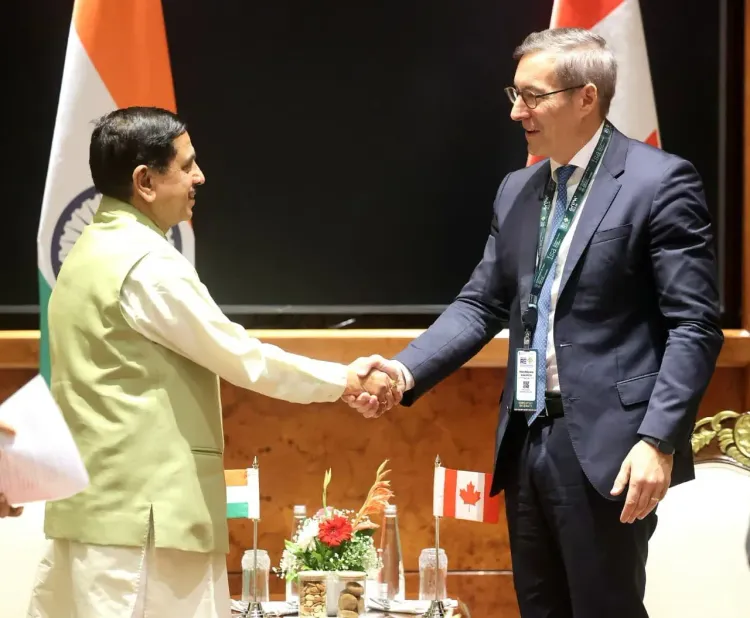
Pralhad Joshi met Maximilian Biagosch of CPP Investments at the Bharat Renewable Energy Summit 2026 on November 4, 2026 .
CPP Investments has invested approximately INR 20,340 crore (C$3 billion) in India's renewable energy sector.
The fund's total estimated exposure to India across all sectors stands at INR 2.28 lakh crore (C$33.7 billion) .
Joshi highlighted an estimated US$220 billion clean energy investment opportunity during FY 2027–30 across battery storage, hybrid projects, transmission, and clean-tech manufacturing.
The minister called for deeper engagement through long-term investments, platform partnerships, and co-investments .
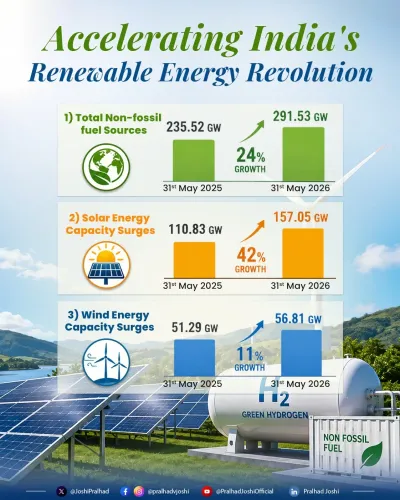
India's overarching goal is 500 GW non-fossil fuel capacity by 2030 , announced at COP26 in 2021.
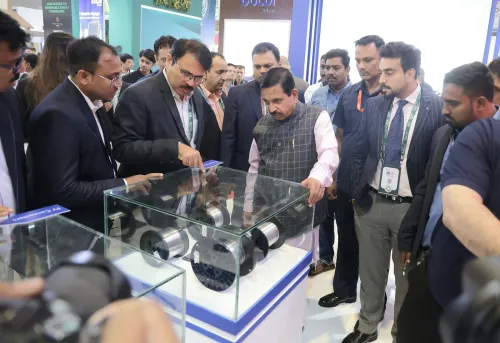
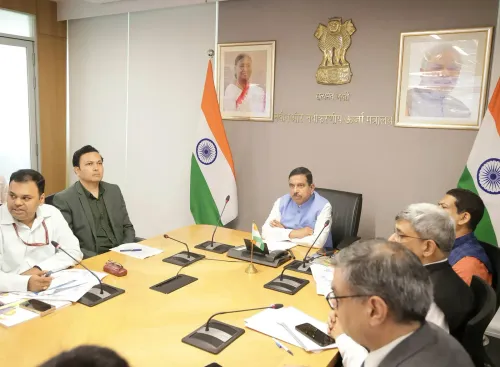
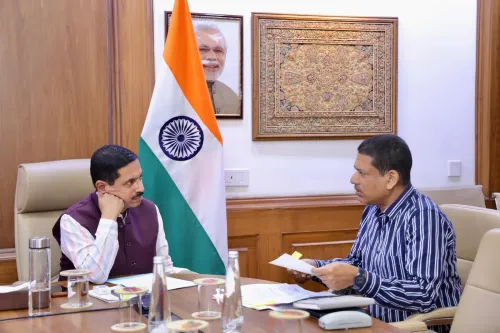
A C$3 billion (approximately INR 20,340 crore) bet on Indian sunshine and wind — that is what Union Minister of New and Renewable Energy Pralhad Joshi thanked Canada's pension giant for on Wednesday, November 4, 2026, as he met Maximilian Biagosch, Senior Managing Director and Global Head of Real Assets at CPP Investments, on the sidelines of the Bharat Renewable Energy Summit 2026.
The bilateral sit-down came as India's clean energy pitch to global capital reaches a new pitch of urgency. CPP Investments — one of Canada's largest pension funds — has built a total estimated exposure of INR 2.28 lakh crore (C$33.7 billion) across Indian markets, making it one of the most committed foreign institutional presences in the country's real-assets landscape.
A $220 Billion Window: What Joshi Put on the Table
The minister did not come empty-handed with optimism. Joshi laid out a concrete opportunity window: an estimated US$220 billion in clean energy investment during FY 2027–30, spread across battery storage, renewable-plus-storage hybrids, transmission infrastructure, and clean-tech manufacturing. Each of those four verticals represents a gap in India's current deployment pipeline — gaps that foreign capital with long investment horizons is uniquely placed to fill.
The pitch was direct: long-term commitments, platform partnerships, and co-investments. These are not transactional asks. They are an invitation to structurally embed a global pension fund into India's decadal energy transition — the kind of sticky, patient capital that sovereign and multilateral planners have been courting since India's 500 GW non-fossil fuel target by 2030, announced at COP26 in 2021, set the clock ticking.
Why CPP Investments' India Bet Keeps Growing
Canadian pension funds occupy a distinctive niche in global infrastructure finance. They manage multigenerational liabilities and need returns that match — which makes long-duration, yield-generating assets like transmission lines, solar parks, and storage platforms a natural fit. CPP Investments has tracked India's regulatory and contractual evolution across real assets for years, and its cumulative C$33.7 billion footprint signals that the fund views India not as an emerging-market wager but as a core allocation.
The Bharat Renewable Energy Summit 2026 provided the stage, but the conversation Joshi described — deepening the partnership, expanding participation in the clean energy transition — points to something more durable than a conference handshake. India has consistently used such multilateral platforms to anchor bilateral investment dialogues that convert into follow-on commitments.
Battery Storage and Transmission: The Next Frontier
Joshi's specific emphasis on battery storage, hybrid projects, and clean-tech manufacturing is telling. India's renewable capacity addition has raced ahead of its storage and grid infrastructure, creating a structural mismatch that now defines the sector's next challenge. Attracting patient capital into transmission and storage — sectors with longer gestation and less merchant risk than generation — is precisely where India needs international partners willing to co-develop platforms rather than simply buy into existing assets.
With the FY 2027–30 investment cycle now underway, the follow-through on conversations like this one will be measured in gigawatt-hours commissioned and transmission corridors energised — not in summit photographs.
Point of View
Hybrid projects, and transmission corridors rather than vanilla solar parks. For CPP Investments, deepening its India platform during the FY2027-30 cycle would reinforce its position as a structurally committed partner rather than a passive allocator. Joshi's dual ministerial portfolio — renewable energy and consumer affairs — gives him unusual leverage to frame India's clean transition as both a supply-side investment story and a demand-side policy imperative, strengthening the pitch to pension-fund stewards who think in decades. The public disclosure of a C$33.7 billion cumulative India exposure also serves a signalling function: it tells other global funds that the country's real-assets framework can accommodate and retain institutional-scale capital at scale.
NationPress
4 Nov 2026
Frequently Asked Questions
How much has CPP Investments invested in India's renewable energy sector?
CPP Investments has invested an estimated INR 20,340 crore (approximately C$3 billion) in India's renewable energy sector, according to Union Minister Pralhad Joshi's statement at the Bharat Renewable Energy Summit 2026.
What is CPP Investments' total investment in India?
CPP Investments' total estimated investment across all sectors in India stands at approximately INR 2.28 lakh crore (C$33.7 billion) , as cited by Minister Joshi during their meeting.
What is the US$220 billion clean energy investment opportunity Joshi mentioned?
Minister Joshi highlighted an estimated US$220 billion clean energy investment opportunity in India during FY 2027–30 , covering battery storage, renewable-plus-storage hybrid projects, power transmission infrastructure, and clean-tech manufacturing.
What is the Bharat Renewable Energy Summit 2026?
The Bharat Renewable Energy Summit 2026 is an industry event focused on India's renewable energy sector and investment opportunities, where Minister Joshi held the meeting with CPP Investments on the sidelines.
What is India's renewable energy target by 2030?
India announced a target of 500 GW non-fossil fuel electricity capacity by 2030 at the COP26 climate summit in 2021, alongside a commitment to achieve net-zero emissions by 2070.