Pralhad Joshi Courts CPP Investments for India's Clean Energy Push
Synopsis
At the Bharat Renewable Energy Summit 2026, Minister Pralhad Joshi thanked CPP Investments for a C$3 billion renewable energy commitment and highlighted $220 billion in Indian clean energy investment opportunities between FY2027 and FY2030, covering battery storage, hybrids, and transmission.
Key Takeaways
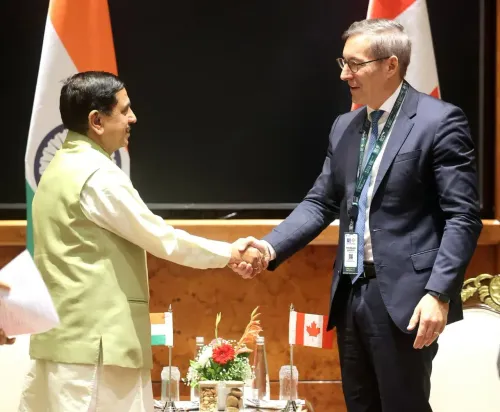
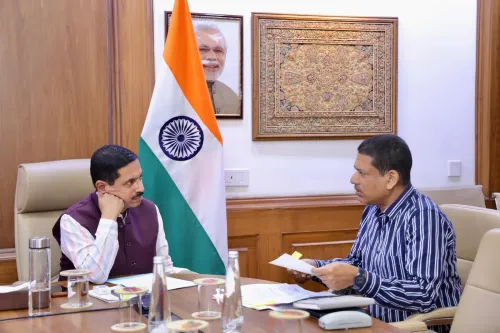
Union Minister Pralhad Joshi met Maximilian Biagosch of CPP Investments at the Bharat Renewable Energy Summit 2026 on November 4, 2026 .
CPP Investments has committed approximately ₹20,340 crore (C$3 billion) specifically to India's renewable energy sector.
The fund's total cumulative investment in India across all sectors stands at approximately ₹2.28 lakh crore (C$33.7 billion) .
India's clean energy sector is estimated to offer $220 billion in investment opportunities during FY2027–30 .
Priority sectors identified include battery storage, renewable-plus-storage hybrids, transmission infrastructure , and clean technology manufacturing .
Joshi called for deeper engagement through long-term investments, platform partnerships, and co-investment structures .
A ₹20,340 crore vote of confidence in Indian renewables — that is what Union Minister for New and Renewable Energy Pralhad Joshi acknowledged on Wednesday, November 4, 2026, as he met Maximilian Biagosch, Senior Managing Director and Global Head of Real Assets at Canada Pension Plan Investment Board (CPP Investments), on the sidelines of the Bharat Renewable Energy Summit 2026.
Posting on X, Joshi expressed gratitude to CPP Investments for committing approximately ₹20,340 crore (C$3 billion) to India's renewable energy sector and noted that the Canadian pension giant's cumulative investment in India now stands at a remarkable ₹2.28 lakh crore (C$33.7 billion) across all asset classes — a figure that underscores just how central Indian infrastructure has become to one of the world's largest institutional investors.
₹2.28 lakh crore and counting: CPP Investments' India bet
CPP Investments, which manages retirement savings for millions of Canadians, has built one of the most substantial emerging-market footprints of any OECD pension fund. Its India allocation spans infrastructure, real estate, and financial services, but clean energy has been gaining weight within that portfolio as global capital increasingly chases energy-transition assets. The meeting with Joshi signals that the fund views India's policy environment and growth runway as aligned with its long-horizon mandate.
Joshi highlighted sectors where he sees the greatest headroom: battery storage, renewable-plus-storage hybrids, transmission infrastructure, and clean technology manufacturing. These are precisely the segments that India's grid integration challenge demands — moving beyond raw generation capacity to building the backbone that makes intermittent solar and wind reliable at scale.
$220 billion on the table: the FY2027–30 window
The minister flagged an estimated $220 billion in clean energy investment opportunities in India over the FY2027–30 period — a number that frames the conversation not as a courtesy call but as a commercial pitch of the highest order. India's Panchamrit climate commitments, made at COP26 in 2021, include reaching 500 GW of non-fossil capacity by 2030 and achieving net-zero by 2070. Closing the gap between current installed capacity and those targets will require a sustained flood of institutional capital — exactly the kind CPP Investments represents.
Joshi encouraged deeper participation through long-term investments, platform partnerships, and co-investment structures — the architecture that lets a large fund like CPP scale exposure without taking on individual project risk directly. Platform deals, in particular, have become the preferred mode for OECD institutional investors entering emerging-market infrastructure: they provide diversification, management leverage, and an alignment with local partners who know the regulatory terrain.
Why Canadian capital keeps returning to Indian renewables
Canada's pension funds have been among the most consistent foreign backers of Indian infrastructure over the past decade, drawn by long-duration, inflation-linked revenue streams that match their liability profiles. India, in turn, has courted them through mechanisms like the International Solar Alliance, launched in 2015, and consistent policy signals on tariff stability and grid connectivity. The Bharat Renewable Energy Summit itself serves as a structured channel for exactly this kind of high-level capital diplomacy.
The next measure of this partnership's depth will not be in summits or statements — it will be in signed term sheets for battery storage projects and hybrid capacity auctions in the fiscal years ahead. The minister has laid out the map; whether capital follows at the speed the grid requires is the question that will define India's energy decade.
Point of View
Using high-profile summits as deal-making venues rather than mere showcases. By publicly quantifying CPP Investments' cumulative India exposure at ₹2.28 lakh crore, Joshi is signalling to other large pension funds that the risk-return case has already been validated by a credible peer. The $220 billion opportunity framing for FY2027–30 is also a policy signal — it sets an expectation that the government will sustain an enabling environment for private capital in grid storage and transmission, segments historically dominated by state utilities. If platform partnerships and co-investment structures follow, it could meaningfully accelerate India's path to its 500 GW non-fossil target.
NationPress
4 Nov 2026
Frequently Asked Questions
How much has CPP Investments invested in India so far?
CPP Investments has cumulatively invested approximately ₹2.28 lakh crore (C$33.7 billion) in India across various sectors, including a dedicated commitment of around ₹20,340 crore (C$3 billion) to the renewable energy sector.
What is the Bharat Renewable Energy Summit 2026?
The Bharat Renewable Energy Summit 2026 is an industry summit focused on India's renewable energy sector, bringing together policymakers, investors, and industry leaders to discuss clean energy investment and policy.
What clean energy sectors is India targeting for foreign investment in FY2027–30?
India is prioritising battery storage, renewable-plus-storage hybrid projects, transmission infrastructure, and clean technology manufacturing as key areas for foreign institutional investment between FY2027 and FY2030.
Who is Maximilian Biagosch and why did Pralhad Joshi meet him?
Maximilian Biagosch is Senior Managing Director and Global Head of Real Assets at CPP Investments. Joshi met him at the Bharat Renewable Energy Summit 2026 to thank the fund for its renewable energy investment and to encourage deeper co-investment in India's clean energy transition.
What is India's 2030 renewable energy target?
Under its Panchamrit commitments made at COP26 in 2021, India has set a target of achieving 500 GW of non-fossil energy capacity by 2030 and reaching net-zero emissions by 2070.