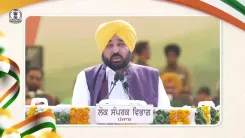
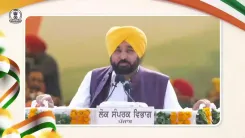
Tricolour flies in Maoist heartland for first time: CM Office
Synopsis
The Tricolour flew for the first time in Binagunda, Maharashtra — identified as the gateway to Maoist-held territory — as residents celebrated Independence Day on 15 August 2026, marking a symbolic and operational milestone in the state's decade-long anti-Naxal strategy.
Key Takeaways
Residents of Binagunda village celebrated Independence Day for the first time on 15 August 2026 .
Binagunda is identified as the 'gateway to Maoist-controlled territory' in Maharashtra .
The Chief Minister's Office of Maharashtra posted about the event, tagging CM Devendra Fadnavis .
The ceremony marks a visible restoration of civilian administration in a village previously under Maoist influence.
Maharashtra's anti-Naxal approach pairs security operations with administrative outreach and symbolic civic events.
The event mirrors a wider national strategy of reclaiming Maoist-affected geography through coordinated state action.
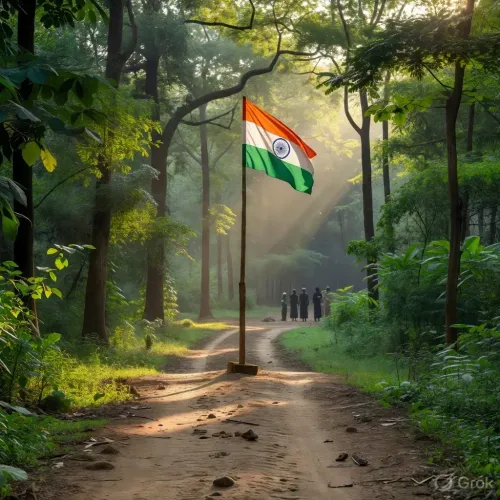
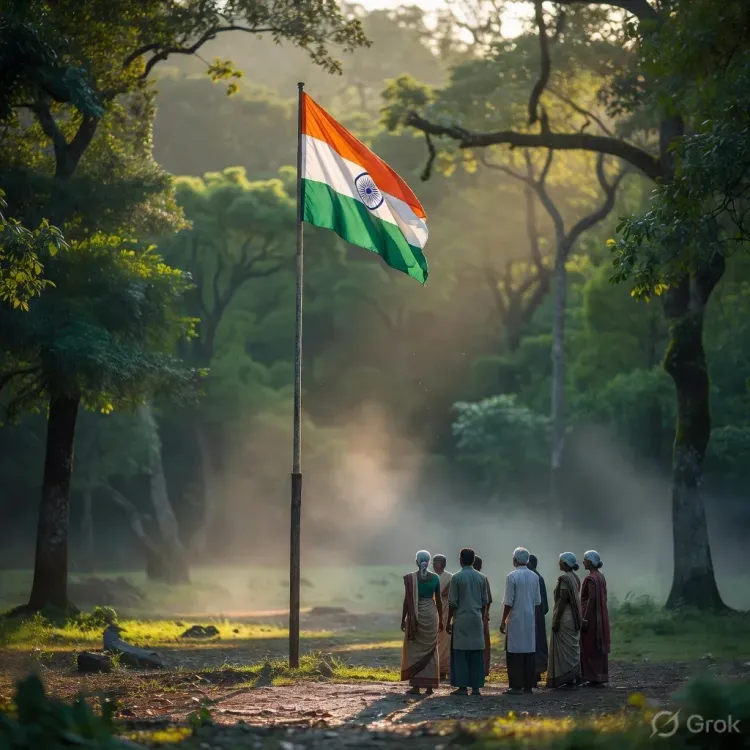
For the first time in living memory, the residents of Binagunda — long known as the gateway to Maoist-controlled territory in Maharashtra — raised the Tricolour and celebrated Independence Day on 15 August 2026. Where the shadow of armed insurgency once silenced every public gathering, the national flag flew at dawn, marking what the Chief Minister's Office of Maharashtra called a new beginning for the village.
The CMO's post, tagging Chief Minister Devendra Fadnavis, captured the moment in Marathi: 'जिथे बंदुकीची दहशत होती, तिथे तिरंग्याच्या साक्षीने स्वातंत्र्याची नवी पहाट उगवली!' — 'Where the terror of the gun once reigned, a new dawn of freedom has risen under the Tricolour.'
Binagunda: From Maoist gateway to Independence Day celebration
Binagunda's identity as the entry point to a Maoist stronghold made it one of the most visible symbols of the state's unfinished security challenge. Villages like this one, embedded in the forested districts of central Maharashtra, have historically been sites where civilian administration struggled to function openly — where national observances were either suppressed or simply absent.
That a formal Independence Day ceremony could be held here, attended by local residents, signals a tangible shift in ground conditions. Symbolic as it is, the hoisting of the Tricolour in a contested village carries operational weight: it marks the re-entry of the Indian state into a space that insurgents had, for years, claimed as their own.
The strategy behind the symbolism
Maharashtra's approach to Naxal-affected districts — particularly Gadchiroli and surrounding areas — has combined sustained security operations with administrative outreach and welfare delivery. Successive governments have used exactly these kinds of public ceremonies to signal restored civilian control, drawing residents back into the fold of national civic life.
Chief Minister Devendra Fadnavis, who has made anti-Naxal operations a centrepiece of his security agenda across multiple tenures, was directly tagged in the post — a deliberate political signal that this moment is being framed as a governance achievement, not merely a ceremonial one.
The broader national strategy mirrors this pattern: reduce the geographical footprint of left-wing extremism through coordinated pressure, then consolidate gains with visible acts of civic normalcy. A flag hoisting is not just a photograph. It is a statement that the state has arrived — and intends to stay.
Point of View
Who has consistently positioned anti-Naxal action as a signature achievement, this moment reinforces a political narrative of decisive state authority. It also fits a wider national pattern where symbolic reclamation events are used to consolidate public perception of shrinking Maoist influence. The real test, however, will be whether administrative presence and development delivery follow the flag.
NationPress
16 Aug 2026
Frequently Asked Questions
Where is Binagunda village and why is it significant?
Binagunda is a village in Maharashtra identified as the entry point to territory historically under Maoist influence. Its significance lies in being a symbolic frontier between civilian administration and insurgent-controlled areas.
What happened in Binagunda on Independence Day 2026?
On 15 August 2026 , residents of Binagunda celebrated Independence Day and hoisted the Tricolour for the first time, according to a post by the Chief Minister's Office of Maharashtra.
Who is Devendra Fadnavis and what is his role in anti-Naxal policy?
Devendra Fadnavis is the Chief Minister of Maharashtra. He has made counter-Naxal operations and the extension of state authority into insurgent-affected districts a central part of his governance agenda across multiple tenures.
What is Maharashtra's strategy against Naxalites?
Maharashtra has followed a dual approach combining security operations with administrative outreach, welfare delivery, and symbolic civic events — such as Independence Day ceremonies — to restore civilian life in Naxal-affected districts like Gadchiroli.
What does hoisting the Tricolour in a Maoist area signify?
A flag hoisting in a previously insurgent-controlled village signals the re-establishment of civilian administration and state authority. It is used by governments as a marker of operational progress in anti-Naxal campaigns.