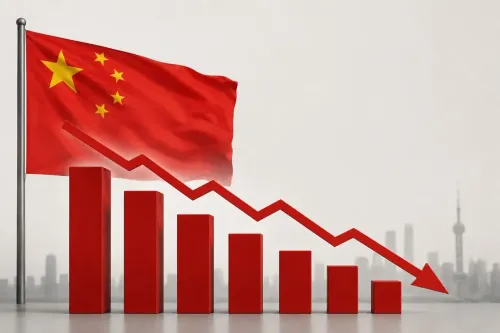
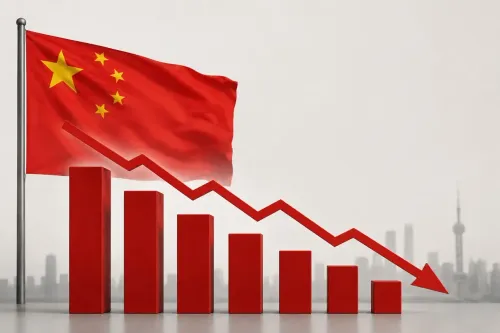
China GDP slows to 4.3% in Q2 as domestic demand collapses
Synopsis
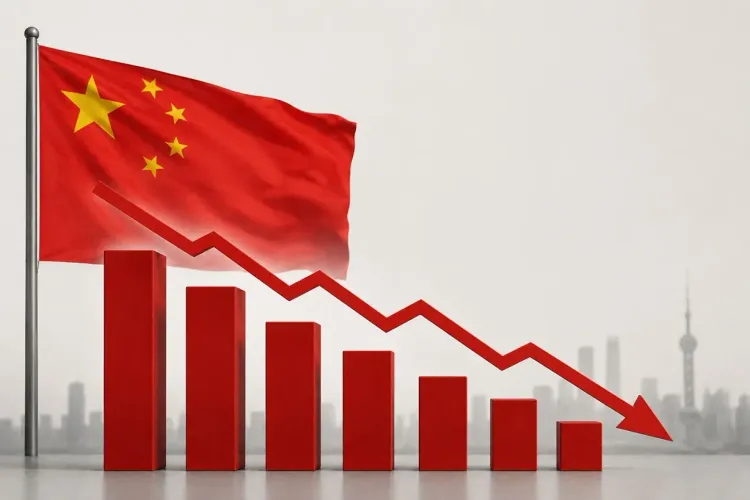
China's economy grew just 4.3% in Q2 2025 — but the headline masks something more alarming: real estate investment posted its worst half-year contraction on record, local government finances are drying up, and consumer confidence is so weak that car sales fell 16.1% in June. The export engine is still running hot, but it is pulling the economy in the opposite direction from where Beijing needs it to go.
Key Takeaways
China's GDP grew just 4.3% in Q2 2025 , slowing sharply on weak domestic demand.
Real estate investment fell 18.0% — the largest half-year contraction on record — while FAI also declined in roads, education, healthcare, and construction.
Domestic car sales collapsed 16.1% year-on-year in June , signalling deep consumer confidence weakness.
Exports surged 27.0% and imports rose 36.0% in June on a USD basis, but import growth reflects rising prices rather than higher volumes.
EU-China trade tensions are expected to remain elevated as Chinese export volumes grow; even Germany has hardened its stance on Beijing's industrial policy.
Structural reforms needed to boost consumption would take years to deliver results, leaving Beijing with limited near-term tools to rebalance growth.
China's GDP growth decelerated sharply to 4.3 per cent in the second quarter of 2025, as collapsing domestic demand exposed the deepening structural fault lines of the world's second-largest economy. According to analysis published by MERICS (Mercator Institute for China Studies), the slowdown reflects a worsening imbalance between an export-driven growth model and a persistently weak domestic economy.
Fixed-Asset Investment: The Primary Drag
The steepest blow came from fixed-asset investment (FAI), which contracted across multiple sectors. Real estate investment fell by 18.0 per cent — the largest contraction for a half-year on record, according to the MERICS report. Crucially, the decline was not limited to property: FAI also fell in road building, education, healthcare, and construction.
The analysis points to cash-strapped local governments as a key structural weakness. These governments typically shoulder a significant share of infrastructure spending, but their fiscal buffers appear to have run dry — removing a critical engine of domestic investment.
Consumer Confidence Remains Fragile
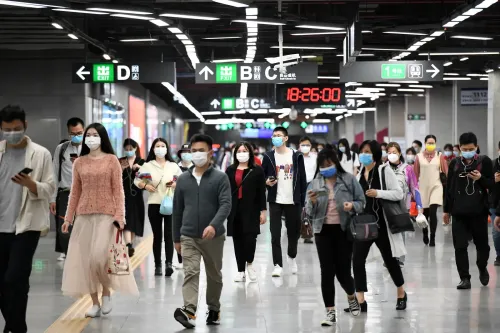
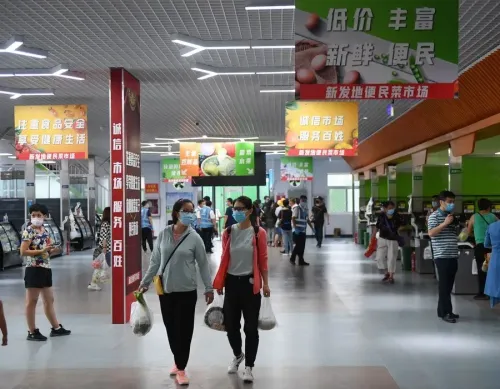
Weak household sentiment is compounding the investment slump. Domestic car sales collapsed by 16.1 per cent year-on-year in June, according to the MERICS report, serving as a barometer of broader consumer caution. Suppressed consumption is directly dragging on headline growth figures, and analysts see no near-term catalyst for a reversal.
Beijing has repeatedly stated its commitment to raising household spending, but the MERICS analysis notes that any meaningful shift would require difficult structural reforms — ones that could take several years to produce results even if implemented decisively. Serious steps in that direction, the report observes, are not currently on the cards.
Exports Surge, But Imbalances Deepen
While the domestic economy stagnates, China's external trade has surged. Exports grew 27.0 per cent in June on a US dollar value basis, and imports rose 36.0 per cent — though the import growth is largely attributed to rising prices for commodities and high-tech products rather than a genuine increase in import volumes. In effect, China is paying more for roughly the same quantity of goods from abroad.
High-tech products performed particularly strongly in the export mix, suggesting China's external competitiveness remains intact and its export boom retains room to grow. This dynamic, however, is precisely what is fuelling trade friction with major partners.
EU-China Trade Tensions Set to Escalate
The growing volume of Chinese goods flowing into Europe has prompted a review of the European Union's trade defence mechanisms. Notably, even the German government — historically cautious about publicly criticising Beijing's industrial policy — has begun speaking more candidly about what it characterises as unfair trade practices.
The MERICS report warns that EU policymakers should not expect concessions from Beijing in ongoing trade and investment discussions. Given the economic pressures China faces domestically, it is likely to maintain an intransigent position in negotiations, the analysis states. EU-China trade tensions, it concludes, will remain elevated as long as structural imbalances persist.
The Road Ahead for Beijing
Even with export strength providing a partial buffer, Beijing will need at least moderate growth in both consumption and investment to avoid a broad-based economic slowdown and meet its official growth targets. The challenge is structural: the levers required to boost consumption — income redistribution, social safety net expansion, property market stabilisation — are politically complex and fiscally demanding.
Whether Beijing can engineer a rebalancing without triggering a sharper near-term contraction remains the central question for China's economic trajectory in the second half of 2025.
Point of View
Consumption, local government capacity — is losing pressure simultaneously. Beijing's growth target is increasingly being held up by external demand it cannot fully control and domestic stimulus it cannot fully afford. The real estate collapse is not a cyclical blip; at 18% for a half-year, it is a structural rupture. What makes this particularly difficult is that the two obvious fixes — aggressive fiscal stimulus and consumption-boosting reforms — are in tension with each other and with the political economy of the current leadership. The EU's hardening stance on trade defence adds an external constraint precisely when China can least afford to lose export momentum.
NationPress
26 Oct 2026
Frequently Asked Questions
Why did China's GDP growth slow to 4.3% in Q2 2025?
China's GDP growth slowed to 4.3% in the second quarter of 2025 primarily because of a sharp contraction in domestic demand, led by a record 18% fall in real estate investment and a broad decline in fixed-asset investment across infrastructure, education, and healthcare. Weak consumer confidence, reflected in a 16.1% year-on-year collapse in domestic car sales in June, further suppressed growth.
How bad is China's real estate investment decline?
Real estate investment in China fell 18.0% — the largest contraction for a half-year on record, according to the MERICS analysis. The decline is compounding fiscal stress on local governments, which traditionally fund a large share of infrastructure spending but are increasingly cash-strapped.
Why are China's exports rising even as its domestic economy weakens?
China's exports grew 27.0% in June on a US dollar basis, driven by strong performance in high-tech products. However, this export surge is widening the structural imbalance: the domestic economy remains stagnant while external trade booms, making China more dependent on foreign markets and heightening trade tensions — particularly with the European Union.
What is the EU's response to the surge in Chinese exports?
The European Union has launched a review of its trade defence mechanisms in response to the growing inflow of Chinese goods. Even Germany, historically reluctant to criticise Beijing's industrial policy, has begun speaking openly about unfair trade practices. The MERICS report warns that Beijing is unlikely to offer concessions in trade negotiations given its domestic economic pressures.
Can Beijing boost domestic consumption to offset the slowdown?
Beijing has stated a long-term commitment to raising household spending, but analysts at MERICS note that meaningful reform would require difficult structural changes that could take years to show results. Immediate, substantive steps to boost consumption are not currently expected, leaving the economy reliant on export growth to meet its targets.