China GDP slows to 4.3% in Q2 2026, property drag deepens demand crisis
Synopsis
China's economy grew just 4.3% in Q2 2026 — its weakest in over three years and below Beijing's own floor target — as real-estate investment collapsed 18% and retail sales barely moved. With exports the only engine firing, trade tensions are rising and the structural demand crisis Premier Li Qiang has himself acknowledged is far from resolved.
Key Takeaways
China's GDP grew 4.3 per cent year-on-year in Q2 2026 , the weakest quarterly reading in over three years.
The figure missed economists' forecast of 4.5 per cent and fell below the lower bound of Beijing's 4.5–5 per cent annual target.
Real-estate investment plunged 18 per cent and fixed-asset investment fell 5.7 per cent in the first half of 2026 .
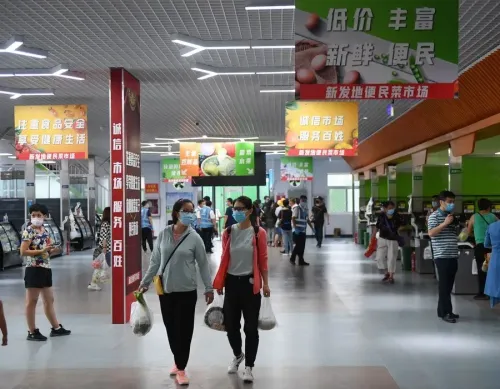
Retail sales grew only 0.6 per cent in July , while industrial output slowed to 4.5 per cent from 5.3 per cent in June .
Premier Li Qiang has acknowledged insufficient domestic demand as a prominent problem and called for measures to boost both domestic and external demand.
China's goods exports rose 13.4 per cent in H1 2026, but analysts warn export reliance is unsustainable and is stoking trade tensions with key partners.
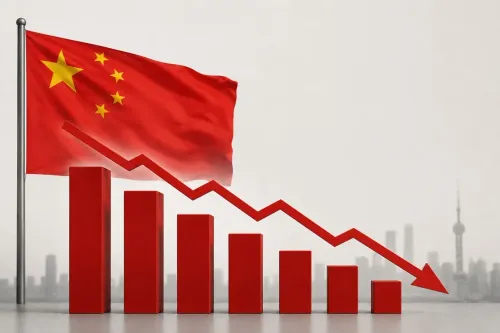
China's economy decelerated sharply in the second quarter of 2026, with gross domestic product (GDP) expanding just 4.3 per cent year-on-year in the April–June period — down from 5 per cent in Q1 and below the 4.5 per cent forecast by economists, according to a new report. The reading marked the weakest quarterly growth in over three years and fell short of the lower bound of Beijing's own 4.5–5 per cent annual growth target.
Property Sector Remains the Central Drag
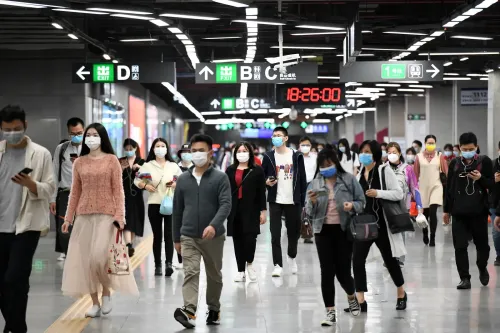
A prolonged downturn in China's real-estate market continues to weigh heavily on the broader economy. Years of overbuilding and excessive investment have left the sector mired in a structural slump that has eroded household wealth, dampened consumer confidence, and suppressed investment activity.
Fixed-asset investment fell 5.7 per cent in the first half of 2026, while real-estate investment plunged 18 per cent. The weakness has carried into the third quarter: July industrial output rose just 4.5 per cent, down from 5.3 per cent in June, while retail sales grew a tepid 0.6 per cent.
Domestic Demand: Beijing's Acknowledged Problem
Premier Li Qiang has publicly acknowledged that insufficient domestic demand remains a prominent challenge. He has called for measures to strengthen both domestic and external demand, according to the report. The admission underscores the scale of the structural shift Beijing must engineer — moving an economy long powered by infrastructure investment and manufacturing exports toward one sustained by consumer spending.
The report argued that an export engine running at full capacity cannot indefinitely compensate for weak consumption at home, describing domestic demand as a crucial and unresolved issue for policymakers.
Export Reliance Stirs Trade Tensions
China's trade in goods rose 16.9 per cent year-on-year in the first half of 2026, with exports up 13.4 per cent. However, analysts have warned that relying on external markets to absorb excess manufacturing capacity is unsustainable over the medium term.
That reliance is already generating friction with trading partners, who have raised concerns about Chinese subsidies, surplus industrial capacity, and the impact of competitively priced Chinese goods on their domestic industries. Several major economies have either imposed or signalled additional tariffs on Chinese exports in recent months.
What the Numbers Signal for the Rest of 2026
With the property sector still contracting, retail sales barely moving, and industrial output losing momentum, the path to meeting Beijing's full-year growth target looks increasingly narrow. Analysts note that a sustained export surplus can mask demand weakness in quarterly data, but cannot substitute for the consumer-driven growth China needs to rebalance its economy structurally. Policy stimulus — whether through rate cuts, fiscal transfers, or targeted consumption subsidies — is widely expected to be on the table in the coming months.
Point of View
Exports are doing the heavy lifting for an economy of 1.4 billion people. That is not rebalancing; that is substitution. Premier Li Qiang's acknowledgement of the demand problem is notable for its candour, but candour without a credible consumption stimulus framework changes little. The deeper risk is that trade partners absorbing China's export surplus are now pushing back with tariffs, threatening the one engine still running. Beijing is caught between a property sector it cannot easily reflate and export markets it cannot fully control — and the Q2 data suggests the window for a soft landing is narrowing.
NationPress
6 Oct 2026
Frequently Asked Questions
What was China's GDP growth rate in Q2 2026?
China's economy grew 4.3 per cent year-on-year in the second quarter of 2026 (April–June), according to a new report. This was down from 5 per cent in Q1, below the 4.5 per cent economist forecast, and the weakest quarterly reading in over three years.
Why is China's economy slowing in 2026?
The slowdown is driven by a prolonged property sector downturn, weak domestic consumer demand, and slowing industrial output. Real-estate investment fell 18 per cent in the first half of 2026, eroding household wealth and consumer confidence, while retail sales grew only 0.6 per cent in July.
Has Beijing acknowledged the demand problem?
Yes. Premier Li Qiang has publicly stated that insufficient domestic demand remains a prominent problem and has called for policy measures to strengthen both domestic and external demand, according to the report.
How are China's exports performing, and why is it a concern?
China's goods trade rose 16.9 per cent year-on-year in H1 2026, with exports up 13.4 per cent. However, analysts warn that relying on exports to offset weak domestic demand is unsustainable and is generating trade tensions with partners concerned about Chinese subsidies and surplus industrial capacity.
Is China on track to meet its 2026 growth target?
The Q2 reading of 4.3 per cent fell below the lower bound of Beijing's 4.5–5 per cent annual target, raising doubts about whether the full-year goal is achievable. With property investment still contracting and consumer spending subdued, analysts expect further policy stimulus in the coming months.