North Korea warns of 'powerful counteraction' over DMZ intrusion threat
Synopsis
North Korea has threatened 'immediate and powerful counteraction' if South Korea crosses even a millimetre of its border — a direct escalation after Seoul formally blamed Pyongyang for a 21 September DMZ mine blast that critically injured two soldiers. With only 200 of the original 1,292 border markers still intact and Pyongyang flatly refusing talks, the risk of miscalculation along one of the world's most volatile borders is sharply elevated.
Key Takeaways
North Korea's foreign ministry on 6 October 2026 threatened 'immediate and powerful counteraction' if South Korea crosses even a millimetre of its territory.
South Korea's Joint Chiefs of Staff concluded that antipersonnel mines planted by North Korean troops south of the MDL caused the 21 September DMZ blast, critically injuring two soldiers.
Defence Minister Kang Shin-chul called the subsequent mine-clearing operation — the first inside the buffer zone — a 'decisive' response to Pyongyang.
North Korea categorically denied involvement, calling Seoul's findings a 'premeditated farce' and ruling out any inter-Korean dialogue on border demarcation.
Of the 1,292 MDL marker signs installed at the 1953 armistice, only around 200 remain intact today, complicating border enforcement.
A similar DMZ mine blast in 2015 followed the same pattern: Seoul sought talks, Pyongyang rejected them.
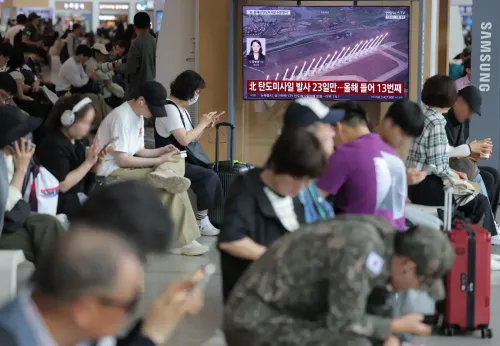
North Korea on Tuesday, 6 October 2026, threatened an 'immediate and powerful counteraction' if South Korea crosses even 'a millimetre' into its territory, escalating tensions along the Demilitarised Zone (DMZ) following a deadly land mine blast that Seoul has formally attributed to Pyongyang. The warning from North Korea's foreign ministry came a day after South Korea's military concluded an investigation into the 21 September explosion that critically injured two South Korean soldiers.
The DMZ Mine Blast That Triggered the Crisis
South Korea's Joint Chiefs of Staff (JCS) announced the final findings of its investigation, concluding that antipersonnel mines deliberately planted by North Korean troops south of the Military Demarcation Line (MDL) caused the explosion on the southern side of the DMZ. Seoul has characterised the incident as a violation of the 1953 Armistice Agreement, which bans hostile activities and unauthorised border crossings along the zone.
In direct response, the South's military conducted a mine-clearing operation at the blast site in coordination with the UN Command (UNC), which oversees the border area. Defence Minister Kang Shin-chul described the operation as a 'decisive' response against Pyongyang — the first such mission inside the buffer zone between the two Koreas.
Pyongyang's Categorical Denial and Threat
North Korea's foreign ministry categorically denied any involvement in the blast, accusing Seoul of fabricating a 'premeditated farce' to frame its own border fortification as a military invasion. 'The ROK seeks to hold the DPRK accountable for the premeditated farce, fabricated and determined unilaterally by it, and tarnish the latter's international image,' the ministry stated, referring to South Korea by its official name, the Republic of Korea (ROK).
The ministry issued a stark warning: 'If a jackboot or a spark of fire from the ROK goes even a millimetre beyond the border to violate our territory, the border guard forces of the DPRK will take an immediate and powerful counteraction.' It also vowed to exercise its 'just sovereign rights' in a 'more resolute and bold manner' to ensure border security, while ruling out any inter-Korean dialogue on the matter.
The MDL Marker Problem at the Heart of the Dispute
A complicating factor lies in the deteriorating physical demarcation of the border itself. When the armistice was signed in 1953, the UNC and North Korean military installed 1,292 signs along the MDL to mark the ceasefire line. Today, only around 200 remain intact, with the rest having degraded due to weather exposure and lack of maintenance over seven decades.
Unification Minister Chung Dong-young proposed that the two Koreas meet to address discrepancies in the border line, citing the fading visibility of MDL markers as a primary factor behind the blast. A defence ministry official in Seoul confirmed that a military task force was launched earlier this year to discuss MDL demarcation with the UNC, which has reportedly conveyed to Pyongyang the need to establish clearer and consistent markers along the border.
A Recurring Pattern Along the Border
This is not the first time a DMZ mine blast has pushed inter-Korean tensions to the brink. A 2015 mine explosion similarly injured two South Korean troops. At that time, Seoul and the UNC proposed military-level talks with Pyongyang — an offer North Korea rejected outright. The current situation echoes that pattern: South Korea and international overseers seeking dialogue, Pyongyang refusing any negotiation it considers an encroachment on its military sovereignty.
Notably, North Korea's statement explicitly ruled out future talks: 'The DPRK will never discuss with the enemy countries the issue of exercising its military sovereignty within its territory but defend its territorial sovereignty by thoroughly exercising its power, not by negotiations.' This effectively closes the door on the kind of military-level engagement Seoul has proposed.
Seoul's Position and What Comes Next
Defence Minister Kang reiterated to reporters that all responsibility for the mine blast lies with North Korea, and that Seoul will respond 'decisively' to any activities threatening national security. When pressed on potential follow-up measures, Kang declined to elaborate, saying only that 'necessary steps' would continue.
With Pyongyang hardening its posture and the physical integrity of the MDL itself in question, the prospects for de-escalation along one of the world's most heavily armed borders appear slim in the near term.
Point of View
Rejecting talks, and threatening force, North Korea is signalling that it will not allow the DMZ mine incident to become a diplomatic opening for Seoul. The crumbling MDL markers are a genuine operational ambiguity that both sides now interpret to their own advantage. Most mainstream coverage focuses on the rhetoric; the structural problem — a 70-year-old ceasefire line with 85% of its physical markers gone — is the real story, and one neither side has a clear incentive to resolve quickly.
NationPress
6 Oct 2026
Frequently Asked Questions
What triggered North Korea's latest warning against South Korea?
North Korea issued the warning on 6 October 2026, a day after South Korea's military formally concluded that North Korean troops had planted the antipersonnel mines that exploded on the southern side of the DMZ on 21 September, critically injuring two South Korean soldiers. Seoul's subsequent mine-clearing operation inside the buffer zone further escalated tensions.
What exactly did North Korea threaten?
North Korea's foreign ministry warned that if 'a jackboot or a spark of fire from the ROK goes even a millimetre beyond the border,' its border guard forces would 'take an immediate and powerful counteraction.' The ministry also ruled out any negotiations over its military sovereignty within its territory.
Why is the Military Demarcation Line (MDL) so difficult to enforce?
Of the 1,292 border marker signs installed along the MDL when the armistice was signed in 1953, only around 200 remain intact today. Decades of weather exposure and lack of maintenance have degraded the rest, creating physical ambiguity about the exact ceasefire line — a factor Unification Minister Chung Dong-young cited as a primary cause of the mine blast.
Has South Korea proposed talks to resolve the border dispute?
Yes. Unification Minister Chung Dong-young proposed inter-Korean meetings to address discrepancies in the MDL, and a military task force was reportedly launched earlier in 2026 to discuss the issue with the UN Command. However, North Korea flatly rejected the idea, stating it will 'never discuss' its military sovereignty with 'enemy countries.'
Has a similar DMZ mine incident happened before?
Yes. A comparable mine blast occurred in 2015, also critically injuring two South Korean troops. At the time, Seoul and the UN Command proposed military-level talks with Pyongyang, which North Korea rejected. The current episode follows a near-identical pattern of incident, South Korean accusation, North Korean denial, and Pyongyang's refusal of dialogue.