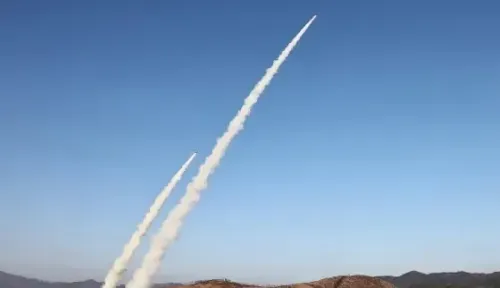
North Korea fires ballistic missile into East Sea amid rising inter-Korean tensions

Synopsis
North Korea launched a ballistic missile from Wonsan on 3 October — the second such launch in 13 days — as inter-Korean tensions spiked following a DMZ mine blast that injured three South Korean soldiers. With Pyongyang denying involvement, threatening 'merciless' retaliation, and dismissing all dialogue, the Korean Peninsula is entering one of its most volatile stretches in recent months.
Key Takeaways
North Korea launched a ballistic missile from Wonsan toward the East Sea on 3 October 2026 at approximately 6:30 a.m.
The missile flew over 700 kilometres before landing at sea; type is unconfirmed but may be an IRBM or MRBM .
The launch followed a 21 September North Korean land mine blast in the DMZ that injured three South Korean soldiers , two seriously.
Kim Yo-jong denied North Korea's role in the mine blast and threatened 'merciless' retaliation against any South Korean response.
This is the second North Korean ballistic missile launch in 13 days , following twin short-range launches on 20 September .
South Korea and the US are jointly analysing the missile's specifications under a combined defence posture.
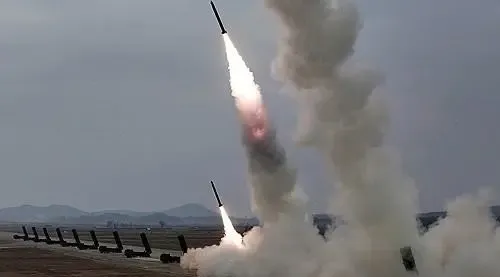
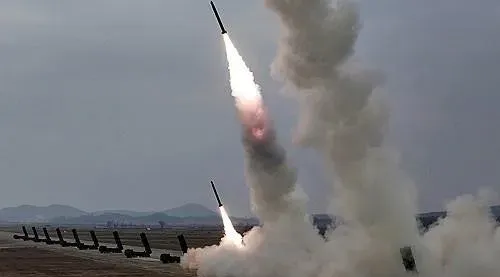
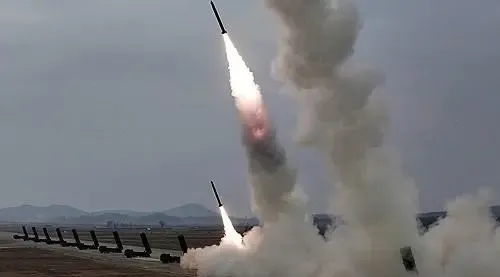
North Korea fired a ballistic missile toward the East Sea on Saturday, 3 October 2026, South Korea's military confirmed, as inter-Korean tensions reached a new high following a deadly mine blast inside the Demilitarised Zone (DMZ) that wounded three South Korean soldiers. The launch, detected at approximately 6:30 a.m. from the Wonsan area, saw the missile travel over 700 kilometres before splashing down at sea.
Key Details of the Launch
South Korea's Joint Chiefs of Staff (JCS) confirmed the detection but did not immediately specify the missile type. The JCS said it is jointly analysing the exact specifications with the US side, and noted that South Korean and US intelligence authorities had tracked the launch from its earliest stage. According to a government source, there is a possibility that North Korea fired an intermediate-range ballistic missile (IRBM) at a reduced range, with the projectile appearing similar to one launched on 12 August from the same Wonsan area.
Analysts have not ruled out the possibility that it could have been a medium-range ballistic missile (MRBM), which has a range of 1,000 to 3,000 kilometres, or an IRBM, capable of travelling 3,000 to 5,500 kilometres. The military has so far declined to confirm the classification.
The DMZ Mine Blast That Preceded the Launch
Saturday's missile test came just days after a significant escalation on the ground. On 21 September, North Korean land mines detonated inside the DMZ, injuring three South Korean soldiers — two of them seriously. Seoul's military labelled the incident a 'blatant violation' of the armistice agreement and demanded a formal apology from Pyongyang, urging it to halt all border fortification activities.
North Korea, however, categorically denied responsibility. Kim Yo-jong, the influential sister of leader Kim Jong-un, issued a statement on Wednesday accusing Seoul of fabricating evidence and warning of 'merciless' retaliation should the South take any corresponding military actions. In a follow-up statement on Friday, she dismissed South Korean President Lee Jae Myung's pledge to reduce military tensions as 'the climax of the farce that everyone should watch.'
Pyongyang Dismisses Dialogue Overtures
Kim also rejected a proposal by Unification Minister Chung Dong-young for dialogue to clarify the Military Demarcation Line (MDL), calling it a 'delusional, one-sided rant not worth responding to.' Chung had argued that fading visibility of the border line was a contributing factor in the DMZ blast — a framing Pyongyang refused to engage with.
The Seoul-Washington alliance reiterated its readiness. The JCS stated that the combined defence posture remains robust: 'Our military is closely monitoring various movements by the North under a robust South Korea-US combined defence posture and maintaining the capability and readiness to respond decisively to any provocations.'
A Pattern of Escalating Provocation
Saturday's launch is the latest in a sequence of North Korean military actions. Just 13 days earlier, on 20 September, Pyongyang fired two short-range ballistic missiles from Wonsan within hours of each other. The 12 August launch — also from Wonsan — was widely seen as a protest against the annual Ulchi Freedom Shield joint military exercise between South Korea and the United States.
This escalatory cycle — missile launches timed to joint exercises or diplomatic friction — follows a now well-established North Korean playbook. With the mine blast unresolved and Pyongyang rejecting dialogue, analysts warn the peninsula could be heading into a prolonged period of heightened military activity. Seoul's next move, diplomatic or defensive, will be closely watched.
Point of View
That the DMZ mine blast will not go unanswered diplomatically, and to Washington, that any allied military exercise invites a proportionate show of force. What is striking is the speed of the escalatory ladder — mine blast, dual short-range launches, and now a possible IRBM within thirteen days. Kim Yo-jong's language, dismissing both the South Korean president and the Unification Minister in consecutive statements, suggests Pyongyang has no interest in a diplomatic off-ramp right now. For Seoul's new leadership, this is an early and pointed stress test.
NationPress
3 Oct 2026
Frequently Asked Questions
What missile did North Korea fire on 3 October 2026?
North Korea fired a ballistic missile from the Wonsan area toward the East Sea on 3 October 2026, which travelled over 700 kilometres before landing at sea. South Korean and US authorities are jointly analysing its specifications, with officials leaving open the possibility it was a medium-range ballistic missile (MRBM) or an intermediate-range ballistic missile (IRBM) tested at a reduced range.
What triggered the latest North Korea missile launch?
The launch came amid heightened inter-Korean tensions following a 21 September mine blast inside the DMZ that injured three South Korean soldiers. North Korea has denied responsibility for the mine blast but has simultaneously escalated with missile tests, suggesting a deliberate show of force.
What did Kim Yo-jong say about the DMZ mine incident?
Kim Yo-jong, the sister of North Korean leader Kim Jong-un, denied Pyongyang's involvement in the DMZ mine blast, accused Seoul of fabricating the findings, and warned of 'merciless' retaliation if South Korea takes any corresponding actions. She also dismissed dialogue proposals from South Korean officials as not worth responding to.
How has South Korea responded to the missile launch?
South Korea's Joint Chiefs of Staff confirmed the launch was tracked from its earliest stage in coordination with the United States. The JCS stated it is maintaining the 'capability and readiness to respond decisively to any provocations' under a robust combined defence posture, while analysis of the missile's specifications continues.
How does this launch fit into North Korea's recent pattern of activity?
Saturday's launch is the second North Korean ballistic missile test in 13 days, following twin short-range launches from Wonsan on 20 September. An earlier August 12 launch from the same area was seen as a protest against the annual Ulchi Freedom Shield joint exercise between South Korea and the US — part of a well-established Pyongyang pattern of timing provocations to allied military activities or diplomatic friction.