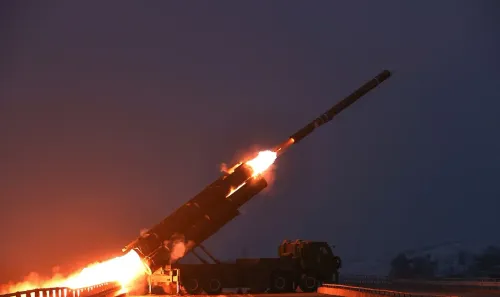
Kim Jong-un oversees hypersonic missile launch, vows to sharpen North Korea's war deterrent
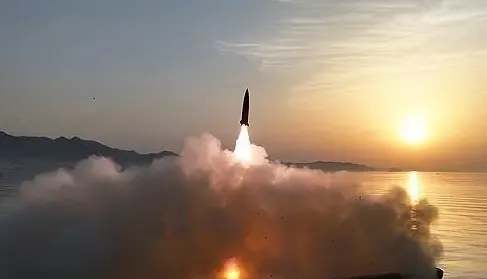
Synopsis
Kim Jong-un personally oversaw a hypersonic intermediate-range missile test from Wonsan, with the weapon reportedly hitting a target 1,000 km away in the East Sea. Coming just days after a DMZ mine blast that injured South Korean soldiers, the launch — possibly the Hwasong-16 Na — signals that Pyongyang is escalating on multiple fronts simultaneously, and doing so with growing speed and sophistication.
Key Takeaways
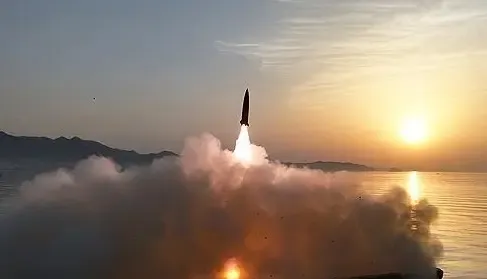
Kim Jong-un oversaw a hypersonic intermediate-range strategic missile launch from Wonsan toward the East Sea on 4 October 2026 .
KCNA said the missile struck a target 1,000 km away; South Korea's military tracked it flying over 700 km .
Experts cited the Hwasong-16 Na — a manoeuvring hypersonic ballistic missile — as a likely candidate based on KCNA's flight-orbit description.
Kim Yo-jong made an unusually swift public disclosure of the test, claiming Seoul and Tokyo failed to track the missile's trajectory.
The launch follows a 21 September DMZ land mine blast that injured three South Korean soldiers , which Seoul blamed on Pyongyang.
Kim called the test 'a form of exercising deterrent' aimed at 'more rapidly developing the country's nuclear war deterrent.'
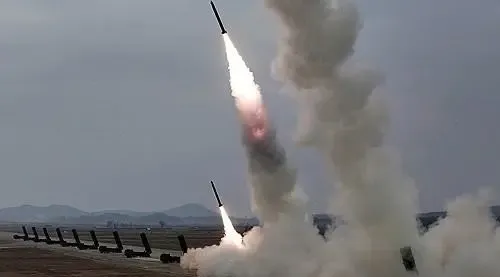
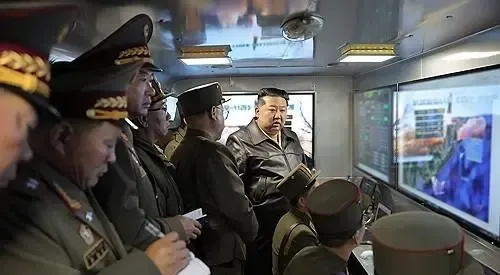
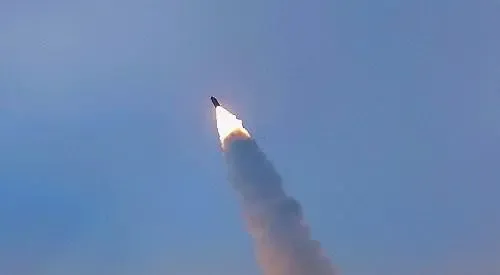
North Korean leader Kim Jong-un personally oversaw the test-firing of an intermediate-range hypersonic strategic missile toward the East Sea on Saturday, 4 October 2026, state media reported, with Pyongyang framing the drill as a demonstration of its 'nuclear war deterrent' and calling for relentless efforts to sharpen the 'fatality' of its offensive arsenal. The launch marks yet another provocation in a period of sharply elevated inter-Korean tensions.
What the Launch Involved
According to North Korea's state-run Korean Central News Agency (KCNA), the missile was fired at dawn from the Wonsan area toward the northeast and struck a target approximately 1,000 kilometres away in the East Sea. The South Korean military, in an earlier assessment, said the projectile flew over 700 km — a discrepancy that analysts say may reflect different measurement methodologies or intentional Pyongyang exaggeration.
State media published photographs showing Kim overseeing the launch alongside his daughter Ju-ae and his wife Ri Sol-ju — a recurring visual motif that Pyongyang uses to project dynastic continuity around high-profile military events.
Missile Identified as Hwasong-16 Na
Weapons experts raised the possibility that the projectile was the Hwasong-16 Na, a hypersonic medium-range ballistic missile, citing KCNA's description of the weapon as capable of 'changing its flight orbit at a low altitude' — a manoeuvring re-entry vehicle characteristic that complicates interception. If confirmed, it would represent one of Pyongyang's most sophisticated battlefield systems to date.
The drill was described by KCNA as part of efforts to train missile troops operating a 'hypersonic strategic weapon system,' suggesting the launch had both a technical evaluation and a readiness-testing function.
Kim's Remarks and Kim Yo-jong's Warning
'We must continue our responsible efforts nonstop to constantly and repeatedly make the enemy recognise the reliability and fatality of our strategic offensive means,' Kim was quoted as saying by KCNA. He added: 'This is a form of exercising deterrent,' stressing that such launches were aimed at 'more rapidly developing the country's nuclear war deterrent.'
In an unusually swift disclosure, Kim Yo-jong — the North Korean leader's influential sister — announced the missile firing on Saturday itself, a rare departure from Pyongyang's typical lag in acknowledging tests. She alleged that military authorities in South Korea and Japan failed to accurately track the missile's trajectory due to what she called 'limitations of their tracking capabilities' — a claim Seoul and Tokyo have not publicly confirmed.
Context: DMZ Mine Blast and Escalating Tensions
The missile test came against a backdrop of heightened inter-Korean hostility following a land mine explosion inside the Demilitarised Zone (DMZ) on 21 September that injured three South Korean soldiers. The South Korean military attributed the blast to North Korea, calling it a 'blatant' violation of the armistice agreement that ended the 1950–53 Korean War. Seoul demanded an apology and corrective measures from Pyongyang.
North Korea has denied any involvement, accusing the South of fabricating its findings, and warned of 'merciless' retaliation should Seoul take any corresponding action. Saturday's launch, coming less than two weeks after the DMZ incident, is widely seen as Pyongyang's most direct military signal yet in the current cycle of escalation.
What Comes Next
The United Nations Security Council has repeatedly condemned North Korean ballistic missile launches as violations of international sanctions, though Pyongyang has dismissed those resolutions. Seoul is expected to consult with Washington and Tokyo on a joint response. With Kim continuing to prioritise missile programme expansion and projecting domestic confidence through family-accompanied launches, analysts warn that the pace and sophistication of North Korea's tests show no sign of slowing.
Point of View
If confirmed, is not an incremental upgrade — it is a direct answer to US-South Korean missile defence architecture. Meanwhile, the juxtaposition of the DMZ mine blast and the missile test within a fortnight suggests a deliberate escalation sequencing: provoke at the conventional level, then signal at the strategic level. The international community's track record of UNSC condemnations followed by North Korean defiance means diplomatic tools are approaching exhaustion, leaving Seoul and Washington with shrinking options and an accelerating threat curve.
NationPress
4 Oct 2026
Frequently Asked Questions
What missile did North Korea launch on 4 October 2026?
North Korea test-fired an intermediate-range hypersonic strategic missile from the Wonsan area toward the East Sea, with experts identifying it as a likely Hwasong-16 Na based on KCNA's description of its low-altitude flight-orbit-changing capability. The missile reportedly hit a target 1,000 km away, according to state media.
Why did North Korea conduct this missile test?
Kim Jong-un framed the launch as 'a form of exercising deterrent' aimed at accelerating the country's nuclear war deterrent capability. The test also served as a live-fire training drill for missile troops operating the hypersonic weapon system, underscoring Pyongyang's emphasis on operational readiness.
How does this launch connect to the DMZ mine blast?
The missile test came roughly two weeks after a 21 September land mine explosion inside the Demilitarised Zone injured three South Korean soldiers — an incident Seoul blamed on North Korea. Pyongyang denied responsibility and warned of 'merciless' retaliation, making the missile launch widely read as an escalatory signal.
What did Kim Yo-jong say about South Korea and Japan's tracking?
Kim Yo-jong claimed that military authorities in South Korea and Japan failed to accurately track the missile's trajectory due to limitations in their detection capabilities. Neither Seoul nor Tokyo has publicly confirmed or refuted this assertion.
What is the Hwasong-16 Na missile?
The Hwasong-16 Na is a North Korean hypersonic medium-range ballistic missile believed to feature a manoeuvring re-entry vehicle capable of altering its flight path at low altitude. This characteristic makes it significantly harder to intercept with conventional missile defence systems deployed by South Korea, Japan, and the United States.