White House: No Cyberattack Behind Recent Tech Outages
Synopsis
The White House announced on November 18, 2026, that DNI Clayton and Secretary Rubio found 'no indication of a cyberattack' behind recent major technology outages in the United States, with follow-up technical assessments expected from oversight bodies.
Key Takeaways
DNI Clayton and Secretary Rubio jointly assessed there is 'no indication of a cyberattack' behind recent U.S. technology outages.
The White House publicised the finding on November 18, 2026 , signalling a deliberate effort to manage public confidence.
The assessment reflects the U.S. government's standard protocol of issuing rapid, authoritative clarifications after major infrastructure disruptions.
The statement does not identify the specific outages or close the door on further technical investigation.
Congressional briefings and a formal CISA root-cause assessment are expected as follow-up steps.
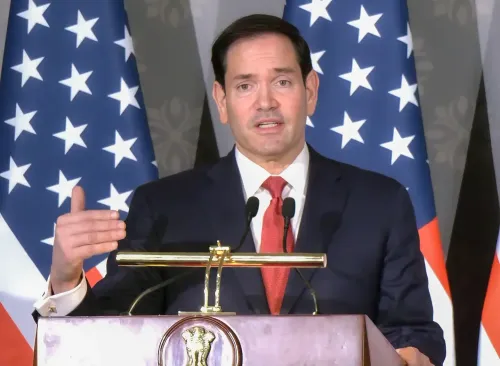
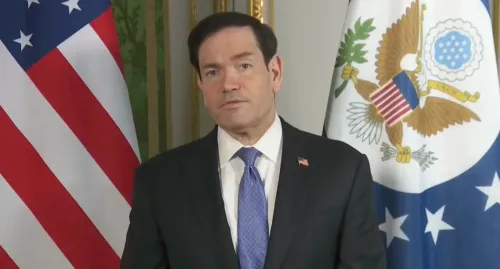
When the screens go dark and the networks stall, the first fear is always the same — was this an attack? The White House moved to answer that question directly on Wednesday, November 18, 2026, announcing that Director of National Intelligence (DNI) Clayton and Secretary of State Marco Rubio found 'no indication of a cyberattack' behind the recent wave of technology outages rattling the United States.
What Clayton and Rubio actually said
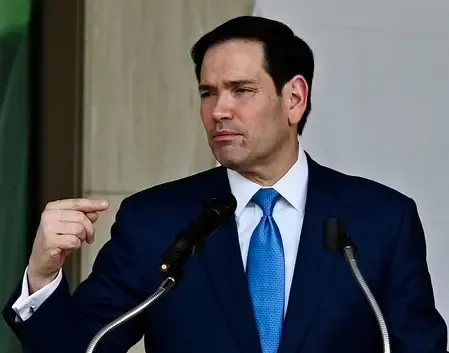
The joint assessment from two of Washington's most senior national security voices carries significant institutional weight. DNI Clayton, the nation's top intelligence coordinator, and Secretary Rubio — a cabinet-level official with oversight over foreign threats and national security — both concluded that the disruptions appear rooted in technical failure rather than foreign interference. The White House amplified the finding publicly, a deliberate move aimed at containing speculation before it could harden into panic.
The statement does not identify the specific outages in question, nor does it rule out future investigation. It is a snapshot assessment — the intelligence community's best read at the moment, not a closed case.
Why this kind of statement exists at all
Large-scale technology failures — whether they hit airlines, banks, cloud platforms, or communications networks — have a way of sparking immediate suspicion of state-sponsored hacking. The U.S. intelligence apparatus has developed a near-standard playbook in response: swift public clarification, delivered at the highest credible level, to separate a software or hardware incident from a hostile act. The logic is sound. Misidentifying a mundane outage as an attack can destabilise markets, trigger diplomatic friction, and erode public trust in ways that last long after the systems come back online.
Precedents go back years — from major airline ground stops blamed on faulty software updates to cloud-service failures cascading across hospitals and financial institutions. Each time, the speed and authority of the government's public 'not an attack' call has shaped how the story landed.
What comes next for the investigation
An intelligence-community assessment is a starting point, not a full stop. Congressional oversight committees typically request technical briefings after significant infrastructure disruptions, and the agencies responsible for protecting critical systems — including CISA, the Cybersecurity and Infrastructure Security Agency — are expected to publish their own root-cause findings. If the picture shifts, the White House will be expected to update its guidance just as publicly and quickly as it did here.
For now, two of the most authoritative voices in the American national-security architecture have delivered the same verdict: this was not an attack. The burden of proof, should anyone argue otherwise, just got a great deal heavier.
Point of View
Rather than letting it sit in classified channels, signals confidence in the assessment and a desire to shape the information environment quickly. At the same time, the vagueness around which outages triggered the review leaves room for further political pressure from Congress. The broader pattern here underscores a growing norm in U.S. governance: the cyber-attribution call is now as important as the incident response itself.
NationPress
18 Nov 2026
Frequently Asked Questions
Was the recent US tech outage a cyberattack?
No. DNI Clayton and Secretary Rubio stated on November 18, 2026 , that there is 'no indication of a cyberattack' behind the recent technology outages in the United States.
What did Secretary Rubio say about the tech outages?
Secretary Rubio , a senior cabinet official overseeing national security matters, joined DNI Clayton in finding no evidence linking the recent technology disruptions to a foreign cyberattack.
What happens after the US government rules out a cyberattack?
Following such assessments, agencies like CISA typically conduct root-cause investigations, and congressional oversight committees may call for technical briefings to determine the actual cause of the disruptions.
Why does the US government publicly announce cyberattack assessments?
Public clarifications prevent speculation from destabilising financial markets, triggering diplomatic friction, or eroding public trust. Swift, authoritative statements from senior officials help separate technical failures from acts of foreign interference.