Rubio denies US role in Ukraine drone satellite disruption

Synopsis
Rubio's denial at Joint Base Andrews raises more questions than it answers — he acknowledged a disruption occurred, said it was restored, but couldn't explain the cause. Meanwhile, Ukraine's request for Starshield access to hit targets deep inside Russia reveals a far larger strategic fault line: Washington is effectively deciding the range of Ukraine's war from a satellite control room.
Key Takeaways
Secretary of State Marco Rubio denied on 18 October that the Trump administration ordered any slowdown of satellite internet used by Ukrainian drones .
Rubio acknowledged a disruption 'sort of happened' but said service had since been restored, based on reports he received.
Ukraine has separately requested access to Starshield , the US military satellite system, to conduct deep strikes inside Russia — a request still under discussion.
Rubio drew a sharp distinction between Starlink (commercial, operated by SpaceX ) and Starshield (military, used by the US armed forces).
A bipartisan group of nine US senators has called for a Defence Department inspector general investigation into the satellite disruptions.
Key questions — the technical cause of the disruption, its battlefield impact, and whether services are fully restored — remain unanswered.
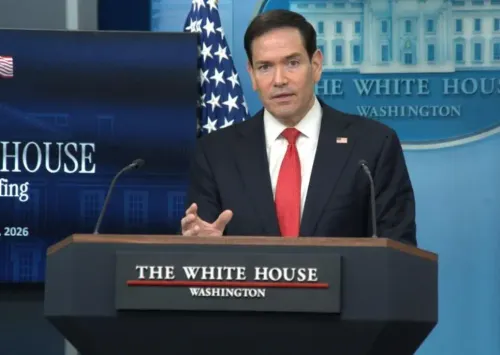
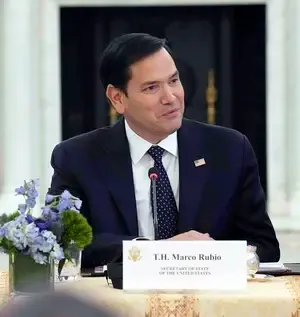
US Secretary of State Marco Rubio on 18 October flatly denied that the Trump administration had deliberately throttled satellite internet services relied upon by Ukrainian drones, pushing back against allegations of American interference. Speaking to reporters at Joint Base Andrews, Rubio also confirmed that Kyiv had separately requested access to a classified US military communications system to carry out deep strikes inside Russia — a request that remains unresolved.
Rubio's Denial and What He Acknowledged
Rubio was categorical in rejecting White House involvement in any slowdown of satellite connectivity affecting Ukrainian battlefield operations. 'No one at the White House ordered anyone to slow down internet or slow down speed so that certain drones couldn't use it,' he told reporters. He added that he had seen a report suggesting administration involvement and called it 'categorically false.'
However, Rubio stopped short of a full denial that any disruption had occurred. He acknowledged the episode had taken place but said, based on reports he had received, normal service appeared to have been restored. 'It sort of happened, but my understanding is it's been restored. It's back to where it was before,' he said.
Starlink vs Starshield: A Critical Distinction
Central to Rubio's argument was a distinction between two separate satellite systems. Starlink — the commercial broadband network operated by Elon Musk's SpaceX — is the service Ukraine has long used for battlefield communications and drone coordination. Starshield, by contrast, is a defence-oriented counterpart developed specifically for government and national-security applications and currently used by the US military.
'Starlink is a commercial product,' Rubio said. 'Starshield is a defense product, a military product.' He emphasised that the two systems operate under fundamentally different regulatory and contractual arrangements, and that Ukraine does not currently have access to Starshield.
Ukraine's Request for Deep-Strike Capability
Rubio confirmed that Ukrainian President Volodymyr Zelenskyy's government had formally sought access to Starshield specifically to enable strikes against targets deep inside Russian territory. 'They've asked for access to it in order to conduct deep strikes inside of Russia. They do not have access to it at this moment,' he said, adding that discussions on the request were ongoing.
This disclosure underscores the strategic dimension of the satellite dispute, which goes well beyond a technical connectivity issue. Ukraine's ability to strike Russian infrastructure and supply lines at range is directly tied to the communications systems available to its drone operators.
Senate Scrutiny and Unresolved Questions
A bipartisan group of nine US senators has formally called on the Defence Department's inspector general to investigate disruptions affecting satellite communications supporting Ukrainian forces. The lawmakers raised concerns about potential risks to American diplomatic, military, and security personnel, and sought to determine whether US officials had approved or possessed advance knowledge of the restrictions.
Notably, the conflicting accounts — a disruption that Rubio acknowledged occurred but attributed to no deliberate policy — have left critical questions unanswered: what technically caused the restrictions, how severe their operational impact was, and whether the affected services have been fully and permanently restored. This comes amid sustained Russian attacks on Ukrainian infrastructure, making reliable satellite connectivity a frontline necessity rather than a logistical convenience.
Broader Significance for Modern Warfare
The episode highlights a structural vulnerability for countries that depend on commercially operated or externally controlled satellite infrastructure for critical military functions. Starlink has become so embedded in Ukraine's battlefield operations that any disruption — intentional or otherwise — carries immediate tactical consequences. The Starshield episode further illustrates how decisions made in Washington about military communications access can directly shape the course of the conflict in Eastern Europe.
With the Senate investigation underway and Ukraine's Starshield request still under discussion, the dispute is unlikely to be resolved quickly.
Point of View
But it's been restored' — is not an exoneration; it is an acknowledgement wrapped in ambiguity. The administration has not explained what caused the disruption, which is precisely what the Senate wants investigated. More consequentially, the Starshield revelation shifts the story: Washington is not merely a supplier of communications hardware to Ukraine, it is an active gatekeeper of how far Ukraine can strike into Russia. That is a policy decision of enormous strategic weight, and it is being made outside any public democratic deliberation. The satellite infrastructure debate is no longer a technical footnote to the Ukraine war — it is one of its central axes.
NationPress
18 Oct 2026
Frequently Asked Questions
What did Marco Rubio say about the Ukraine satellite disruption?
Rubio denied that the Trump administration ordered any deliberate slowdown of satellite internet services used by Ukrainian drones, calling reports of White House involvement 'categorically false.' He acknowledged a disruption had occurred but said, based on reports he received, service had since been restored.
What is the difference between Starlink and Starshield?
Starlink is a commercial broadband satellite network operated by Elon Musk's SpaceX, which Ukraine uses for battlefield communications and drone operations. Starshield is a separate, defence-oriented satellite system developed for US government and national-security applications, currently used by the US military and not available to Ukraine.
Why has Ukraine requested access to Starshield?
According to Rubio, Ukraine has specifically requested access to Starshield in order to conduct deep strikes against targets inside Russian territory. The request is currently under discussion and Ukraine does not yet have access to the system.
What are US senators doing about the satellite disruption?
A bipartisan group of nine US senators has called on the Defence Department's inspector general to investigate disruptions affecting satellite communications supporting Ukrainian forces. The lawmakers want to establish whether US officials approved or had advance knowledge of the restrictions, and to assess any risks to American personnel.
Has the satellite connectivity issue affecting Ukrainian drones been resolved?
Rubio said his understanding, based on reports he received, was that service had been restored to its previous level. However, the technical cause of the disruption remains unexplained and the Senate investigation means the matter is far from closed.