Rubio: Ukraine strikes and Western sanctions denting Russian economy
Synopsis
US Secretary of State Marco Rubio has said Putin is consumed by the war's economic toll — and quietly confirmed that Washington and Kyiv are negotiating a deal that could let Ukraine manufacture its own missile-defence systems. The licensing talks, if successful, would mark a structural shift from weapon transfers to enabling Ukrainian defence self-sufficiency, though Rubio warned the factories would take years to build.
Key Takeaways
US Secretary of State Marco Rubio said on Wednesday that Ukrainian strikes and Western sanctions are hurting the Russian economy .
Rubio described President Vladimir Putin as consumed by the war and its economic fallout, citing them as his primary preoccupations.
Washington and Kyiv are actively negotiating arrangements to allow Ukraine to manufacture its own missile-defence systems, though Rubio warned production ramp-up would take 'multiple years.' Rubio said air interceptors have become 'the number-one defence need on the planet,' but stressed the US must meet its own stockpile minimums before transferring weapons.
Cooperation on drone technology between the US and Ukraine is also under negotiation, described as 'a work in progress.' CIA Director John Ratcliffe's visit to Russia was characterised as 'largely routine,' aimed at maintaining intelligence communication channels — not linked to any trilateral summit.
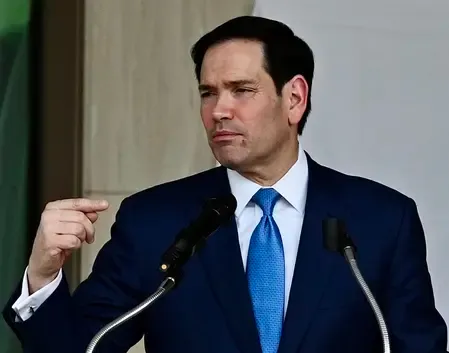
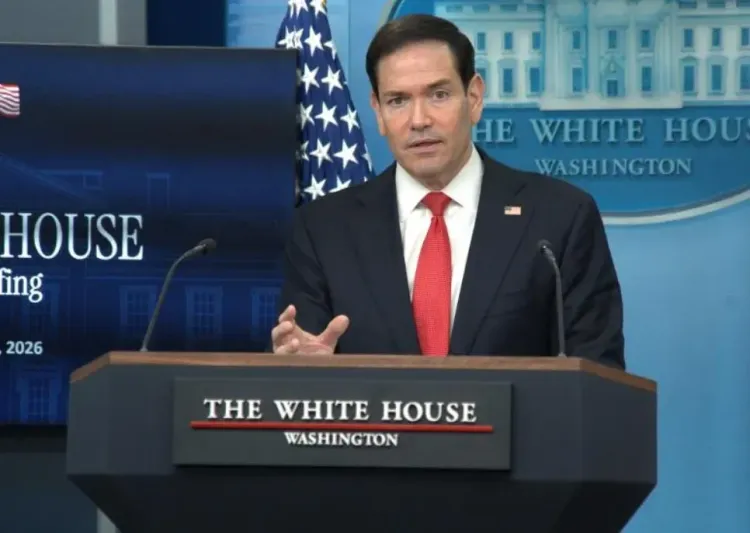
US Secretary of State Marco Rubio said on Wednesday that Ukrainian strikes inside Russia, combined with sweeping Western sanctions, are measurably hurting the Russian economy — and that President Vladimir Putin is consumed by the twin pressures of the war and its economic fallout. The remarks came as Washington and Kyiv are actively negotiating arrangements that could allow Ukraine to manufacture sophisticated missile-defence systems domestically.
Rubio's Assessment of Russia's Vulnerabilities
Speaking in a Wednesday interview while addressing Russia's support for Iran and the ongoing war in Ukraine, Rubio said Putin faces 'his own set of problems' that dominate his attention. 'Russia's got, and Putin's got his own set of problems that I think take up the majority of his time and focus, which is the war in -- with Ukraine, and frankly the impacts that these Ukrainian strikes are having on the Russian economy in combination with sanctions,' Rubio said. He did not provide specific figures on the economic damage or name particular Ukrainian strikes, but his framing signals Washington's view that Moscow is under sustained pressure on multiple fronts.
The Patriot Shortage and Global Air-Defence Demand
Rubio also addressed Ukraine's persistent demand for more Patriot air-defence systems and interceptors, placing it in a broader global context. 'The whole world is asking for more air interceptors. It's become the number-one defence need on the planet — not just for Ukraine, but on the planet,' he said. He cautioned, however, that the United States must first satisfy its own minimum stockpile requirements before transferring weapons to allies. 'We have minimum requirements of our own, and those always have to be met before we can provide others,' Rubio said, adding that Washington would continue assisting Ukraine 'within the limits of our own availability and capability.'
Negotiations on Ukraine Producing Its Own Missile-Defence Systems
When asked whether Washington opposed granting Ukraine licences to manufacture missile-defence systems independently, Rubio confirmed that talks are under way. 'Well, that's being negotiated as we speak,' he said. He tempered expectations, however, stressing that even a successful licensing deal would not resolve Ukraine's immediate shortfall. 'Ramping up production, even if you have a license, is something that takes multiple years to build these factories,' he said. 'These are highly sophisticated weaponry. So that's being negotiated now. That may come to fruition, but it really won't solve the short-term challenge that they're pointing to.' Rubio also confirmed that Washington is exploring cooperation with Ukraine on drone technology, describing those discussions as 'a work in progress.'
CIA Director's Russia Visit: 'Largely Routine'
Separately, Rubio pushed back on speculation surrounding CIA Director John Ratcliffe's recent visit to Russia. He rejected reports linking the trip to a possible trilateral summit involving President Donald Trump, Putin, and Ukrainian President Volodymyr Zelensky, saying he did not know the origin of such reports. 'That trip was primarily a routine one. It is not unprecedented,' Rubio said. He emphasised that the United States must maintain intelligence-to-intelligence communication channels with Russia despite deep geopolitical differences, and that such contacts could prove critical during a crisis. 'His visit there was largely routine in that sense of just establishing and continuing to build these intel-to-intel communication channels,' he added.
What to Watch Next
The licensing negotiations over missile-defence production represent a potentially significant shift in how the West supports Ukraine's long-term defence capacity — moving from direct weapons transfers toward enabling indigenous manufacturing. Whether those talks yield a deal, and on what timeline, will be closely watched by NATO allies and Moscow alike. Ukraine's ongoing long-range drone campaign against Russian military and energy infrastructure is expected to continue as a pressure tool even as diplomatic channels remain open.
Point of View
Whatever the official framing.
NationPress
18 Oct 2026
Frequently Asked Questions
What did Marco Rubio say about the Russian economy?
US Secretary of State Marco Rubio said on Wednesday that Ukrainian strikes inside Russia, combined with Western sanctions, are having a measurable impact on the Russian economy. He said President Vladimir Putin is consumed by the war and its economic fallout, though he did not provide specific damage figures.
Is the US negotiating to let Ukraine make its own missile-defence systems?
Yes. Rubio confirmed that Washington and Kyiv are actively negotiating arrangements that would allow Ukraine to manufacture sophisticated missile-defence systems under licence. However, he cautioned that even a successful deal would not solve Ukraine's immediate air-defence shortage, as building production capacity takes 'multiple years.'
Why can't the US simply send more Patriot systems to Ukraine?
Rubio said the United States must first meet its own minimum stockpile requirements before transferring weapons to other countries. He acknowledged that air interceptors have become 'the number-one defence need on the planet' but said American supply constraints limit how much can be provided.
What was CIA Director John Ratcliffe doing in Russia?
Rubio described Ratcliffe's visit to Russia as 'largely routine,' focused on establishing and maintaining intelligence-to-intelligence communication channels between the two countries. He rejected reports linking the trip to a possible trilateral summit involving Presidents Trump, Putin, and Zelensky.
Is the US also cooperating with Ukraine on drone technology?
Rubio confirmed that Washington is in negotiations with Kyiv over drone technology cooperation, calling the discussions 'a work in progress.' He said no formal announcement was imminent but that the US remains interested in partnerships that could strengthen both Ukrainian and American defence capabilities.