Air interceptors now world's top defence need, says Rubio
Synopsis
US Secretary of State Marco Rubio's blunt admission — that air interceptors are now the planet's number-one defence need, not just Ukraine's — reframes the global arms supply debate. With Washington drawing a hard line on its own stockpiles and licensed production years away from scale, the interceptor shortage is set to define alliance diplomacy and battlefield outcomes well into the coming years.
Key Takeaways
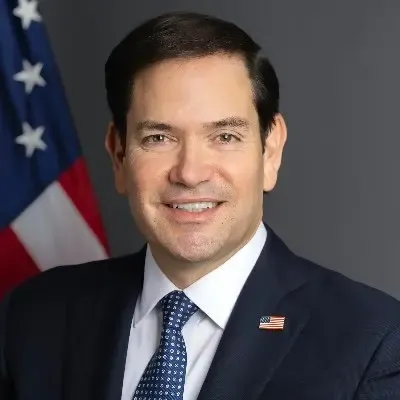
US Secretary of State Marco Rubio called air interceptors the 'number-one defence need on the planet' in remarks on Wednesday .
Demand spans Ukraine , the Middle East , and beyond — driven by the proliferation of missiles and low-cost drones.
Rubio said Washington must ensure its own stockpiles are sufficient before supplying allies, framing availability — not willingness — as the key constraint.
He warned that inaccurate reporting on US weapons inventories could embolden adversaries and risk triggering conflict.
Negotiations on allowing Ukraine to manufacture missile-defence systems under licence are under way, but Rubio cautioned it would take 'multiple years' to scale production.
US Secretary of State Marco Rubio on Wednesday declared that air interceptors have become the single most sought-after defence capability on the planet, as nations across multiple theatres grapple with escalating missile and drone threats. Speaking in an interview, Rubio warned that Washington must safeguard its own military stockpiles before it can expand supplies to allies.
A Global Shortage, Not Just Ukraine's Problem
Rubio made clear that the demand for air-defence systems now extends well beyond Ukraine, which has repeatedly requested additional Patriot air-defence systems and interceptors to counter sustained Russian missile and drone strikes. 'The whole world is asking for more air interceptors. It's become the number-one defence need on the planet — not just for Ukraine, but on the planet,' he said.
He specifically noted appetite from the Middle East, underscoring that the shortage is a structural, multi-theatre challenge rather than a bilateral US-Ukraine supply question. The wars in Ukraine and the Middle East have accelerated demand for integrated air and missile defence, while the proliferation of low-cost battlefield drones has compounded the burden on military planners worldwide.
America First on Stockpiles
Rubio was unambiguous that availability — not political will — is the central constraint shaping US decisions. 'Look, it's just a question of availability,' he said. 'We have our own defence needs; we have our own defence requirements. And before we can help others, we have to make sure that our stockpiles are always sufficient.'
He characterised this as a standing policy rather than a new restriction, noting that minimum American defence requirements 'always have to be met before we can provide others.' The remarks signal that allies seeking accelerated deliveries will face a hard ceiling tied to US inventory levels.
Rubio Pushes Back on Stockpile Reports
The Secretary of State also challenged what he described as inaccurate media reporting on the state of US weapons inventories, arguing that such coverage carries its own security risk. 'I think there's a lot that's been reported inaccurately about what US stockpiles are — I think dangerously, too, because I think in some ways our adversaries read that stuff and think it's true, and they try to test us, and it could lead to conflict,' he said.
Licensed Production Talks Underway, But No Quick Fix
On the question of whether Washington would permit Ukraine to manufacture missile-defence systems under licence, Rubio confirmed that negotiations are already in progress. 'Well, that's being negotiated as we speak,' he said. However, he cautioned that licensed production is not a near-term solution. 'Ramping up production, even if you have a license, is something that takes multiple years to build these factories. These are highly sophisticated weaponry,' he said, adding that the arrangement 'may come to fruition, but it really won't solve the short-term challenge.'
What Comes Next
The United States has said it will continue providing Ukraine with assistance 'within the limits of our own availability and capability.' Longer-term, the focus is shifting toward enabling allied production capacity — but given the industrial lead times involved, the interceptor gap is unlikely to close quickly. How Washington balances allied demand against domestic readiness requirements will remain a defining tension in global defence diplomacy in the months ahead.
Point of View
Giving Washington diplomatic cover while allies queue for systems that may not arrive in time. The admission that global demand now outstrips supply is also a tacit acknowledgement that the West's defence-industrial base was not built for sustained, multi-theatre attrition warfare. Licensed production negotiations with Ukraine sound promising, but Rubio's own caveat — 'multiple years' to stand up factories — means the short-term battlefield gap will persist regardless of what agreements are signed. The warning about inaccurate stockpile reporting is worth watching: it suggests the US believes adversaries are actively probing its readiness, raising the stakes of every public disclosure.
NationPress
18 Oct 2026
Frequently Asked Questions
What did Marco Rubio say about air interceptors?
US Secretary of State Marco Rubio said air interceptors have become the world's top defence need, with countries across the globe — including in the Middle East and Ukraine — seeking more systems to counter missile and drone threats. He made the remarks in an interview on Wednesday.
Why can't the US simply send more interceptors to Ukraine?
Rubio said the constraint is availability, not political will. Washington must ensure its own minimum defence stockpile requirements are met before supplying allies, a policy he described as longstanding rather than new.
Are Ukraine and the US negotiating licensed missile production?
Yes, Rubio confirmed that talks on allowing Ukraine to manufacture missile-defence systems under licence are already under way. However, he cautioned that scaling up production would take multiple years even with a licence in place, meaning it will not resolve the near-term shortage.
Why did Rubio warn about media reports on US stockpiles?
Rubio said much of the reporting on US weapons inventories has been inaccurate and potentially dangerous, arguing that adversaries may read such reports and believe them, which could lead them to test American resolve and risk triggering conflict.
What is driving the global demand for air interceptors?
The conflicts in Ukraine and the Middle East have demonstrated both the destructive power of modern missiles and the enormous quantities of interceptors consumed by sustained air-defence operations. The growing battlefield use of relatively inexpensive drones has added a further layer to the challenge, straining inventories across multiple nations simultaneously.