Robert Gates: US needs wartime defence footing to counter China's rise
Synopsis
Robert Gates didn't mince words: America's defence industrial base is on a peacetime footing in what he calls a wartime-scale competition with China. His warning — that the US lacks sufficient missiles, drones, and munitions — is a rare public admission from a former Pentagon chief that Washington's factory lines haven't kept pace with its strategic ambitions.
Key Takeaways
Former US Defence Secretary Robert Gates warned on 17 May that the US may need a wartime-style defence production model to counter China .
Gates identified critical shortfalls in Patriot missiles , THAAD systems , Standard Missile-3 interceptors , precision-guided munitions, and drone capacity.
He cited Ukraine's reported target of seven million drones next year as a benchmark the US must match.
Gates described China as a more formidable challenge than the Soviet Union , noting Beijing has already surpassed the US in shipbuilding capacity.
On Taiwan , Gates said a near-term full-scale invasion was unlikely but warned of pressure via blockades, cyber operations, and economic coercion.
The remarks carry direct implications for India , which is deepening Quad ties and domestic defence production amid its own standoffs with China along the LAC .
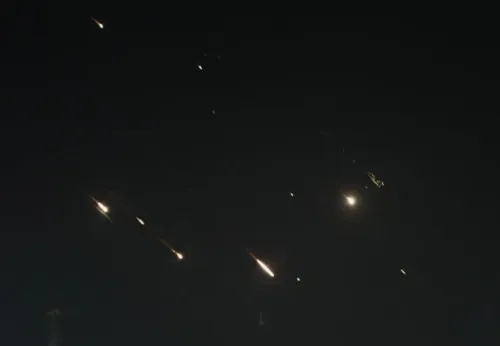
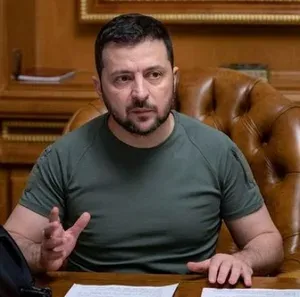
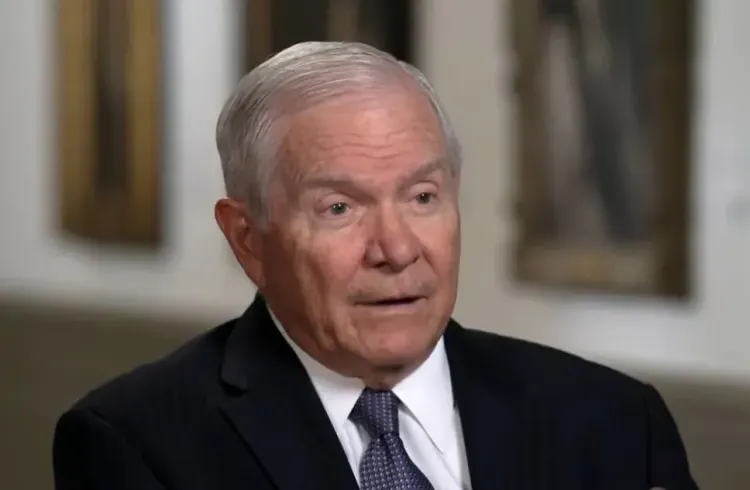
Former US Defence Secretary Robert Gates warned on Sunday, 17 May that the United States may need to adopt a wartime-style defence production model to counter China's rapidly expanding military and industrial power, and to replenish weapons stockpiles depleted by ongoing conflicts in Ukraine and Iran. Speaking on CBS News, Gates said Washington faced mounting shortages across precision-guided munitions, missile defence systems, and drone capabilities at a moment of acute strategic competition.
Key Concerns Gates Raised
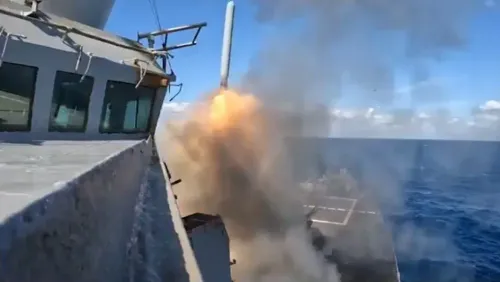
Gates, who also served as CIA Director, was direct about the scale of the challenge. 'It is a problem,' he said when pressed on declining American weapons stockpiles. He identified shortfalls as particularly severe in Patriot missiles, THAAD systems, and the Navy's Standard Missile-3 interceptors — the defensive architecture the US relies on in any high-intensity conflict scenario.
He also pointed to drone warfare as a critical gap, citing Ukraine's reported production target of seven million drones next year. 'We need that kind of capacity in the United States,' Gates said, underscoring how the conflict in Ukraine had rewritten expectations for industrial-scale drone production.
The Case for a Wartime Economy
When CBS News drew a parallel between the US defence industrial challenge and Ukraine's wartime economy, Gates responded: 'Absolutely.' He argued that bureaucratic delays in Washington were throttling urgently needed investments in manufacturing capacity. 'What's needed is accelerated action in actually starting to get these factories built and expand these capabilities,' he said.
Gates warned that the US defence industrial base — designed for peacetime procurement cycles — was structurally misaligned with the pace and scale of threats now facing the country. This comes amid broader concern in Washington over whether the US can sustain multiple simultaneous geopolitical crises, including China tensions, the Iran conflict, and continued military support for Ukraine.
China: A More Formidable Challenge Than the Soviet Union
Gates argued that China now represents a more comprehensive strategic challenge than the Soviet Union ever did during the Cold War, citing its technological sophistication, industrial scale, and global economic influence. 'We have not faced a country that was as technologically advanced as we are,' he said. He noted that China had already surpassed the US in shipbuilding capacity and was closing the gap across several other sectors.
On Taiwan, Gates offered a more nuanced assessment. He suggested that Chinese President Xi Jinping was unlikely to attempt a near-term full-scale invasion, partly because years of anti-corruption purges inside the People's Liberation Army (PLA) may have left him uncertain about his military leadership's readiness. However, Gates cautioned that Beijing could still exert severe pressure on Taiwan through blockades, cyber operations, and economic coercion — without a direct military assault.
Implications for India and the Indo-Pacific
Gates's remarks carry particular resonance in India, where defence planners are closely tracking China's military modernisation and the trajectory of US strategy in the Indo-Pacific. India has deepened defence cooperation with the United States, Japan, and Australia through the Quad framework, while simultaneously accelerating domestic investments in drones, missile systems, and defence manufacturing — partly in response to repeated military standoffs with China along the Line of Actual Control (LAC).
Notably, the concerns Gates raised about US drone and missile stockpiles mirror challenges that India itself has been working to address through indigenous programmes and bilateral technology partnerships. As the Indo-Pacific security architecture continues to evolve, Gates's call for a wartime industrial posture in Washington could accelerate both US-India defence trade and co-production arrangements.
Point of View
Not a partisan talking point. What mainstream coverage underplays is the Taiwan dimension: Gates's assessment that Xi may lack confidence in his purged military leadership is a double-edged signal — it buys time, but it also means the PLA is actively working to close that readiness gap. For India, the subtext is urgent: if Washington's own stockpiles are strained, New Delhi cannot treat US security guarantees as a substitute for indigenous capability. The Quad is a framework, not a defence pact — and Gates's remarks are an implicit reminder of that distinction.
NationPress
1 Oct 2026
Frequently Asked Questions
What did Robert Gates warn about the US and China?
Former US Defence Secretary Robert Gates warned on 17 May that the United States may need to adopt a wartime-style defence production model to counter China's rapidly expanding military and industrial power. He cited critical shortfalls in precision-guided munitions, missile defence systems, and drone capabilities as immediate concerns.
Why did Gates say the US defence industrial base is inadequate?
Gates argued that bureaucratic delays in Washington were slowing urgently needed factory expansion, leaving the US with insufficient stockpiles of Patriot missiles, THAAD systems, and Standard Missile-3 interceptors. He said the US needed the kind of drone production scale that Ukraine — reportedly targeting seven million drones next year — had already demonstrated.
Is China a bigger threat than the Soviet Union, according to Gates?
Yes. Gates said China now poses a more comprehensive challenge than the Soviet Union ever did during the Cold War, because of its technological advancement, industrial capacity, and global economic influence. He specifically noted that China has already surpassed the US in shipbuilding capacity.
What did Gates say about a Chinese invasion of Taiwan?
Gates suggested a near-term full-scale invasion of Taiwan was unlikely, partly because years of anti-corruption purges inside the People's Liberation Army may have left President Xi Jinping uncertain about his military's readiness. However, he warned that China could still pressure Taiwan through blockades, cyber operations, and economic coercion.
Why do Gates's remarks matter for India?
India is directly affected because it faces its own military standoffs with China along the Line of Actual Control and relies on the Quad framework — which includes the US — for Indo-Pacific security cooperation. Gates's warning that US stockpiles are strained reinforces India's own push for domestic defence manufacturing, drone production, and bilateral co-production agreements with Washington.