US weapons stocks critically low after months of Iran war, warns ex-Defence Secretary
Synopsis
Months of war with Iran have left the US critically short of Patriot and THAAD interceptors — and former Defence Secretary Mark Esper is warning that the real danger is the signal this sends to China. With a two-year production lag on key missiles and Congress divided over a $67 billion replenishment request, America's deterrence posture faces its most serious stress test in decades.
Key Takeaways
Former US Defence Secretary Mark Esper warned that America is 'considerably low' on Patriot and THAAD interceptors following months of war with Iran .
The Pentagon is seeking an additional $67 billion in defence funding to replenish depleted stockpiles.
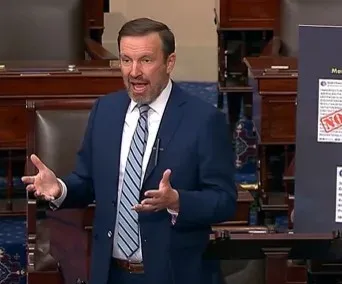
Democratic Senator Chris Murphy said the US had used up 'almost all' of its interceptors and 'the majority' of its Tomahawks .
Republican Senator Jim Banks credited the US military with destroying 85 per cent of Iran's ballistic missile stockpile.
Esper cautioned that rebuilding stocks would take years, citing a two-year production timeline for a single Patriot missile.
Esper identified China — not Iran — as his primary strategic concern, warning that depleted US arsenals could undermine deterrence in the Indo-Pacific .
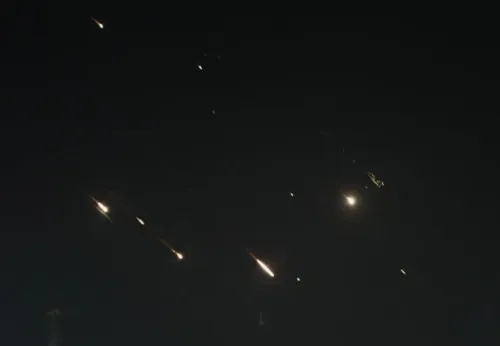
The United States is facing a significant depletion of critical missile interceptors and other munitions following months of active war with Iran, former US Defence Secretary Mark Esper has warned, raising urgent questions about America's military readiness and its ability to deter other potential adversaries. The warning comes as the Pentagon seeks an additional $67 billion in defence funding, in part to rebuild exhausted stockpiles.
The Scale of the Shortage
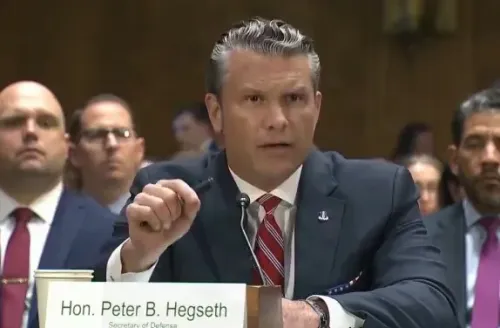
Esper, who served as Defence Secretary during President Donald Trump's first term, said shortages of Patriot and Terminal High Altitude Area Defence (THAAD) interceptors were serious and that rebuilding would take considerable time. 'It is a serious situation that goes back to the end of the Cold War and decisions we made between them and then with the onset of the Iraq and Afghanistan wars,' he said in remarks to a US broadcaster on Sunday.
'And frankly, it accelerated during the Biden administration when we were expending munitions or giving munitions to Ukraine. And it's, of course, in the last six, seven months, it's really taken a toll that we've now find ourselves considerably low with regard to interceptors such as Patriot and THAAD, and to some ground attack weapons as well,' Esper added.
China Looms as the Bigger Strategic Concern
Esper said his foremost concern was not Iran but China, and the signal that a depleted American arsenal could send about US deterrence. 'When I look at the world, I'm most concerned about China and the messages it may be sending there and the deterrent effect of our munition stockpiles, and more importantly of our defence industrial base,' he said. The warning reflects a broader anxiety in Washington that the Iran conflict has consumed resources originally positioned to counter a potential confrontation in the Indo-Pacific.
Political Divisions Over Funding and Strategy
The request for additional defence funding has exposed sharp divisions in US Congress. Democratic Senator Chris Murphy of Connecticut said he would oppose further funding while the Iran war continued, but would back replenishment once the conflict ended. 'We have used up almost all of our interceptors, the majority of our Tomahawks. We have put the United States in a dangerous position,' Murphy said, warning that the situation had emboldened Russia and China to 'imagine things that they couldn't have imagined early because of our inability to defend ourselves and our allies.'
Republican Senator Jim Banks of Indiana, however, defended Trump's handling of the conflict, arguing the President's legacy would rest on preventing Tehran from acquiring a nuclear weapon. 'His legacy is going to be largely wrapped up in ensuring that Iran never has a nuclear weapon,' Banks said. He credited the US military with destroying 85 per cent of Iran's ballistic missile stockpile and damaging its defence industrial base, and also cited Trump's naval blockade as having crippled Iran's economy.
No Quick Fix on the Production Line
Esper acknowledged that the administration was pressing defence contractors to accelerate weapons production, but cautioned that there was no near-term solution. 'When you're talking about taking two years to build a Patriot missile, whatever we do now is not going to help in the short term, but nonetheless needs to be done for strategic reasons,' he said. Patriot batteries are designed to intercept aircraft, cruise missiles, and certain ballistic missiles, while THAAD targets ballistic missiles during the terminal phase of flight — making both systems central to US and allied air-defence architecture.
What Comes Next
The Pentagon's $67 billion supplemental funding request is expected to face a fractious debate in Congress, with Democrats likely to condition support on a clearer endgame for the Iran conflict. Defence analysts warn that even if funding is approved promptly, production timelines mean US stockpiles will remain constrained for at least two years. The strategic implications for NATO allies and Indo-Pacific partners — who rely on US extended deterrence — are expected to dominate upcoming security consultations.
Point of View
A two-year Patriot production cycle means that even a funding approval today offers no near-term relief — a structural vulnerability that adversaries in Beijing and Moscow are almost certainly calculating. The Iran war may be the immediate cause, but the defence-industrial hollowing that Esper traces back to post-Cold War decisions is the deeper story mainstream coverage is underplaying.
NationPress
24 Sept 2026
Frequently Asked Questions
Why is the US running low on weapons after the Iran war?
Months of active combat operations against Iran have consumed large quantities of Patriot and THAAD interceptors and Tomahawk cruise missiles, according to former Defence Secretary Mark Esper and Senator Chris Murphy. The shortage is compounded by earlier drawdowns during the Ukraine conflict and a defence-industrial base that cannot rapidly scale production.
What are Patriot and THAAD missile systems?
Patriot batteries are US missile-defence systems capable of intercepting aircraft, cruise missiles, and some ballistic missiles. THAAD — Terminal High Altitude Area Defence — is designed to intercept ballistic missiles during the final, terminal phase of their flight. Both are central to US and allied air-defence architecture.
How much additional funding is the Pentagon seeking?
The Pentagon is seeking an additional $67 billion in defence funding, partly to replenish munitions stockpiles depleted during the Iran conflict, according to reports. The request faces a divided Congress, with Democrats conditioning support on clarity about the war's endgame.
What did Senator Chris Murphy say about US military readiness?
Senator Chris Murphy warned that the US had used up 'almost all' of its interceptors and 'the majority' of its Tomahawks, calling the situation 'dangerous.' He said it had allowed Russia and China to 'imagine things that they couldn't have imagined early because of our inability to defend ourselves and our allies.'
Why is China Esper's bigger concern despite the Iran war?
Esper said depleted US munitions stockpiles could weaken America's deterrent signal to China, which he identified as his foremost strategic concern. He argued that a visibly strained US defence industrial base risks emboldening Beijing at a time of heightened Indo-Pacific tensions.