Iran war cost hits $37.5 billion as US seeks $88 billion emergency funds
Synopsis
US Defence Secretary Pete Hegseth put a $37.5 billion price tag on the Iran war before a Senate panel — and then asked for $87.6 billion more. With Democrats questioning the legal basis for continuing hostilities and the War Powers clock ticking, the hearing exposed a White House fighting on two fronts: one in the Strait of Hormuz, one on Capitol Hill.
Key Takeaways
US Defence Secretary Pete Hegseth told the Senate Appropriations Committee on 22 July that the Iran war has cost an estimated $37.5 billion to date.
The Trump administration is seeking $87.6 billion in emergency supplemental funding, including roughly $67 billion for the military. $46 billion of the request targets munitions production, hypersonic weapons, counter-drone systems, and satellites.
Democrats noted the Pentagon still holds approximately $75 billion in unobligated funds from a prior package, questioning the urgency.
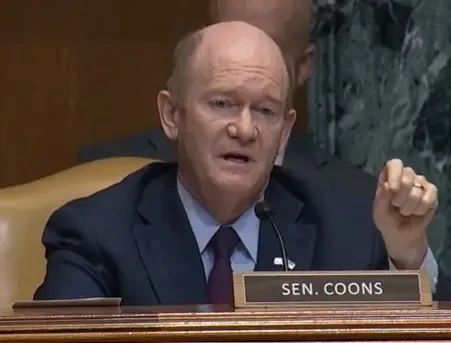
Republican Senator Lisa Murkowski raised the War Powers Resolution , which requires congressional authorisation after 60 days of hostilities.
General Dan Caine , chairman of the Joint Chiefs of Staff , declined to discuss the possibility of ground force deployments.
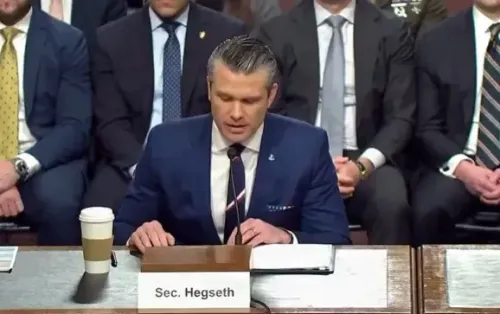
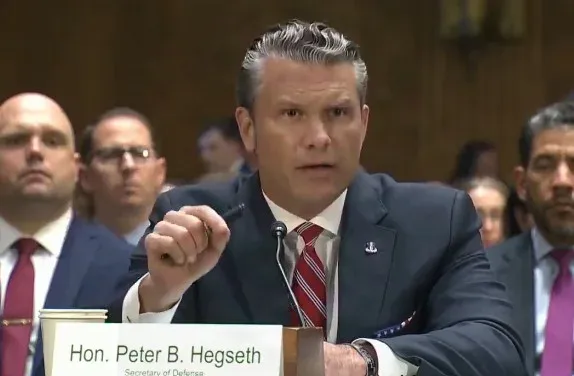
US Defence Secretary Pete Hegseth told a Senate Appropriations Committee hearing on 22 July that the war with Iran has cost an estimated $37.5 billion to date, as the Trump administration pressed Congress for nearly $88 billion in emergency supplemental funding amid renewed hostilities in the Strait of Hormuz. The disclosure came as lawmakers from both parties raised pointed questions about the war's cost, legal basis, and strategic direction.
What the $87.6 Billion Request Covers
The administration's supplemental request totals $87.6 billion, of which roughly $67 billion is earmarked for the military. Within that envelope, $21 billion would fund readiness needs — including service member pay, equipment replacement, forward-deployed forces, fuel, and National Guard support. A further $46 billion would accelerate production of munitions and fast-track investments in hypersonic weapons, counter-drone systems, and satellites.
Hegseth disclosed the $37.5 billion war-cost estimate in direct response to questioning by Democratic Senator Richard Durbin. He clarified that the figure covered costs incurred so far as well as anticipated military pay, operations, and maintenance expenses through 30 September.
Hegseth's Warning to Congress
The Defence Secretary warned that training exercises could be curtailed if Congress withheld the additional funds. 'Without these funds, we face critical shortfalls that threaten our ability to also simply pay our service members, rapidly replenish equipment and munitions, and sustain vital operations without disruption,' he said. He also argued that the military was grappling with years of deferred maintenance and depleted weapons stocks — structural vulnerabilities that pre-date the current conflict.
Democratic Pushback on Spending and Strategy
Several Democratic senators challenged the request's scale and composition. They noted the Pentagon still held roughly $75 billion in unobligated funds from an earlier spending package, questioning why fresh emergency appropriations were needed so urgently.
Senator Patty Murray highlighted that the supplemental included nearly $1 billion for US Southern Command, about $1 billion for continued National Guard deployments in Washington, and more than $1 billion for operations along the southern border — costs critics argued had limited connection to the Iran conflict. 'The American people want to see a quick and strategic end to this war, not $70 billion of their tax dollars sent to keep it going,' Murray said.
War Powers and Legal Authority Under Scrutiny
The hearing also surfaced sharp divisions over the administration's legal standing to continue military operations. Republican Senator Lisa Murkowski pointed out that the War Powers Resolution generally requires a president to end hostilities within 60 days unless Congress formally authorises their continuation.
Hegseth defended the administration's position, stating that the White House believed President Donald Trump retained all necessary constitutional authority. 'We certainly, as a department, share the position of the White House that we have all the authorities necessary at this moment,' he said.
Joint Chiefs Decline to Discuss Ground Options
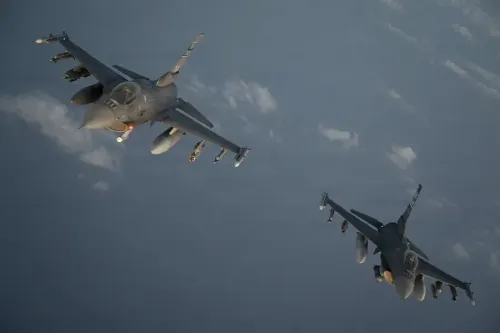
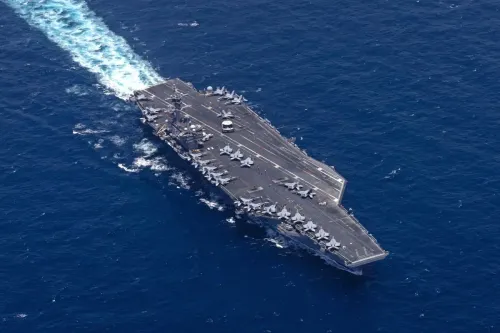
General Dan Caine, chairman of the Joint Chiefs of Staff, declined to comment on whether the United States could deploy ground forces, saying military planners routinely prepared options and assessed their associated risks. His reticence underscored the sensitivity around any potential escalation beyond the current air and naval campaign in and around the Strait of Hormuz.
With Congress yet to act on the request and the 60-day War Powers clock a live constitutional question, the coming weeks will test both the administration's legislative strategy and its legal footing for sustaining operations.
Point of View
The inclusion of Southern Command and southern border funds in an 'Iran war' supplemental suggests the administration is using a permissive emergency label to consolidate a broader security agenda. Congress's willingness to approve or scrutinise that bundling will define the institutional limits of executive war-making for years beyond this conflict.
NationPress
20 Oct 2026
Frequently Asked Questions
How much has the US war with Iran cost so far?
According to Defence Secretary Pete Hegseth, the war with Iran has cost an estimated $37.5 billion as of 22 July. The figure covers costs incurred to date as well as projected military pay, operations, and maintenance expenses through 30 September.
What is the Trump administration's $87.6 billion emergency funding request for?
The $87.6 billion supplemental request includes roughly $67 billion for the military, split between $21 billion for readiness needs and $46 billion for munitions production and advanced capabilities such as hypersonic weapons and counter-drone systems. The remainder covers other security-related spending.
Why are Democrats opposing the emergency funding request?
Democratic senators argue the Pentagon still holds approximately $75 billion in unobligated funds from an earlier package, making the urgency of fresh appropriations unclear. Senator Patty Murray also objected to non-Iran items — including border operations and National Guard deployments in Washington — being bundled into an Iran war supplemental.
Does the Trump administration have legal authority to continue the war with Iran?
The administration maintains that President Donald Trump retains all necessary constitutional authority. However, Republican Senator Lisa Murkowski raised the War Powers Resolution, which generally requires a president to end hostilities or seek congressional authorisation within 60 days — a legal question that remains unresolved.
Could the US deploy ground forces in Iran?
General Dan Caine, chairman of the Joint Chiefs of Staff, declined to discuss ground force deployment options at the Senate hearing, saying military planners routinely prepare and assess options without confirming specific plans.