Project Freedom: US deploys 15,000 troops to guard Hormuz shipping from Iran
Synopsis
The US has launched 'Project Freedom' — deploying over 15,000 troops, guided-missile destroyers, and 100+ aircraft to guard commercial shipping in the Strait of Hormuz. With Iran having fired on vessels nine times since a ceasefire and seized two container ships, Washington is drawing a clear but limited line: protect the lane, avoid escalation, and eventually hand off to allies.
Key Takeaways
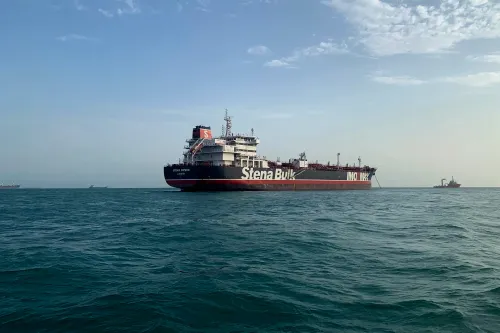
Project Freedom is a defensive US military operation ordered by President Donald Trump to protect commercial shipping through the Strait of Hormuz .
More than 15,000 US personnel , guided-missile destroyers, and over 100 aircraft have been deployed to the region.
Iran has fired at commercial vessels nine times since a ceasefire, seized two container ships , and attacked US forces more than ten times .
The Strait of Hormuz handles roughly one-fifth of global oil consumption, making it one of the world's most critical maritime chokepoints.
US officials say the ceasefire remains in force and the operation is temporary , with allies expected to eventually take over security responsibilities.
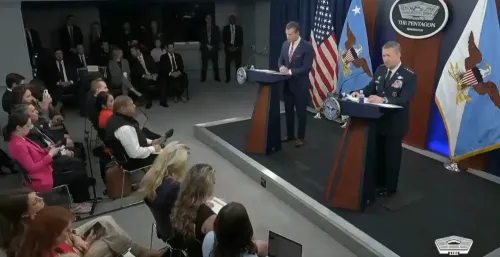
US Secretary of Defense Pete Hegseth and Joint Chiefs Chairman Air Force General Dan Caine on 5 May unveiled "Project Freedom", a limited defensive military operation ordered by President Donald Trump to protect commercial shipping through the Strait of Hormuz amid a sharp escalation in Iranian aggression against civilian vessels.
What Project Freedom Entails
Hegseth described the mission as "defensive in nature, focused in scope, and temporary in duration, with one mission, protecting innocent commercial shipping from Iranian aggression." He stressed that the operation was specifically ordered to "restart the free flow of commerce through the Strait of Hormuz" and is "separate and distinct from Operation Epic Fury."
US forces have been explicitly instructed not to enter Iranian waters or airspace. "We're not looking for a fight," Hegseth said, while warning that Iran "cannot be allowed to block innocent countries and their goods from an international waterway."
Military Assets Deployed
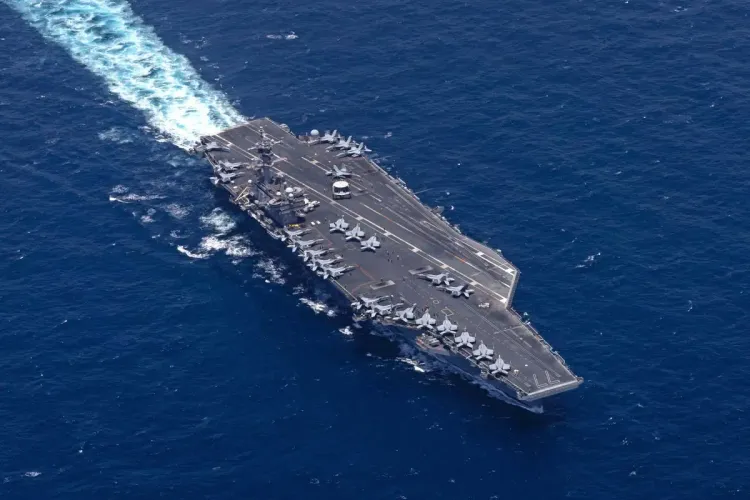
The United States has committed substantial military resources to the operation, including more than 15,000 personnel, guided-missile destroyers, helicopters, and over 100 aircraft providing round-the-clock protection for vessels transiting the area. An "enhanced security area" has been established along the southern side of the strait, where US land, naval, and air forces are positioned to detect and defeat threats.
Hegseth characterised the effort as creating a "red, white and blue dome" over the strait, providing continuous overwatch for commercial shipping. Two US-flagged merchant vessels have already transited the strait under escort, with more ships expected to follow in the coming days.
Iran's Provocations and the Stakes
General Caine noted that the Strait of Hormuz serves as a "vital transit route for approximately one-fifth of the global oil consumption," underlining the enormous economic stakes. He said Iran has fired at commercial vessels nine times since a ceasefire was announced, seized two container ships, and attacked US forces more than ten times, though "all below the threshold of restarting major combat operations."
Hegseth accused Iran of "harassing civilian vessels, threatening mariners from every nation indiscriminately and weaponising a critical choke point," calling it "a form of international extortion." This comes amid broader US-Iran tensions that have periodically threatened global energy supply chains over the past several years.
Ceasefire Status and Long-Term Plan
Despite the incidents, Hegseth emphasised that "the ceasefire is not over" and that Project Freedom is designed to remain limited in scope. The United States has indicated the mission is intended to be temporary, with Washington expecting allies and global stakeholders to eventually assume responsibility for securing the waterway. The long-term objective, officials said, is a self-sustaining freedom of navigation in one of the world's most strategically critical maritime chokepoints.
Point of View
The deployment of 15,000 troops and a 'red, white and blue dome' narrative is as much a message to oil traders as it is to Tehran.
NationPress
20 Oct 2026
Frequently Asked Questions
What is Project Freedom in the Strait of Hormuz?
Project Freedom is a limited, defensive US military operation ordered by President Donald Trump to protect commercial shipping through the Strait of Hormuz from Iranian aggression. It involves over 15,000 personnel, guided-missile destroyers, and more than 100 aircraft providing round-the-clock escort for vessels transiting the strait.
Why has the US launched Project Freedom now?
Iran has reportedly fired at commercial vessels nine times since a ceasefire was announced, seized two container ships, and attacked US forces more than ten times. US officials described Iran's conduct as 'a form of international extortion,' prompting the defensive operation to restore free navigation.
Is Project Freedom the same as Operation Epic Fury?
No. Secretary Pete Hegseth explicitly stated that Project Freedom is 'separate and distinct from Operation Epic Fury.' Project Freedom is described as defensive, limited in scope, and temporary, focused solely on protecting commercial shipping.
How important is the Strait of Hormuz to global trade?
The Strait of Hormuz is a vital maritime chokepoint through which approximately one-fifth of global oil consumption transits, according to General Dan Caine. Any disruption to shipping there has immediate consequences for global energy prices and supply chains.
How long will Project Freedom last?
US officials have described the operation as temporary. Washington expects allied nations and global stakeholders to eventually assume responsibility for securing the waterway, though no specific timeline for a handover has been announced.