US Issues Stark Warning to Iran Over Strait of Hormuz Oil Flow Disruption

Synopsis
In a decisive warning, US Defense Secretary Pete Hegseth cautions Iran against disrupting oil flow through the Strait of Hormuz, asserting that military retaliation will be severe. This statement comes amid ongoing operations aimed at reducing Iran's military capabilities.
Key Takeaways
US warns Iran: Any disruption in the Strait of Hormuz will be met with severe military action.
Military operations: Targeting over 5,000 Iranian military assets has led to significant reductions in missile launches.
Strategic importance: Strait of Hormuz is crucial for global energy shipments.
Containment strategy: The US aims to keep the conflict contained and focused on specific military objectives.
Regional tensions: Iran's actions have escalated tensions with neighboring countries.
Washington, March 10 (NationPress) US Defense Secretary Pete Hegseth issued a stern warning to Iran on Tuesday, cautioning against any attempts to interfere with navigation through the Strait of Hormuz. He emphasized that President Donald Trump is ready to unleash significant military power if Tehran attempts to obstruct one of the globe’s most crucial energy passageways.
The alert followed a briefing by Hegseth and Joint Chiefs of Staff Chairman Dan Caine, who provided a recent update on 'Operation Epic Fury', highlighting the US military's concentrated efforts on dismantling Iran’s missile, naval, and military-industrial capabilities.
“I want to emphasize, as the Chairman noted, the President reiterated last night that if Iran takes any actions to halt the oil flow in the Strait of Hormuz, they will face retaliation from the United States, significantly more intense than what they've experienced to date,” Hegseth stated.
He further remarked, “Death, fire, and fury will descend upon them.”
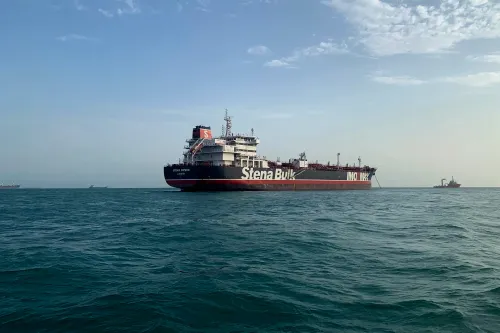
This narrow passage remains an essential corridor for oil and gas shipments from the Gulf region.
Caine mentioned that the military is currently evaluating various options should the US be assigned the task of safeguarding vessels operating in the area.
“If we are tasked to escort, we will consider a multitude of options to establish the necessary military conditions to execute that mission,” he explained. “As always, we will present the Secretary and the President with the required resources, command structure, risks involved, and strategies to mitigate those risks.”
Hegseth criticized Iran for escalating tensions by targeting neighboring nations. “It was a grave error by the Iranian regime to initiate attacks on its neighbors so quickly, revealing their true nature and recklessness,” he commented.
He countered claims of an expanding conflict, asserting, “Contrary to media narratives suggesting the war is spreading, it is actually quite contained.”
Caine reiterated the overarching goals of the US campaign, which focuses on diminishing Iran's ballistic missile and drone capabilities, disrupting its navy, and penetrating deeper into its military and industrial infrastructure.
According to Caine, US strikes have successfully impacted “over 5,000 targets”, with Iranian ballistic missile launches declining by “90% from their initial levels,” and one-way attack drones reduced by “83% since the operation commenced.”
Hegseth affirmed the administration's commitment to preventing the conflict from becoming protracted, stating, “This is not an endless mission. We refuse to allow mission creep. The President has a very specific objective to fulfill.”
The Strait of Hormuz, located between Iran and Oman, connects the Gulf with the Arabian Sea and is historically recognized as one of the world’s most strategically significant maritime chokepoints. Any threats to shipping in this area are closely monitored by energy markets and major importers, including India.
Point of View
It is crucial to note that the escalating tensions between the US and Iran over the Strait of Hormuz represent a significant geopolitical flashpoint. The focus on military readiness and response underscores the importance of maritime security in global energy supply chains.
NationPress
30 Sept 2026
Frequently Asked Questions
What is the significance of the Strait of Hormuz?
The Strait of Hormuz is a critical maritime chokepoint that connects the Persian Gulf to the Arabian Sea, facilitating a significant portion of the world's oil and gas shipments.
What did US Defense Secretary Pete Hegseth say about Iran?
Hegseth warned Iran against disrupting oil flow through the Strait of Hormuz and stated that the US would respond with overwhelming force if Iran attempted to obstruct this vital energy route.
How has the US military responded to Iranian actions?
The US military has conducted operations targeting over 5,000 Iranian military assets, significantly reducing Iran's missile and drone capabilities.
What are the potential consequences of conflict in the Strait of Hormuz?
Any conflict in the Strait of Hormuz could disrupt global oil supplies, leading to increased energy prices and broader geopolitical instability.
What is 'Operation Epic Fury'?
'Operation Epic Fury' refers to the US military campaign focused on countering Iran's military capabilities, particularly its missile and naval forces.