US Naval Blockade on Iran Tightens Hourly: Hegseth Issues Nuclear Ultimatum
Synopsis
The US has declared its naval blockade of Iran is tightening 'by the hour' under Operation Epic Fury, with Marines boarding a seized vessel after disabling fire. Defence Secretary Hegseth warns no ship transits the Strait of Hormuz without US Navy permission — a historic assertion with massive implications for global oil markets and India's energy security.
Key Takeaways
Operation Epic Fury : The US naval blockade of Iran is tightening 'by the hour' , according to Defence Secretary Pete Hegseth on April 25, 2025 .
34 non-Iranian vessels have been granted transit permission; all other ships to and from Iranian ports are being turned around by the US Navy .
US Marines boarded and seized a large container vessel after CENTCOM authorised 'disabling fire' into the ship's engine room — crew and vessel are now in US custody.
The Pentagon confirmed multiple interdictions of sanctioned Iranian crude oil tankers in the Indo-Pacific and Indian Ocean regions.
Hegseth declared that no vessel transits the Strait of Hormuz without US Navy permission , and authorised lethal force against Iranian fast boats laying naval mines.
A second US aircraft carrier is set to join the operation within days, with General Dan Caine warning US forces are ready for 'major combat operations' if ordered.
Washington, April 24: The United States has declared that its expanding naval blockade against Iran is tightening 'by the hour', with Defence Secretary Pete Hegseth issuing a stark ultimatum on Friday, April 25, 2025 — Tehran must either agree to a verifiable nuclear deal or face accelerating economic devastation under sustained American military and economic pressure. The announcement marks one of the most aggressive postures Washington has adopted toward Iran in recent memory, with global energy markets and shipping lanes now directly in the crosshairs.
Operation Epic Fury: What the Pentagon Revealed
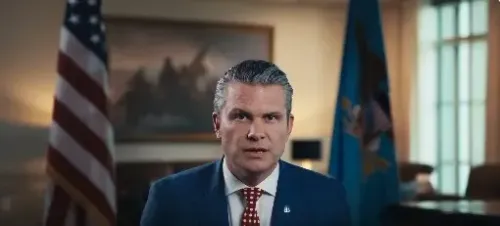
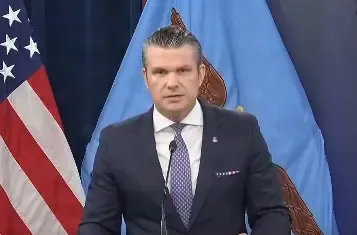
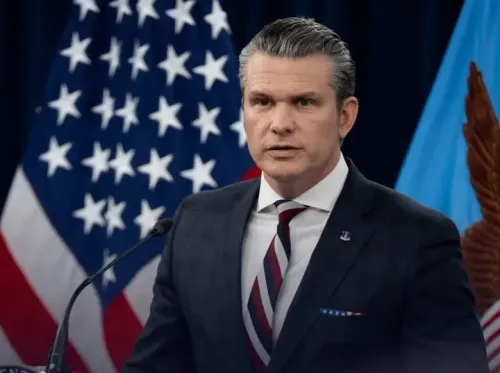
Defence Secretary Pete Hegseth, speaking at a press briefing at the Pentagon, declared that Operation Epic Fury had delivered 'decisive military results in just weeks' — a pointed contrast to what he called 'endless wars of the past' that dragged on for years with little strategic gain. The mission's core objective, he emphasized, remains unambiguous: 'Iran will not have a nuclear weapon.'
Hegseth confirmed that the US Navy is enforcing an 'ironclad blockade' stretching from the Gulf of Oman to international waters. He stated that as of Friday morning, 34 non-Iranian vessels had been granted transit permission, while every other ship attempting to enter or leave Iranian ports without clearance had been turned around.
Hegseth also confirmed that a second US aircraft carrier would join the operation within days, significantly escalating the military footprint in the region.
Marines Board Vessel After 'Disabling Fire' Authorised by CENTCOM
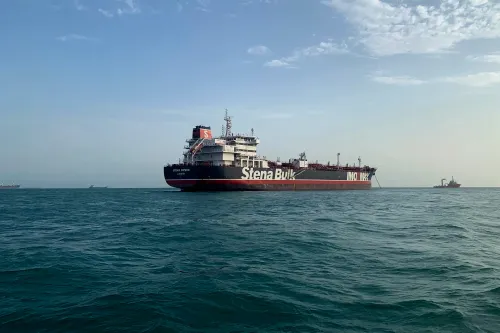
Chairman of the Joint Chiefs of Staff, Air Force General Dan Caine, described a dramatic maritime interdiction carried out earlier this week. A large container vessel ignored repeated warnings from US forces, prompting CENTCOM to authorise what Caine called 'disabling fire' — US forces fired directly into the ship's engine room before US Marines boarded and seized control of the vessel.
Caine confirmed that the vessel and its crew are now 'safe in US custody.' He also disclosed that the Pentagon has conducted multiple global interdictions of sanctioned Iranian oil shipments, including large crude tankers intercepted in the Indo-Pacific and Indian Ocean regions. 'We will continue to conduct similar maritime interdiction actions,' Caine stated.
Critically, Caine underscored that US joint forces remain 'postured and prepared to commence major combat operations' if ordered — a signal that the situation could escalate rapidly beyond economic pressure into open conflict.
Strait of Hormuz Now Under US Navy Authority, Hegseth Claims
In perhaps the most sweeping assertion of the briefing, Hegseth declared that 'no one sails from the Strait of Hormuz without the permission of the United States Navy.' The Strait of Hormuz is one of the world's most critical energy chokepoints, handling nearly 20% of global seaborne crude oil — making any sustained disruption a direct threat to global energy prices and supply chains, including those serving India, China, Japan, and South Korea.
Hegseth accused Iran's Islamic Revolutionary Guard Corps (IRGC) of behaving like 'pirates' and 'terrorists,' alleging attacks on commercial vessels and responsibility for broader regional instability. The US has now authorised lethal force against Iranian fast boats suspected of laying naval mines. 'If Iran is putting mines in the water… we will shoot to destroy — no hesitation,' Hegseth warned.
He also called on European and Asian allies to take a more active role in securing global shipping lanes, declaring bluntly: 'The time for free riding is over.'
Trump's Position: 'Not Anxious for a Deal' but Door Remains Open
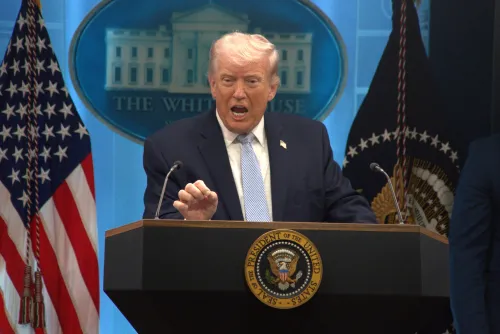
Hegseth referenced President Donald Trump directly, noting that the President is 'not anxious for a deal' but has left diplomatic channels open — provided Iran abandons its nuclear ambitions in 'meaningful and verifiable ways.' Quoting the President, Hegseth said: 'We have all the time in the world.'
This posture reflects a calculated pressure strategy: maximum military and economic coercion paired with a conditional diplomatic off-ramp. Analysts note this mirrors the Trump administration's 'maximum pressure' doctrine from his first term, which saw the US withdraw from the 2015 Joint Comprehensive Plan of Action (JCPOA) in 2018 and reimpose sweeping sanctions on Iran. That earlier campaign failed to bring Tehran to the negotiating table on US terms — raising questions about whether this more militarised version will succeed where economic pressure alone did not.
Global Implications: Energy Markets, India, and the Indo-Pacific
The escalation carries significant second-order consequences for India, which has historically been one of the largest importers of Iranian crude oil before US sanctions forced a reduction in purchases. A prolonged blockade or conflict in the Strait of Hormuz could spike global oil prices, directly impacting India's import bill, fuel prices, and inflation.
Notably, the Pentagon's confirmation of interdictions in the Indian Ocean places the theatre of operations uncomfortably close to India's strategic maritime neighbourhood — a development New Delhi will be watching with acute concern, particularly given its longstanding policy of strategic autonomy and its complex energy relationships in the region.
The broader pattern is also alarming for global trade: if the US establishes a precedent of unilaterally controlling passage through the Strait of Hormuz, it fundamentally reorders the rules-based international maritime order — a shift with profound implications for China, Russia, and other powers who rely on those same lanes.
As the blockade expands and a second carrier battle group moves into position, the coming days will be decisive — either pushing Iran toward the negotiating table or toward a dangerous miscalculation that could ignite a wider regional conflict.
Point of View
One that Beijing, Moscow, and even US allies will find deeply unsettling. The Trump administration is essentially weaponising the world's most critical oil chokepoint, gambling that Iran blinks before global energy markets fracture. For India, which has painstakingly maintained strategic autonomy between Washington and Tehran, this crisis forces an impossible choice — and the Indian Ocean interdictions signal that New Delhi's backyard is already part of the battlefield. History suggests maximum pressure without a credible diplomatic architecture rarely ends cleanly.
NationPress
22 Sept 2026
Frequently Asked Questions
What is Operation Epic Fury against Iran?
Operation Epic Fury is a US military operation involving a naval blockade of Iran, enforced by the US Navy across the Gulf of Oman and international waters. It aims to prevent Iranian oil exports and pressure Tehran into nuclear negotiations by intercepting vessels violating US sanctions.
What did Pete Hegseth say about the Iran naval blockade?
US Defence Secretary Pete Hegseth declared on April 25, 2025 that the blockade was tightening 'by the hour' and that no ship could transit the Strait of Hormuz without US Navy permission. He warned Iran faces a choice between a nuclear deal and economic collapse.
Did US Marines board an Iranian ship?
Yes. US forces fired disabling shots into the engine room of a large container vessel that ignored repeated warnings, after which US Marines boarded and seized control of the ship. The vessel and its crew are now in US custody, according to General Dan Caine.
How does the US Iran blockade affect India?
India is one of the largest consumers of energy passing through the Strait of Hormuz, and the US has confirmed interdictions in the Indian Ocean. A prolonged blockade or conflict could spike global oil prices, raising India's import costs and domestic fuel prices significantly.
Is the US ready for military conflict with Iran?
General Dan Caine stated that US joint forces remain 'postured and prepared to commence major combat operations' if ordered. A second aircraft carrier is also joining the operation within days, indicating a significant escalation in military readiness.