Strait of Hormuz Crisis: US Warns of Rising Iran Threat to Shipping

Synopsis
The US Pentagon has confirmed Iran attacked 5 merchant vessels and seized 2, while threatening mines in the Strait of Hormuz — the world's most critical oil chokepoint. With a US Navy blockade in force and shoot-to-destroy orders issued, India's crude oil imports and fuel prices face a direct and immediate threat.
Key Takeaways
Iran has attacked five merchant vessels and seized two in the Strait of Hormuz region, according to US Joint Chiefs Chairman General Dan Caine .
US Defense Secretary Pete Hegseth issued a shoot-to-destroy order against any Iranian naval mines placed in the waterway, with no hesitation policy confirmed.
The US Navy is enforcing a strict blockade against vessels linked to Iranian ports , while allowing controlled transit for other international shipping.
Iran has deployed small fast boats to threaten commercial and cruise ships, significantly elevating risk for civilian maritime traffic.
India , as a top crude oil importer dependent on Gulf region supplies through Hormuz, faces direct fuel price and energy security risks from this escalation.
The crisis mirrors Iran's aggressive maritime tactics seen in 2019 , when it seized the British tanker Stena Impero and shot down a US surveillance drone.
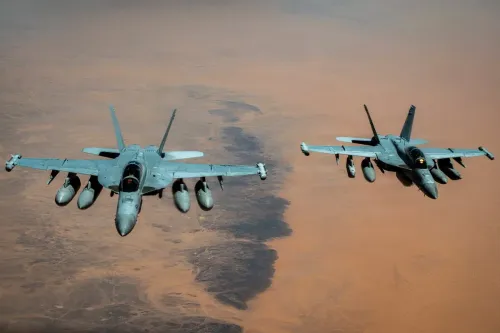
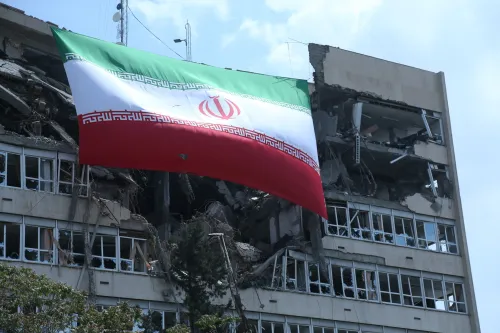
Washington, April 24 — The United States has issued a stark warning that maritime transit through the Strait of Hormuz is operating under significantly elevated risk, as Iran escalates hostile actions against commercial shipping in one of the world's most strategically critical waterways. The alert came on Friday during a high-level Pentagon briefing, underscoring growing concerns over global energy supply chains and regional military stability.
Pentagon Issues Stark Warning on Hormuz Transit Risks
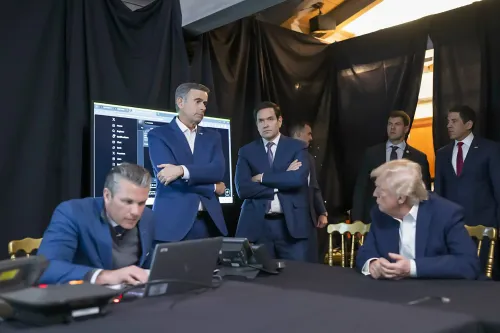
US Secretary of Defense Pete Hegseth confirmed that vessels are still moving through the Strait of Hormuz, but under conditions far more dangerous than what any nation would consider acceptable. Speaking directly at the Pentagon, he described a waterway under siege from Iranian provocations.
"Transit is occurring... much more limited than anybody would like to see and with more risk than people would like to see," Hegseth said, attributing the deteriorating conditions to aggressive Iranian naval tactics, including the deployment of small fast boats and direct threats against commercial and cruise vessels.
"These are commercial ships... cruise ships... being threatened," he added, signalling that civilian maritime traffic — not just military vessels — is now squarely in Iran's crosshairs.
US Authorises Shoot-to-Destroy Orders Against Naval Mines
In a significant escalation of rules of engagement, the US military has authorised forces to destroy any naval mines laid by Iran in the strait without hesitation. This marks one of the most aggressive postures the US Navy has publicly declared in the region in recent years.
"If Iran is putting mines in the water... we will shoot to destroy — no hesitation," Hegseth stated firmly. Military officials, however, declined to provide specific timelines for clearing any mines already believed to be present in the area, raising concerns about the duration of this threat to shipping lanes.
The use of naval mines by Iran would represent a dramatic escalation. Notably, Iran mined the Persian Gulf during the Tanker War of the 1980s, which resulted in the near-sinking of the USS Samuel B. Roberts in 1988 and triggered direct US military strikes against Iranian naval assets. History suggests that mine warfare in this region carries catastrophic escalation potential.
Iran Has Already Attacked and Seized Merchant Vessels
Chairman of the Joint Chiefs of Staff General Dan Caine revealed that Iran has already attacked five merchant vessels in the region and seized two of them — a detail that moves this crisis well beyond the realm of posturing into active hostilities against international commerce.
"Iran has attacked five merchant vessels... seized two of them," General Caine confirmed, lending concrete weight to what might otherwise be dismissed as diplomatic rhetoric. These seizures are consistent with Iran's documented pattern of detaining foreign-flagged tankers, a tactic it has employed repeatedly since 2019 as leverage in nuclear negotiations and sanctions disputes.
The Pentagon further disclosed that the US Navy is enforcing a strict blockade against vessels linked to Iranian ports, while permitting other international shipping to transit under controlled conditions. Hegseth said enforcement actions have already deterred further breach attempts.
"That sent a very clear sign that this is not a fake blockade," he said, signalling Washington's intent to maintain maximum pressure on Tehran's maritime access.
What This Means for India's Energy Security
For India, the stakes in the Strait of Hormuz are enormous. The strait handles approximately 20% of global oil trade, and India — the world's third-largest crude oil importer — sources a substantial share of its energy needs from Gulf nations including Iraq, Saudi Arabia, UAE, and Kuwait, all of whose exports transit through this chokepoint.
Even a partial disruption — or a spike in war-risk insurance premiums for tankers — translates directly into higher fuel costs at Indian petrol pumps. With India already managing inflationary pressures, any sustained disruption to Hormuz transit could force New Delhi to accelerate its diversification toward alternative suppliers, including Russia and US LNG.
Analysts also note that India walks a diplomatic tightrope here: it maintains strong ties with both Washington and Tehran, and has historically avoided taking sides in US-Iran confrontations. However, if the blockade tightens and Iranian-linked vessels are barred, India's options for cheap Iranian crude — already constrained by US sanctions — narrow further.
Broader Geopolitical Context and What Comes Next
The current escalation comes amid stalled US-Iran nuclear talks, with Washington and Tehran engaged in indirect negotiations over Iran's uranium enrichment programme. Analysts widely interpret Iran's aggressive maritime posture as a pressure tactic designed to signal its willingness to disrupt global oil markets if sanctions are not eased.
This is not the first time the Strait of Hormuz has been weaponised in geopolitical brinkmanship. In 2019, Iran shot down a US surveillance drone and seized the British-flagged tanker Stena Impero, nearly triggering direct military conflict. The current situation mirrors that escalation cycle — but with higher military stakes given the explicit US shoot-to-destroy authorisation.
With US-Iran nuclear negotiations ongoing and no ceasefire framework in sight for the maritime domain, global shipping companies, energy markets, and oil-importing nations like India should brace for continued volatility in the weeks ahead. The next flashpoint could come with little warning.
Point of View
As a major oil importer and diplomatic balancing act, cannot afford to ignore. While the US frames this as deterrence, Iran's seizure of merchant vessels and mine threats are acts of economic warfare against the entire world, not just America. India's silence on this escalation — driven by its careful Tehran-Washington tightrope — is becoming increasingly costly as fuel price pressures mount. New Delhi must urgently accelerate its strategic petroleum reserve expansion and shipping route diversification before the next Iranian provocation forces a crisis it cannot diplomatically sidestep.
NationPress
7 Oct 2026
Frequently Asked Questions
Why is the Strait of Hormuz so important for global oil supply?
The Strait of Hormuz is the world's most critical maritime chokepoint, through which approximately 20% of global oil trade passes daily. Any disruption to transit — whether from military conflict, naval mines, or blockades — immediately impacts global crude oil prices and energy supply chains.
What has Iran done to threaten shipping in the Strait of Hormuz?
According to US General Dan Caine, Iran has attacked five merchant vessels and seized two of them in the region. Iran has also deployed small fast boats to threaten commercial and cruise ships, and the US has warned of potential Iranian mine-laying in the waterway.
What is the US Navy's current position in the Strait of Hormuz?
The US Navy is enforcing a strict blockade against vessels linked to Iranian ports while allowing other international shipping to transit under controlled conditions. US Defense Secretary Pete Hegseth confirmed forces have shoot-to-destroy orders for any naval mines Iran places in the water.
How does the Strait of Hormuz crisis affect India?
India is the world's third-largest crude oil importer and sources a major share of its energy from Gulf nations whose exports transit through the Strait of Hormuz. Disruptions or rising war-risk insurance costs can directly push up domestic fuel prices and strain India's energy security.
Has Iran blocked the Strait of Hormuz before?
Iran has repeatedly threatened to close the Strait of Hormuz during periods of US-Iran tension, most notably in 2011-12 and 2019. During the 1980s Tanker War, Iran mined the Persian Gulf, resulting in direct US military retaliation. The current escalation mirrors these historical patterns.