US launches 'Project Freedom' to break Iran's Hormuz blockade

Synopsis
The US has deployed 15,000 troops, guided-missile destroyers, and over 100 aircraft to forcibly reopen the Strait of Hormuz under 'Project Freedom' — a direct challenge to what Washington calls Iran's systematic blockade of global shipping. With 22,500 mariners stranded and Iran having attacked commercial vessels nine times since a ceasefire, the operation marks the most significant US military intervention in the Gulf in years.
Key Takeaways
The US launched "Project Freedom" to break Iran's alleged blockade of the Strait of Hormuz , ordered by President Donald Trump .
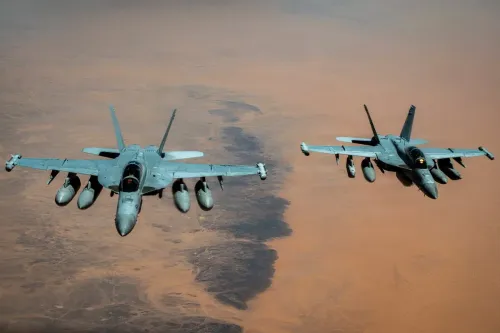
Over 15,000 US personnel , guided-missile destroyers, and more than 100 aircraft have been deployed to escort commercial shipping.
The Pentagon says more than 22,500 mariners aboard over 1,550 vessels are stranded due to Iranian actions.
Iran has fired at commercial vessels nine times since a ceasefire was announced and attacked US forces more than ten times , according to General Dan Caine .
The strait carries approximately one fifth of global oil consumption, making it a critical chokepoint for world markets.
Pete Hegseth urged US allies to assume responsibility for the waterway over time, warning any attack would trigger "overwhelming" US firepower.
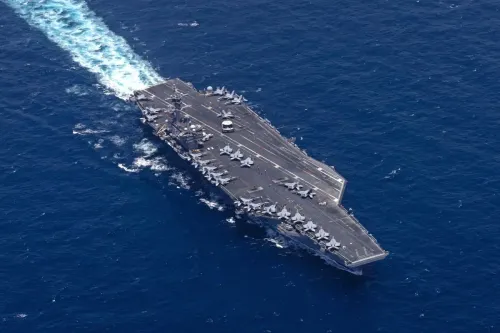
The United States has launched a major military operation, dubbed "Project Freedom", to break what it describes as Iran's blockade of commercial shipping in the Strait of Hormuz — one of the world's most critical oil transit routes. The mission, ordered by President Donald Trump, deploys over 15,000 US personnel, guided-missile destroyers, helicopters, and more than 100 aircraft to escort civilian vessels through the strategic waterway.
What the Mission Involves
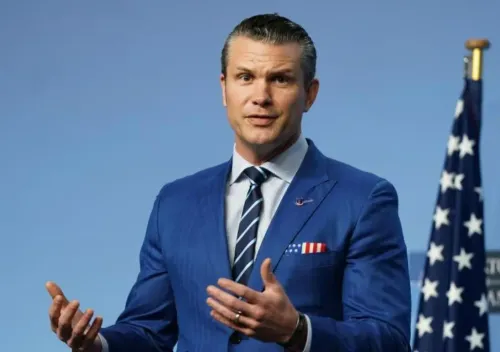
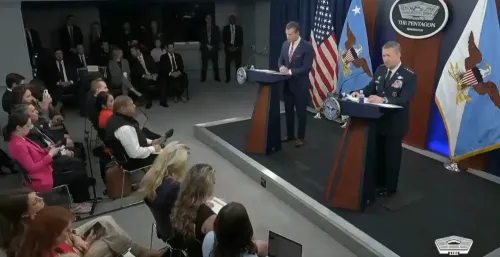
US Secretary of Defense Pete Hegseth described the operation as "defensive in nature, focused in scope, and temporary in duration, with one mission, protecting innocent commercial shipping from Iranian aggression." He said US forces would not enter Iranian waters or airspace, adding, "We're not looking for a fight." Hegseth warned, however, that any attack on US-escorted vessels would trigger "overwhelming and devastating American firepower."
Two US-flagged commercial ships, escorted by American destroyers, have already transited the strait, with Hegseth stating the move demonstrated that "the lane is clear" and that "hundreds more ships from nations around the world are lining up to transit." He described a "red, white and blue dome" of round-the-clock protection now in place over the waterway.
Scale of the Crisis
Joint Chiefs Chairman Air Force General Dan Caine said Iran had "repeatedly threatened and attacked commercial shipping" over the past seven weeks, effectively cutting off commercial traffic and damaging the global economy. He noted that the strait carries "approximately one fifth of the global oil consumption," underscoring its outsized importance to international markets.
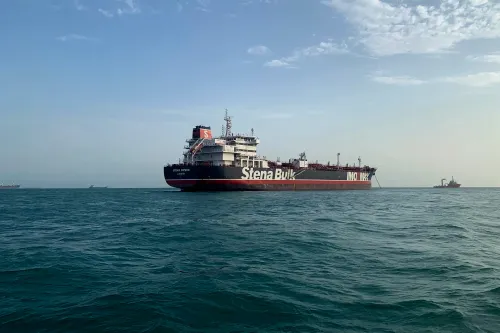
According to the Pentagon, more than 22,500 mariners aboard over 1,550 commercial vessels remain stranded in the region as a result of Iranian actions. General Caine said Iran has fired at commercial vessels nine times since a ceasefire was announced, seized two container ships, and attacked US forces more than ten times — though all, he said, remained "below the threshold of restarting major combat operations."
US Accusations Against Iran
Hegseth accused Tehran of "harassing civilian vessels, threatening mariners from every nation indiscriminately and weaponising a critical choke point," calling it "a form of international extortion." He stressed that Iran "cannot be allowed to block innocent countries and their goods from an international waterway." Despite the exchanges of fire, Hegseth maintained that "the ceasefire is not over" and urged Iran to act "prudently" to avoid further escalation.
Call on Allies and What Comes Next
Hegseth also called on US allies to assume a greater share of responsibility for securing the strait over time, saying, "The world needs this waterway a lot more than we do." Washington reportedly expects partner nations to step in as the operation progresses. This comes amid broader tensions in the Middle East, with the Hormuz corridor increasingly becoming a flashpoint in the standoff between the US and Iran. The durability of the current ceasefire — and Iran's next move — will determine whether "Project Freedom" remains a temporary escort mission or escalates into a broader confrontation.
Point of View
By its own admission, the world depends on more than the US does. The operation places Iran in a bind: back down and lose leverage, or retaliate and risk crossing the ceasefire threshold. Notably, Hegseth's simultaneous call on allies to 'assume responsibility' signals that the US sees this as a burden-shifting moment, not a permanent commitment. The real question is whether Iran's nine post-ceasefire attacks represent a deliberate strategy or miscalculation — and whether 'Project Freedom' resolves the crisis or simply raises the stakes of the next incident.
NationPress
30 Sept 2026
Frequently Asked Questions
What is 'Project Freedom' in the Strait of Hormuz?
'Project Freedom' is a US military operation ordered by President Donald Trump to escort commercial ships through the Strait of Hormuz, which Washington says Iran has blockaded. It involves over 15,000 personnel, guided-missile destroyers, and more than 100 aircraft providing a protected corridor for civilian vessels.
Why is the Strait of Hormuz so important?
The Strait of Hormuz carries approximately one fifth of global oil consumption, making it one of the world's most critical energy transit routes. A sustained blockade of the strait can significantly disrupt global oil supply and damage the broader world economy.
What has Iran done to trigger this US operation?
According to the Pentagon, Iran has fired at commercial vessels nine times since a ceasefire was announced, seized two container ships, and attacked US forces more than ten times. US officials accuse Tehran of harassing civilian vessels and 'weaponising a critical choke point' as a form of international extortion.
How many ships and mariners are affected by the Hormuz blockade?
The Pentagon says more than 22,500 mariners aboard over 1,550 commercial vessels remain stranded in the region as a result of Iranian actions, representing a significant disruption to global shipping.
Is the US-Iran ceasefire still in effect?
US Secretary of Defense Pete Hegseth stated that 'the ceasefire is not over' despite recent exchanges of fire, and urged Iran to act prudently to avoid escalation. However, General Dan Caine noted that Iran's attacks have so far remained 'below the threshold of restarting major combat operations.'