US urges allies to share Hormuz security as Project Freedom begins
Synopsis
Washington has launched 'Project Freedom' — a 15,000-troop naval escort mission through the Strait of Hormuz — while simultaneously telling allies it won't do this forever. With Iran conducting low-level attacks below the conflict threshold, the US is threading a delicate needle: projecting strength while engineering its own exit from a strategically vital but politically costly commitment.
Key Takeaways
The US launched "Project Freedom" to escort commercial vessels through the Strait of Hormuz amid sustained Iranian threats.
Secretary of Defense Pete Hegseth urged Japan , Australia , and European partners to assume greater maritime security responsibility.
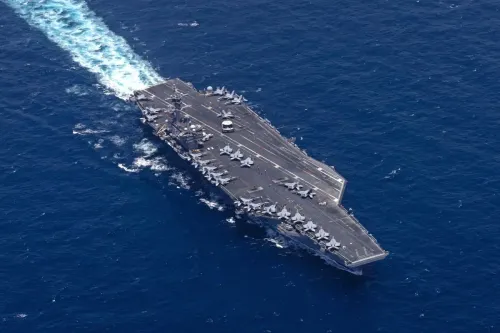
More than 15,000 US personnel , naval warships, and air assets have been deployed to establish a protected transit corridor.
Two US-flagged commercial ships have already transited the strait under escort, with more expected soon.
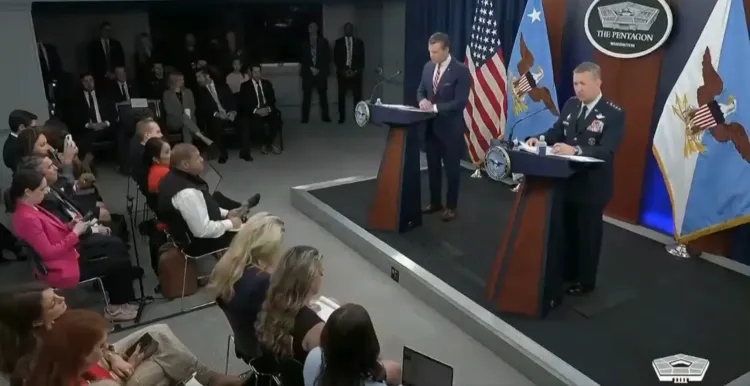
Joint Chiefs Chairman Gen.
Dan Caine confirmed Iran has "repeatedly threatened and attacked commercial shipping" in recent weeks.
The US mission is described as temporary , intended to set conditions for a multinational handover of security responsibility.
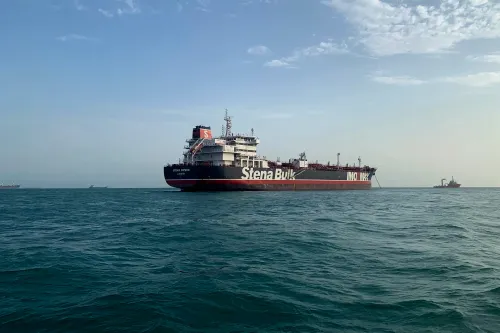
The United States on Tuesday, 6 May 2025, formally urged its allies to assume greater responsibility for securing the Strait of Hormuz, signalling a strategic push toward a broader multinational framework for protecting one of the world's most critical maritime chokepoints. The call came as Washington launched "Project Freedom", a dedicated operation to escort commercial vessels through the strait amid sustained Iranian threats.
What the US Said
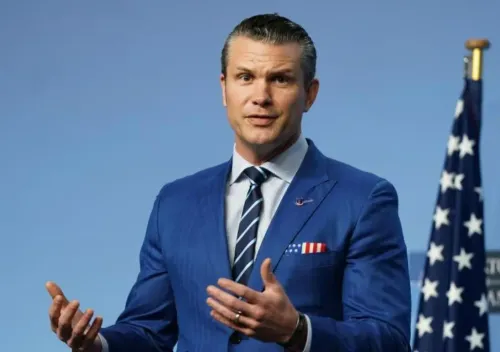
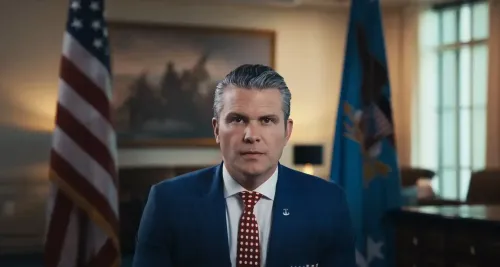
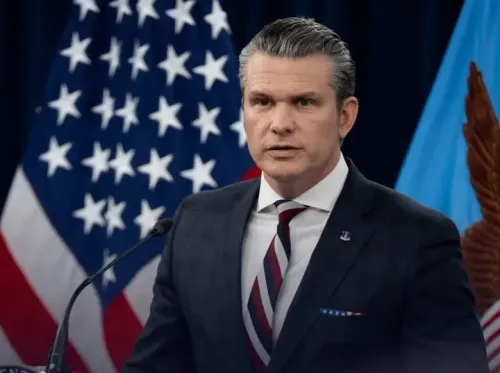
Secretary of Defense Pete Hegseth made clear that Washington expects partner nations to contribute meaningfully to maritime security, even as US forces currently lead the mission. "The world needs this waterway a lot more than we do," Hegseth said, signalling that America views the strait's security as a shared global obligation rather than a unilateral American burden.
He added that the US is not waiting for allies to act before taking steps itself. "We're not waiting for them to do so. We're looking to set the conditions to hand to them," Hegseth said, indicating the mission is explicitly designed as a transitional arrangement.
Project Freedom: Scope and Deployment
The US has deployed more than 15,000 personnel, along with naval warships and air assets, to establish a protected transit corridor through the Strait of Hormuz. Joint Chiefs Chairman Air Force General Dan Caine stated that Iran has "repeatedly threatened and attacked commercial shipping" in recent weeks, seeking to "effectively cut off commercial traffic and damage the global economy."
Caine noted that the strait remains under pressure, with Iran continuing low-level attacks on vessels and US forces, though reportedly below the threshold of a broader armed conflict. Officials confirmed that two US-flagged commercial ships have already transited the passage under escort, with more expected in the coming days as confidence builds among shipping companies.
Allies in Focus
Hegseth specifically named Japan, Australia, and European partners as countries Washington is encouraging to play a greater role. This comes amid a broader US strategic recalibration under which Washington has been pushing allied nations to shoulder more of the burden in global security arrangements. Notably, this is not the first time the US has sought multilateral participation in Hormuz security — a similar coalition effort was attempted under the International Maritime Security Construct (IMSC) in 2019, following a wave of tanker attacks attributed to Iran.
Why the Strait Matters
The Strait of Hormuz is the world's most important oil transit chokepoint, handling a significant share of global crude and liquefied natural gas shipments. Major economies across Asia and Europe, including India, China, Japan, and South Korea, are heavily dependent on energy imports routed through the strait, making any disruption a direct threat to global energy markets and economic stability.
What Comes Next
Hegseth described the US mission as temporary, framing it as a bridge toward a more durable multinational security arrangement. Whether key allies — particularly those in Europe and the Indo-Pacific — respond with concrete commitments will determine how quickly Washington can transition operational leadership. The coming weeks will test both allied resolve and Iran's willingness to de-escalate its maritime pressure campaign.
Point of View
Transitional mission is strategically shrewd but carries real risk. By publicly naming Japan, Australia, and European partners as expected contributors, the US is applying diplomatic pressure — but allied burden-sharing in the Gulf has historically been slow and uneven. Iran's calibrated low-level attacks, kept deliberately below the threshold of open conflict, suggest Tehran is testing how long the coalition holds before fracturing. The deeper question mainstream coverage is missing: if the US transitions leadership and allies under-deliver, does the strait revert to a vacuum that Iran can exploit more aggressively?
NationPress
23 Sept 2026
Frequently Asked Questions
What is 'Project Freedom' in the Strait of Hormuz?
'Project Freedom' is a US military operation launched to ensure safe passage for commercial shipping through the Strait of Hormuz following weeks of Iranian attacks and disruptions. The US has deployed more than 15,000 personnel, naval warships, and air assets to establish a protected transit corridor.
Why is the Strait of Hormuz strategically important?
The Strait of Hormuz is the world's most critical oil transit chokepoint, through which a significant share of global crude oil and liquefied natural gas shipments pass. Major economies including India, China, Japan, South Korea, and European nations depend on energy imports routed through the strait.
Which countries is the US asking to help secure the Strait of Hormuz?
Secretary of Defense Pete Hegseth specifically named Japan, Australia, and European partners as countries Washington is encouraging to play a greater role in maritime security in the Strait of Hormuz.
What has Iran been doing in the Strait of Hormuz?
According to Joint Chiefs Chairman Gen. Dan Caine, Iran has repeatedly threatened and attacked commercial shipping in recent weeks, seeking to cut off commercial traffic and damage the global economy. These attacks have been described as low-level, remaining below the threshold of a broader armed conflict.
How long will the US-led Hormuz escort mission last?
Secretary Hegseth described the mission as temporary, stating the US intends to "set the conditions" before handing over responsibility to allied nations. No specific end date has been announced, but two US-flagged vessels have already transited under escort with more expected in coming days.