US Warns Europe: Stop Free-Riding on Iran Shipping Security
Synopsis
US Defence Secretary Pete Hegseth blasted European allies at a Pentagon briefing, saying 'the time for free riding is over' as Washington enforces a naval blockade on Iranian-linked shipping. With 20% of global oil flowing through the Strait of Hormuz, Europe's inaction on maritime security could have severe energy and geopolitical consequences.
Key Takeaways
US Defence Secretary Pete Hegseth publicly rebuked European allies on Friday, April 25 , accusing them of free-riding on American military protection in the Strait of Hormuz .
The US naval blockade targets Iranian-linked shipping as part of a broader campaign to pressure Tehran over its nuclear programme and regional destabilisation.
Approximately 20% of global oil supply transits through the Strait of Hormuz , making it the world's most strategically sensitive maritime chokepoint.
Hegseth dismissed a recent European diplomatic summit as a "silly conference" that produced no operational commitment or military action.
The Pentagon warned the blockade will be expanded further , raising the stakes for global energy markets and alliance cohesion within NATO .
The standoff has direct implications for India and other Asian economies heavily dependent on Gulf energy imports routed through the contested waterway.
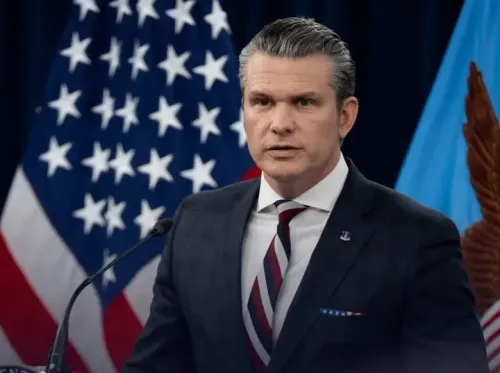
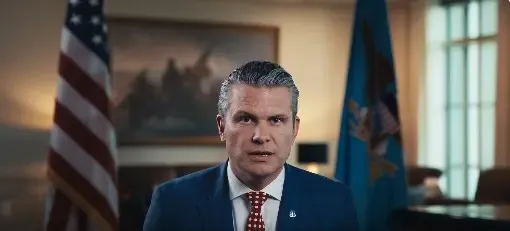
Washington, April 25 (NationPress) — US Defence Secretary Pete Hegseth delivered a stinging rebuke to European allies on Friday, April 25, accusing them of failing to shoulder their share of responsibility in securing critical global shipping lanes amid escalating tensions with Iran. Speaking from a Pentagon briefing, Hegseth declared that the era of Europe benefiting from American military protection without meaningful contribution was definitively over.
Hegseth's Direct Warning to European Allies
Hegseth made clear that Europe and Asia are far more dependent on energy flows through the Strait of Hormuz than the United States, and therefore bear greater responsibility for its protection. "Europe and Asia have benefited from our protection for decades, but the time for free riding is over," he said bluntly.
He further emphasised the disparity in stakes: "We are not counting on Europe, but they need the Strait of Hormuz much more than we do." The remarks signal a hardening of Washington's posture on burden-sharing within NATO and allied frameworks beyond the Atlantic alliance.
This comes amid an intensified US naval blockade targeting Iranian-linked shipping, a central pillar of the Trump administration's strategy to pressure Tehran over its advancing nuclear programme and destabilising regional activities across the Middle East.
US Dismisses European Diplomatic Efforts as Hollow
Hegseth was dismissive — and at times openly contemptuous — of recent European diplomatic activity on the issue. "You saw... a silly conference in Europe... where they got together and talked about talking about maybe doing something eventually," he said, drawing a sharp contrast between words and operational action.
He acknowledged that Washington would welcome genuine allied participation but stressed that no meaningful military or operational support had emerged from European capitals thus far. "We would welcome a serious European effort to do something about this... considering it's their energy capabilities that are most at stake," Hegseth said.
The criticism reflects a broader frustration within the Pentagon that European nations — many of whom import significant volumes of Gulf energy — continue to rely on US naval assets for maritime security without deploying equivalent resources of their own.
Naval Blockade and the Iran Pressure Campaign
The United States has significantly expanded its naval presence across the Persian Gulf and surrounding waters, enforcing restrictions on vessels linked to Iranian ports. Pentagon officials have warned that the blockade will be extended further if Tehran does not alter its course on nuclear negotiations and proxy activities.
The enforcement campaign is part of a broader maximum pressure strategy that the Trump administration revived upon returning to office, aiming to cut off Iran's oil revenues and force a renegotiated nuclear deal. Notably, Iran has responded by threatening to close the Strait of Hormuz — a chokepoint through which approximately 20% of global oil supply passes — a move that would send shockwaves through global energy markets.
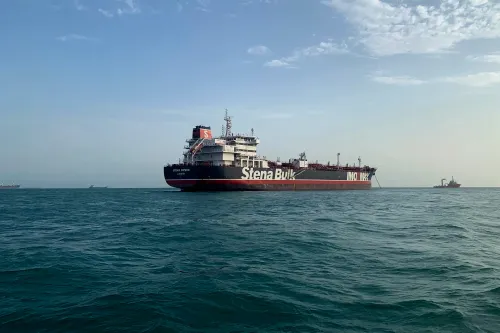
This is not the first time the Strait of Hormuz has been at the centre of a geopolitical standoff. In 2019, Iran seized a British oil tanker in retaliation for the UK's detention of an Iranian vessel off Gibraltar, exposing Europe's vulnerability and its limited capacity for independent naval response.
Alliance Burden-Sharing: A Recurring Fault Line
Hegseth's remarks tap into a long-running tension within NATO over defence spending and operational contributions. "Being an ally is not a one-way street. It's a two-way street," he said, echoing language that has become a hallmark of the Trump administration's approach to alliance management.
Only a handful of NATO members currently meet the alliance's target of spending 2% of GDP on defence — a benchmark that Washington has repeatedly used to pressure partners. The Iran shipping crisis adds a new, urgent dimension to this debate, linking defence contributions directly to European energy security.
"Either you have capabilities or you don't... otherwise you're at the mercy of a country like Iran," Hegseth warned, framing inaction not merely as a political failure but as a strategic vulnerability that European nations themselves will ultimately pay for.
What This Means for Global Energy Markets and India
For India, which imports a substantial share of its crude oil from the Gulf region and routes significant trade through the Arabian Sea and Strait of Hormuz, any escalation in the waterway carries direct economic consequences. A disruption could trigger a spike in global crude prices, impacting India's import bill, fuel prices, and inflation trajectory.
The broader standoff also raises questions about how non-Western powers — including India and China — will navigate pressure to take sides in a maritime security architecture increasingly defined by US-Iran confrontation. New Delhi has historically maintained strategic autonomy on such flashpoints, but the economic stakes make neutrality increasingly costly.
As US-Iran nuclear talks remain fragile and the naval blockade tightens, the coming weeks will be critical in determining whether Europe responds with concrete military deployments or continues to rely on diplomatic channels — and whether that choice reshapes the future of transatlantic burden-sharing for years to come.
Point of View
Which has spent years urging diplomatic engagement with Iran, now finds itself lectured for lacking the military muscle to back that diplomacy. What the mainstream narrative underplays is how this confrontation also puts non-Western powers like India in an impossible position — caught between US pressure on Iran, their own energy dependence on Gulf supplies, and a strategic autonomy they can ill afford to surrender. The Strait of Hormuz is not just a shipping lane; it is the pressure point where America's geopolitical leverage, Europe's energy vulnerability, and Asia's economic exposure all converge.
NationPress
20 Oct 2026
Frequently Asked Questions
Why is the US criticising Europe over Iran shipping security?
The US is criticising Europe because European nations are heavily dependent on energy flows through the Strait of Hormuz but have not contributed meaningfully to securing it. Defence Secretary Pete Hegseth said Europe's diplomatic efforts have been insufficient while Washington bears the military burden alone.
What is the US naval blockade on Iran?
The US has deployed naval assets to enforce restrictions on vessels linked to Iranian ports as part of a maximum pressure campaign targeting Tehran's nuclear programme and regional activities. The Pentagon has warned the blockade will be expanded further if Iran does not change course.
Why is the Strait of Hormuz so important?
The Strait of Hormuz is one of the world's most critical maritime chokepoints, with approximately 20% of global oil supply passing through it. Any disruption — whether through Iranian threats or military escalation — would trigger sharp spikes in global energy prices.
What did Pete Hegseth say about European allies at the Pentagon?
Hegseth declared that 'the time for free riding is over,' saying Europe and Asia have benefited from US military protection for decades without adequate contribution. He also dismissed a recent European diplomatic conference as a 'silly' exercise in talking without action.
How does the US-Iran shipping crisis affect India?
India imports a significant share of its crude oil from Gulf nations and routes major trade through the Arabian Sea and Strait of Hormuz, making it directly vulnerable to any disruption. An escalation could raise global crude prices, increasing India's import bill and fuelling domestic inflation.