Strait of Hormuz Set to Reopen as Iran Agrees to Ceasefire
Synopsis
The Strait of Hormuz is about to reopen for commercial shipping after Iran accepted a ceasefire agreement with the United States. This pivotal development follows extensive military operations that weakened Iran's naval capabilities, as confirmed by Secretary of War, Pete Hegseth.
Key Takeaways
Strait of Hormuz reopening due to Iran's ceasefire agreement with the US.
US military presence will continue to ensure compliance.
Significant for global trade and energy shipments.
Iran's naval capabilities have been weakened.
Potential for rapid response if ceasefire is breached.
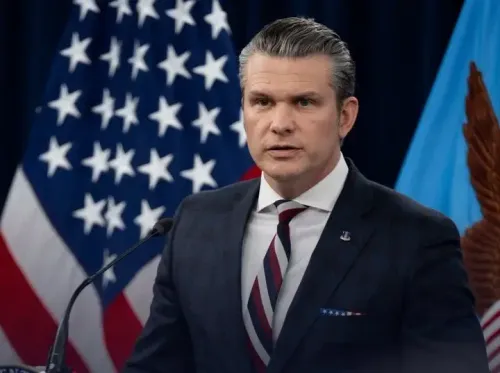
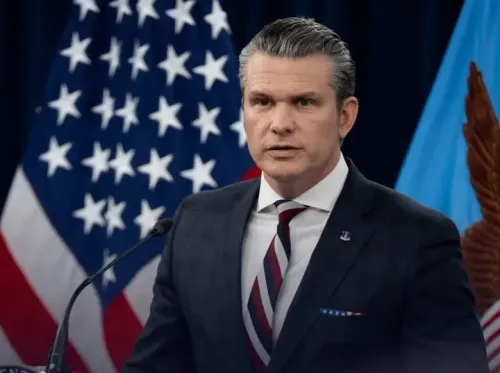
Washington, April 8, (NationPress) The Strait of Hormuz is poised to reopen for commercial navigation as Iran has consented to permit safe transit under a ceasefire agreement established with the United States, announced Secretary of War, Pete Hegseth, on Wednesday.
"The initial agreement we reached allows ships to navigate freely… they will be sailing," Hegseth stated, indicating a significant advancement in the restoration of one of the globe's most vital maritime trade routes.
The reopening follows weeks of intense military operations led by the US that officials claim have diminished Iran's naval and defensive capabilities, compelling Tehran to accept conditions that encompass de-escalation and unimpeded navigation.
Hegseth confirmed that US forces would continue to be stationed to ensure compliance with the agreement.
"We’re not going anywhere… we will ensure Iran adheres to this ceasefire," he emphasized. "Stay alert, stay prepared, stay watchful."
The Pentagon noted that American forces would persist in monitoring Iranian military activities and stand ready to react should hostilities reignite.
"Our troops are on standby, prepared to defend and act at a moment’s notice," Hegseth declared.
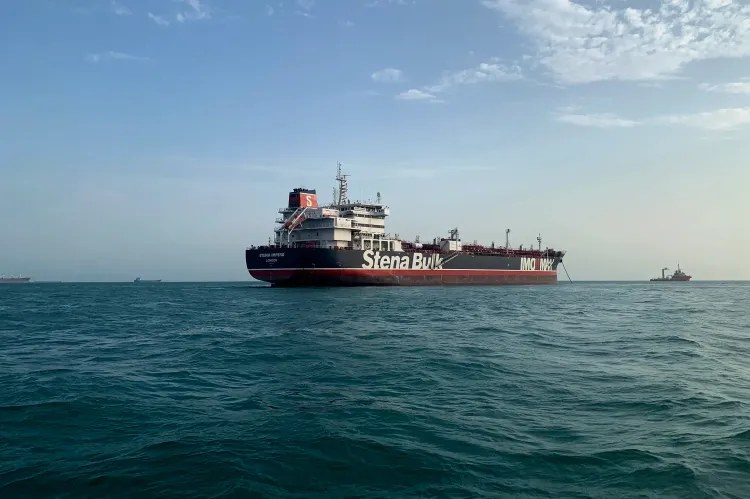
The Strait of Hormuz, which connects the Persian Gulf to international markets, is an essential conduit for energy transport and global trade. Any disruption here can immediately impact oil prices and worldwide trade dynamics.
Hegseth remarked that the US military has played a crucial role in safeguarding the waterway during the conflict, while urging other countries to take responsibility as well.
"We barely receive any of our energy… a tiny fraction. It’s time for the rest of the world to step up and guarantee that it remains open," he said.
He credited US naval and regional operations for regaining control over the strait, stating that Iranian forces no longer possess the same defensive strength.
"Iran lacks the capability to defend the strait as they once did," Hegseth said.
However, US officials acknowledged the situation remains precarious. Iran has made statements indicating that safe passage would be coordinated with its military, raising concerns over practical execution.
"What’s clear is that Iran can declare many things… commerce will dictate terms," Hegseth added, noting that markets were already responding positively to signs of de-escalation.
The Pentagon has committed to closely observing ongoing missile or drone activities following the ceasefire declaration.
"Iran would be prudent to refrain from further aggression," Hegseth advised, acknowledging that ceasefires may require time to be fully effective across dispersed military units.
The decision to reopen Hormuz is being perceived as a significant test of the broader ceasefire, with US officials indicating that any breaches could lead to a swift military response.
This strait has historically been a hotspot for tensions between Iran and the United States, given its strategic significance for global oil exports, especially from Gulf states.
Point of View
The agreement to reopen the Strait of Hormuz is a crucial development in international maritime relations. It reflects a significant shift in Iran's stance amid ongoing military pressures. As the situation evolves, vigilance and readiness from US forces remain paramount to uphold the ceasefire and ensure safe passage for global trade.
NationPress
24 Oct 2026
Frequently Asked Questions
Why is the Strait of Hormuz important?
The Strait of Hormuz is a vital maritime route that connects the Persian Gulf to global markets, playing a crucial role in the transportation of energy and international trade.
What led to the reopening of the Strait of Hormuz?
The reopening follows a ceasefire agreement between Iran and the United States, which was reached after intense US-led military operations that weakened Iran's naval capabilities.
What is the role of US forces in this situation?
US forces will remain deployed in the region to monitor Iranian military activities and ensure compliance with the ceasefire agreement.
What could happen if the ceasefire is violated?
US officials have indicated that any violations of the ceasefire could lead to a rapid military response.
How does this situation affect global oil prices?
As the Strait of Hormuz is crucial for oil exports, any disruptions in this area can have immediate effects on oil prices and global trade flows.