White House: Strait of Hormuz Reopening Essential for Ceasefire with Iran

Synopsis
A fragile ceasefire with Iran relies heavily on the prompt reopening of the Strait of Hormuz, according to the White House. This development follows significant military operations that pressured Tehran into negotiations after extensive strikes.
Key Takeaways
Ceasefire with Iran is contingent upon reopening the Strait of Hormuz.
Significant military operations by the U.S. have pressured Tehran into negotiations.
The Strait is vital for global oil supply .
Continued monitoring of the situation is necessary due to its fragility .
Negotiations will focus on long-term security arrangements .
Washington, April 8 (NationPress) A tenuous ceasefire with Iran is critically dependent on the rapid reopening of the Strait of Hormuz, the White House emphasized on Wednesday. This assertion comes amid claims of substantial military successes that compelled Tehran to engage in negotiations following weeks of intense military action.
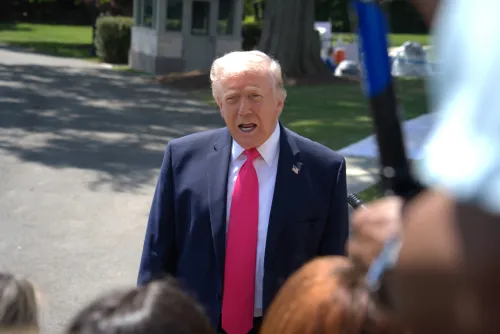
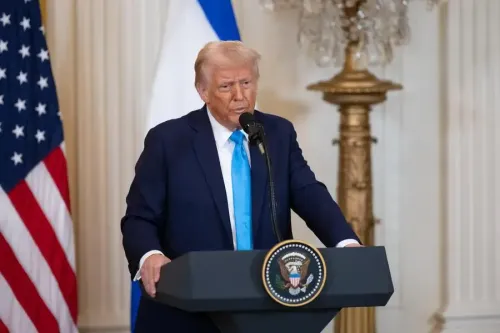
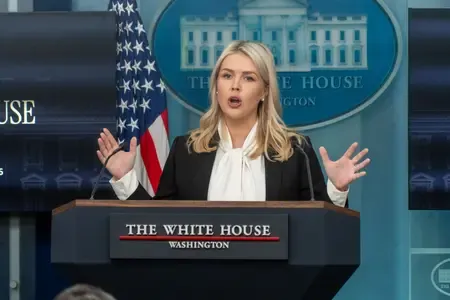
White House Press Secretary Karoline Leavitte informed the media that resuming shipping through this essential energy corridor is a key prerequisite for ongoing discussions. President Donald Trump has made it clear that the passage must be reopened "swiftly, securely, and without delay."
"We anticipate Iran will comply, as articulated by the President... the continuation of this ceasefire is contingent upon the secure reopening of the Strait of Hormuz," Leavitt stated during a press briefing.
She remarked that the administration is closely monitoring the situation, noting an observed increase in maritime traffic in the Strait earlier today.
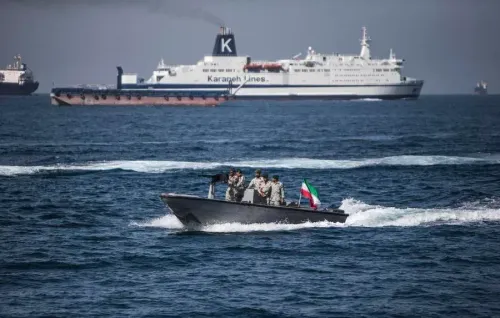
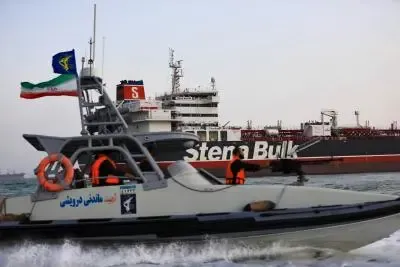
The Strait of Hormuz serves as a crucial artery for global oil trade, and any interruptions could have immediate repercussions for international markets, particularly impacting energy-dependent nations like India.
The ceasefire declaration came in the wake of what the administration termed a decisive military campaign against Iran under the banner of "Operation Epic Fury."
"This represents a significant achievement for the United States, made possible through the efforts of the President and our exceptional military," Leavitt affirmed.
US forces reportedly targeted over 13,000 locations across Iran within a span of 38 days, severely damaging its defense capabilities and significantly impairing its missile, drone, and naval assets.
"The United States has not only met but surpassed its primary military objectives within this short timeframe," she continued.
According to the White House, Iran's naval forces were "entirely obliterated," its air force deemed "functionally and operationally irrelevant," while its ability to support proxy groups was notably diminished.
The administration contended that this military pressure compelled Tehran to seek a ceasefire.
"The President's strategy of maximum pressure, coupled with the leverage gained from Operation Epic Fury's success, led the Iranian regime to request and eventually accept a ceasefire proposal from the United States," Leavitt explained.
She further indicated that Iran had "consented to reopen the Strait of Hormuz" after facing a deadline imposed by Trump.
The White House dismissed earlier Iranian proposals as inadequate, labelling an initial 10-point plan as "fundamentally unserious, unacceptable, and entirely rejected."
"It was literally discarded by President Trump and his negotiation team," Leavitt added.
Only after sustained military pressure did Tehran submit a revised proposal that Washington found to be a viable basis for negotiations.
Despite the announcement of a ceasefire, the administration raised concerns over the ongoing instability of the situation.
"This is a delicate truce. Ceasefires are inherently fragile," Leavitt noted, highlighting disruptions within Iran's command and control structures following repeated military actions.
She pointed out that damage to Iran's leadership and communication frameworks could complicate the ceasefire's implementation in the immediate future.
The United States is now entering a two-week negotiation phase, with discussions expected to revolve around long-term security agreements, including Iran’s nuclear agenda and regional stability.
Notably, the Strait of Hormuz is responsible for about one-fifth of the global oil supply, making its reopening vital for both geopolitical stability and energy markets. Any prolonged disruption would directly impact major importers such as India, which relies heavily on crude oil from the Gulf.
Point of View
It is essential to recognize the intricate balance of power in the Middle East. The reopening of the Strait of Hormuz is not just a military concern but a pivotal element for global energy security and economic stability.
NationPress
13 Oct 2026
Frequently Asked Questions
What is the significance of the Strait of Hormuz?
The Strait of Hormuz is a crucial maritime passageway, responsible for approximately one-fifth of the world’s oil supply, making it vital for global energy markets.
What led to the ceasefire agreement with Iran?
The ceasefire was a result of intense military pressure and operations by the United States, which compelled Iran to seek negotiations.
How has the U.S. military campaign affected Iran?
The U.S. military campaign reportedly destroyed a significant portion of Iran's defense infrastructure and diminished its military capabilities.
What are the next steps following the ceasefire?
The U.S. is entering a two-week negotiation period focusing on long-term security arrangements, including discussions on Iran's nuclear program.
Is the ceasefire stable?
The ceasefire is described as fragile, with potential challenges arising from damage to Iran’s command and control systems.